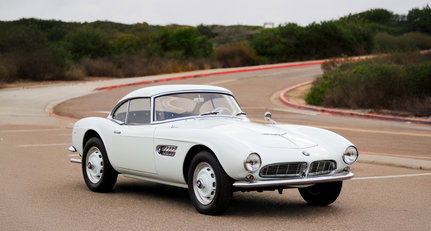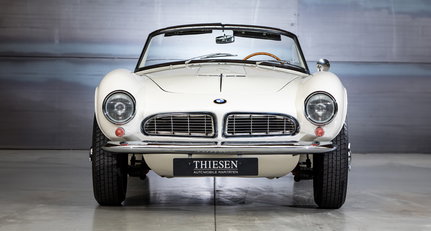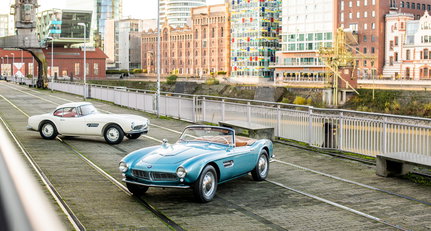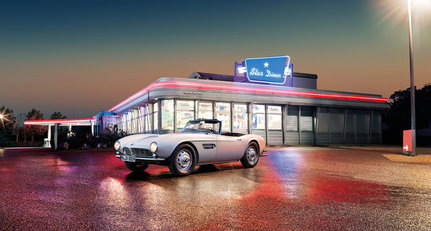
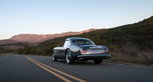
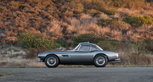

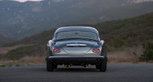
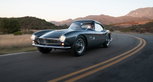
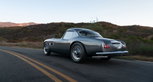
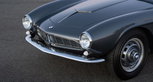
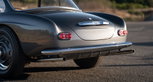
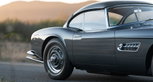
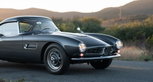
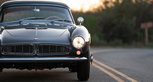
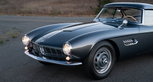


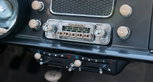



A dream sports car of 1950s and early 1960s Germany, designed by Albrecht Graf von Goertz and realised largely thanks to the persuasive influence of Max Hoffman, the New York-based importer of exotic European sports cars, who had previously also convinced Porsche to bring its 550 Spyder to the US. All this applies to the BMW 507, which, alongside the Mercedes 300 SL, was THE dream car of the early years of the Federal Republic of Germany. In 1955, the two-seater roadster — available with an optional hardtop — captivated the audience at the Frankfurt Motor Show (IAA).
At the time, no one could have foreseen that the 507 would become a massive financial disaster (BMW lost 12,000 DM on every car), and that it would take the compact BMW 700 to save the Munich-based company from certain bankruptcy. While that is part of the story, it has done nothing to diminish the 507's cult status. Its glamour factor remains unsurpassed — not least because of the example Elvis Presley used as a daily driver during his time as a GI in Germany. It was later rediscovered in a Californian scrapyard and subsequently restored to its former glory by BMW Classic.


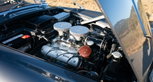
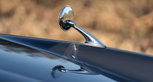
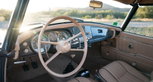
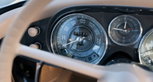
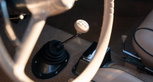
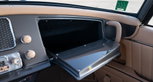
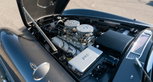
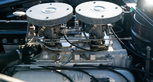
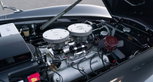
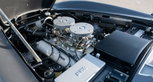
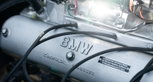
The 507 was powered by the same 3.2-litre V8 engine that also propelled the famous "Baroque Angel", the BMW 502 — immortalised as a police patrol car in a popular German TV series set in early 1960s Munich. Production of the 507 ran from autumn 1956 to summer 1959, with a total of only 252 units built. The first 34 cars (built before March 1957) are known today as Series I, while the subsequent 218 make up Series II. The latter can be identified by the fuel filler neck relocated to the rear right-hand wing, a new dashboard with an integrated speaker, and a larger glovebox.
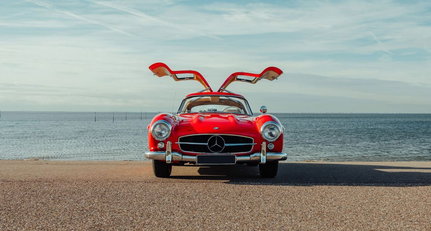
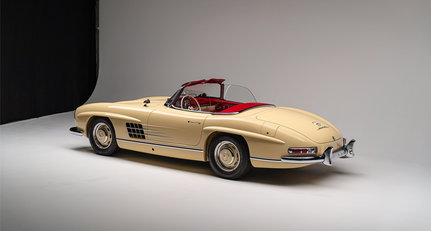
A mere 252 units — a truly sobering figure, especially compared with the 3,258 300 SL coupés and roadsters Mercedes managed to sell. For once, Max Hoffman — the Austrian-born sales genius — had miscalculated. He had ordered 5,000 cars, yet ultimately only 34 were sold in the US. The main problem was the price: at just under $9,000, it cost more than double a Corvette or a Jaguar XK — and considerably more than a 300 SL Gullwing, which listed at $6,820. High production costs were to blame; manufacturing the aluminium bodywork alone — produced by Baur in Stuttgart — took up to 20 days. Furthermore, despite weighing 1,230 kilograms, the 507 was no rocket ship with its 150 hp all-alloy V8: a 0–100 km/h time of 11.1 seconds and a top speed of 195 km/h pointed to a character that was comfortable rather than sporty. Unlike a "Gullwing", a 507 was never to be seen at the motorsport events of the day.


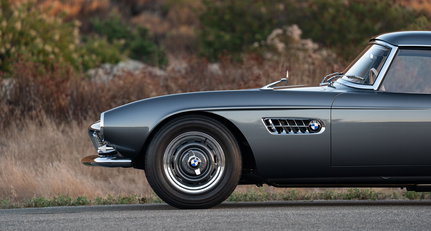
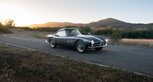
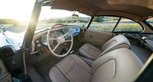
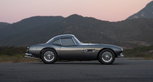
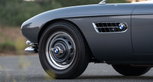
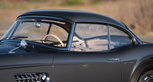
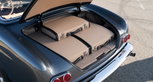
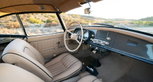
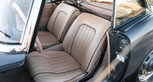
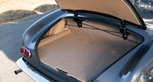
According to its BMW Classic certificate, this example — currently offered by RM Sotheby's as a private sale — is a Series II model completed in October 1957. Just a few months later it was delivered to the United States, to its first owner, Abraham Eckert of Langhorne, Pennsylvania. It eventually made its way back to Europe — first to the Netherlands in 1995 and then to Germany in 2013, where it was acquired by Ulrich Berberich-Martini, owner of the Heilbronn-based Martini Garage. He subsequently restored the car in 2014 and 2015 at a cost of approximately €350,000, finishing it in stunning Graphite Grey Metallic over a beige interior.
Following the restoration, the car returned to the US, where its new owner drove his gem only sporadically and showed it publicly on just one occasion — the 2017 Pinehurst Concours d'Elegance in North Carolina.


In 2016, the 507 passed into the hands of its current custodian. It remains in fantastic condition — a design icon par excellence, defined by timeless elegance and sensuous lines. Its enduring influence even inspired the BMW Z8, launched in 2000.
At auction, the sheer rarity and mystique of the BMW 507 consistently drive prices to just below, or well above, the three-million-dollar mark. The highest price to date was achieved by the car once owned by Formula 1 team principal John Surtees. Fitted with racing components, it went under the hammer for five million dollars — to this day the all-time record for this immortal design from Munich.
Photos: Karissa Hosek for RM Sotheby's