


















Who is the Maserati 3200 GT or 4200 for?
Maserati has long been something of a hot potato in the car industry. In its history spanning more than a century, the sports car maker with the trident badge has changed owners or parent companies no fewer than eight times. The Maserati 3200 GT and its successor, officially known simply as the Coupé and Spyder but colloquially as the 4200, date from a period when ownership was changing hands once again.
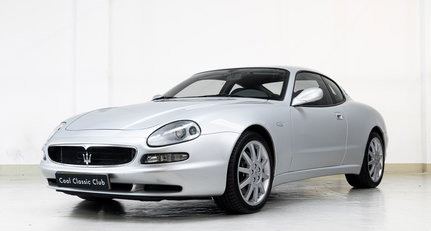
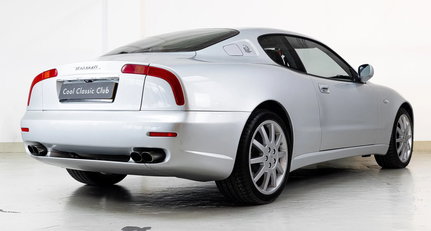
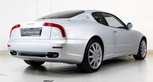
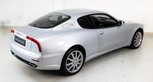
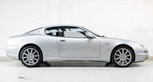
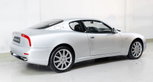
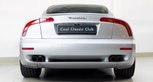
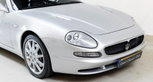
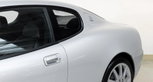
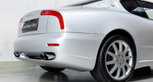
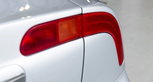
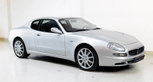
In 1997, Fiat sold the Modena-based manufacturer to Ferrari. A year later, the new 3200 GT was unveiled at the Paris Motor Show. It was penned by none other than Giorgetto Giugiaro, but technically it was still a child of the Fiat era. Its most distinctive feature? The unique boomerang taillights, which remained exclusive to the 3200 GT and made it the world's first car with full LED rear lights. The coupé certainly looked the part with its muscular wedge shape and softly rounded nose, its V8 thrilled with an emotional soundtrack, and its performance was impressive. Even so, a mixed brand image and a rather comfort-oriented GT character meant that it never achieved the aura or legendary status of contemporary Ferraris and Lamborghinis.
That was reflected in steep depreciation and prices that remain low overall to this day. Since the range, apart from the sportiest versions, was practically sold off for a song on the used car market, it offered perhaps the cheapest way to drive a genuine Italian exotic. Unfortunately, that also attracted many a second-hand buyer who, beyond the purchase price, could not really afford to run a Maserati. Anyone dazzled by the low asking price can get badly burned by the hefty maintenance and repair bills, especially with the original biturbo-engined model.

Which version should you buy?
Even though it lost its predecessor's most distinctive design feature, the boomerang-shaped taillights, the Maserati 4200, offered from late 2001 to mid-2007, is the better choice. That is not only down to its more powerful and considerably more durable 390 hp V8, which comes from the same Ferrari engine family as the F430's eight-cylinder, but also to its better weight distribution thanks to the transaxle layout, slightly higher build quality and a wider choice of body styles. The 4200 was first presented as the open Spyder in September 2001, with the coupé following the next year.
Exactly why Maserati abandoned the idiosyncratic, strikingly slim boomerang lights is disputed. According to the manufacturer, they did not comply with regulations in the US, the market the Italians returned to with the 4200 after an eleven-year absence. Frank Stephenson, then head of design at Ferrari and Maserati, has denied this account. According to him, it was Ferrari president Luca di Montezemolo who ordered the switch to conventional taillights. Otherwise, the visual differences between the 3200 and the 4200 are fairly subtle. The hood vents disappeared, and the Spyder, conceived as a strict two-seater, received a wheelbase shortened by 22 centimeters.

From the outset, the 4200 was offered with either a classic six-speed manual or the sequential Cambiocorsa gearbox, operated via paddles behind the steering wheel. Interestingly, the manual remained in the minority throughout production. Its predecessor also came with a six-speed manual as standard, although it was mounted directly on the engine rather than at the rear as in the successor. The 3200 GT was optionally available with a four-speed automatic, which made the coupé somewhat more sluggish.
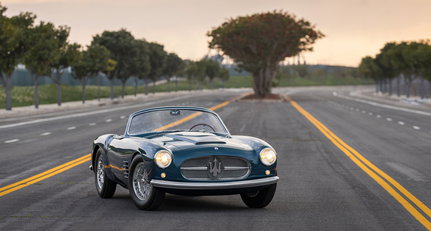
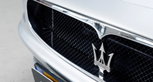
Beyond the standard versions, Maserati also offered several exclusive special editions. Shortly before the model change, the Italians unveiled a performance variant of the 3200 GT called the "Assetto Corsa" at the 2001 Geneva Motor Show. It was limited to 250 units, although 259 were ultimately built. It received no extra power but gained uprated brakes and a modified suspension lowered by 15 millimeters (0.6 in). To mark the brand's 90th anniversary in 2004, the Italians launched the 4200 "Spyder 90th Anniversary," limited to 180 examples worldwide. Mostly finished in "Blu Anniversary," it framed the trident badge on its front fenders in an oval, as in the 1950s, and its body kit anticipated the look of the later GranSport Spyder.


The GranSport coupé had already been revealed at the Geneva Motor Show in March 2004. It stood out above all for its design, refined and aerodynamically optimized by Frank Stephenson, its sportier interior and a top speed of 290 km/h (180 mph), thanks to a longer sixth gear. Instead of the standard 390 hp, its 4.2-liter V8 produced 400 horses, sent to the rear wheels exclusively through the Cambiocorsa gearbox.
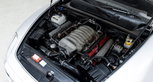
The 4200's greatest strength lies in its heart. The eight-cylinder from Ferrari's parts bin, which produces around 100 hp less in the Maserati than in the later F430, is far less troublesome than the 3200 GT's biturbo engine. That 370 hp unit traces its roots to the V8 that had already served in the Quattroporte IV and the Shamal. Unfortunately, Maserati's in-house engine is not built for sustained flat-out running, and it likes to be warmed up gently and cooled down again at the end of a drive. The later model also wins on sound. Unlike the Ferrari versions, the engine in the Maserati received a cross-plane rather than a flat-plane crankshaft, giving it a deep burble that is even somewhat reminiscent of American muscle cars.

What should you pay for a Maserati 3200 GT or 4200?
With 4,795 built, the 3200 GT is the rarer of the two. Of these, 2,689 were delivered with a manual gearbox and 2,106 with an automatic. Well-maintained 3200 GTs currently cost around 25,000 to 30,000 euros, while particularly good examples are offered for 40,000 euros or more. Cars with high mileage and a maintenance backlog can sometimes be found for well under 25,000 euros, but they should be handled with extreme caution. With 13,423 units, almost three times as many 4200s were built. As a coupé, it is priced between 25,000 and 40,000 euros, while the top-of-the-range GranSport is considerably more expensive at 40,000 to 50,000 euros.
The 4200 Spyder, which promises open-air fun, costs between 28,000 and 45,000 euros with the automated Cambiocorsa gearbox. Only 574 Spyders received the manual, so these command closer to 50,000 euros in top condition. For the 3200 GT Assetto Corsa, prices start at around 50,000 euros, although exceptional cars are occasionally offered beyond the 100,000-euro mark. Special editions such as the Spyder 90th Anniversary or the GranSport MC Victory are sometimes worth a premium of 50 percent or more to collectors. In concrete terms, they change hands for around 60,000 to 90,000 euros.

What are the technical problems?
According to Marc Hanke of Scuderia GT in Irschenberg, the 3200 GT's biggest weakness is its electronic throttle control ("drive-by-wire"), which was novel at the time. Worn potentiometers cause power loss, delayed throttle response or sudden jumps in engine speed. Since original throttle body units are rare and expensive (around 2,500 euros), alternatives have become established. Not every retrofit solution on offer is recommended, though: specialists such as those at Scuderia GT warn that some replacement sensors are not properly recognized by the ECU. The so-called "Volvo solution," using contactless sensors from Volvo's parts bin for just over 600 euros, has proven itself instead. Given the enormous cost of a misdiagnosis, electronic problems like these belong firmly in the hands of a knowledgeable workshop. The biturbo engine's timing belt change must be carried out just as rigorously every three years or 50,000 kilometers (31,000 miles), ideally even a little sooner, or a catastrophic engine failure looms.
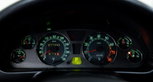
Inside the 3.2-liter engine, increased oil consumption is another warning sign, as it points to wear on the pistons and the wet cylinder liners. A compression test before purchase is essential, since damage to piston rings or cylinder bores occurs regardless of mileage. Manual 3200 GTs harbor a further danger: the pull-type clutch puts strain on the undersized crankshaft thrust bearing, which can lead to fatal end float. The result is an engine rebuild whose cost can quickly approach the value of the car. If the oil pressure warning light comes on, head straight to a workshop. To avoid unnecessary wear on the thrust washers, never keep the clutch pedal pressed while waiting at traffic lights. The clutch itself typically lasts only around 40,000 kilometers (25,000 miles) on manual cars.


On the Maserati 4200, the automated Cambiocorsa gearbox is considered superior to the manual once the car is on the move, but it only grudgingly tolerates stop-and-go traffic, constant pulling away in first gear or steep parking garage ramps. Since early versions sometimes shifted sluggishly, cars from the 2005 model year facelift onwards, with new hardware and software, are the best choice. The biggest cost factor on the 4200, however, is the clutch, especially on Cambiocorsa models, which wear it heavily in city traffic. The degree of wear can be read out as a percentage with a diagnostic tool, and such a printout should be mandatory before any purchase. The same applies to both generations: while common service parts are no problem, sourcing model-specific spare parts such as control arms or electronic control units is becoming increasingly difficult and extremely expensive due to low production numbers.


What problems occur with age?
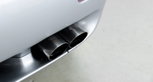
Marc Hanke of the Bavarian specialist garage gives the all-clear when it comes to rust. It only appears after stone chips or very damp storage. According to Hanke, the stainless steel exhaust systems are also of high quality and last accordingly. The suspension, on the other hand, deserves a closer look. In addition to age-related wear of the rubber bushings and dampers, the control arms in particular are considered a real problem area.
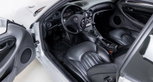
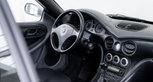
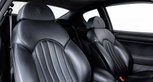
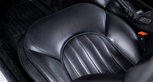
The interiors show the typical weaknesses of Italian cars of this era. The soft-touch coatings on switches, buttons and air vents break down over the years and turn into the notorious "sticky buttons." Fortunately, there is a proven fix: specialists strip the old coating completely, repaint the part and laser-engrave fresh symbols. According to Hanke, the result is ultimately of higher quality and more durable than when new. The fine leather upholstery also needs attention. With frequent exposure to sunlight in particular, the leather can shrink considerably until it ultimately has to be replaced, a laborious and, above all, costly job.


Is it worth buying a Maserati 3200 GT or 4200?
If you are aware of the potential risks, which largely concern the 3200 GT, and have enough set aside for any repairs, the answer is a definite yes. Almost thirty years after the basic shape debuted, Giugiaro's sleek two-doors still look the part and guarantee a refined, stylish appearance on almost every occasion.
Add to that their exotic status and thoroughly Italian character. Thanks to their well-judged balance of comfort and handling, a vacation for two or a weekend tour over winding Alpine passes becomes a real pleasure. Buyers should not necessarily expect stellar value growth, however. It will probably be a while before Maserati's coupés and Spyders of the late 1990s and early 2000s shed their slightly battered image.
You can find plenty Maserati Coupés and Spyders for sale in the Classic Driver Market
Photos: Cool Classic Club