


The battle for evo magazine’s 2007 Car of the Year title was a remarkably close encounter between two different interpretations of the driver’s car. The Ferrari 430 Scuderia and Porsche 911 GT3 RS of the 997.1 generation represented the most focused versions of their respective model lines. Porsche prevailed by just 95.7 points to 94.9. Both drew heavily on motorsport but pursued different philosophies: Porsche favoured mechanical precision, while Ferrari brought contemporary Formula One technology to the road.


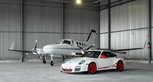
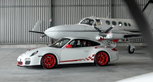
For the 2010 model year, the updated 997 GT3 RS received much more than a mild facelift. Its naturally aspirated flat-six grew from 3.6 to 3.8 litres, with output increasing from 409 hp (415 PS) to 444 hp (450 PS). Weighing less than 1.4 tonnes, with hydraulic steering, a precise six-speed manual gearbox and peak power arriving at 7,900 rpm, the 997.2 GT3 RS remains a distinctly engaging machine.
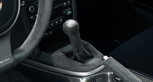
Its immediate turn-in, tactile gearshift and increasingly expressive engine note as the revs rise illustrate how firmly Porsche placed the driver at the centre of the RS experience. A Porsche test driver reportedly lapped the Nürburgring Nordschleife in 7:33, roughly 15 seconds quicker than the 7:48 recorded by sport auto for its predecessor. Different test conditions make this an indicative comparison rather than a direct one.


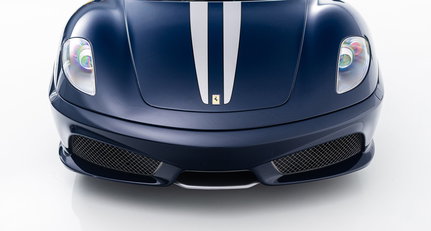
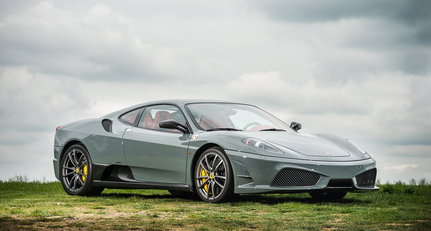
Ferrari took a different approach with the more focused version of its contemporary V8 berlinetta, unveiled by Michael Schumacher at the Frankfurt Motor Show in September 2007. While Porsche refined a long-established formula, Maranello looked towards new technology. Following his first retirement from Formula One, Schumacher also contributed to the 430 Scuderia’s development and set-up.
The clearest expression of Ferrari’s technological approach was its automated six-speed gearbox. It could shift in just 60 milliseconds, yet each gear change remained distinctly perceptible – quite unlike the Porsche’s celebrated conventional manual transmission.


Today, that almost archaic directness is part of the Ferrari’s appeal. Its single-clutch automated manual does not conceal shifts as smoothly as a modern dual-clutch gearbox. Instead, it makes the mechanical act of changing gear part of the experience. What once seemed imperfect has become a source of emotion.
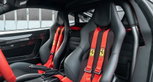
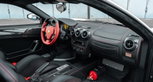
The same is true of the 503 hp (510 PS), 4.3-litre V8. Ferrari reduced not only weight but also sound insulation, allowing engine noise and vibration to reach the occupants with unusual immediacy. The engine changes character noticeably with throttle position and revs, culminating in a piercing note at the top of its range.


Both cars were technologically advanced when new. Today, their appeal lies partly in qualities that later generations increasingly left behind: high-revving naturally aspirated engines, little insulation and a direct connection between driver and machine. The Porsche offers the precision of a manual gearbox; the Ferrari, the tangible mechanics of its automated transmission.
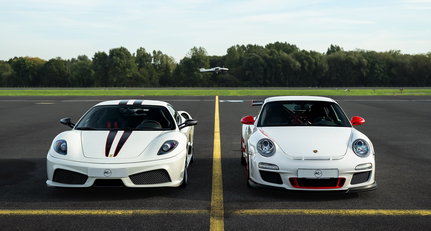
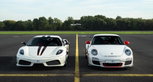
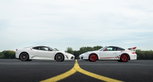
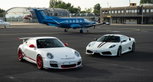
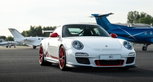
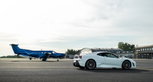
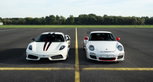
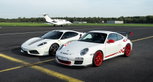
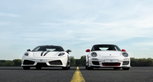
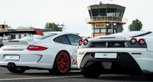
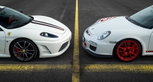
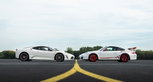
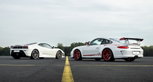
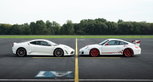
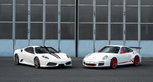
The open setting highlights their different proportions: the compact, rear-engined Porsche with its red RS accents alongside the low, mid-engined Ferrari in Bianco Avus.
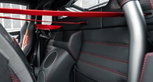
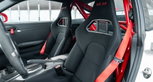
Despite similar ambitions, the cars deliver markedly different sensations. The Porsche impresses with precision, an exceptional manual shift and controls that work together naturally. The Ferrari is louder, rawer and more dramatic. The seating position feels lower, the V8 is constantly present both audibly and physically, and even the gearbox contributes through its distinctive character.


Brought together by Moritz Werner, they appear less like direct substitutes and more like two answers to the same question: how much motorsport can be brought to the road? Porsche answered with evolutionary precision, Ferrari with technology and drama.
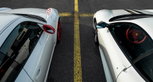
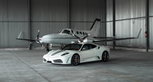
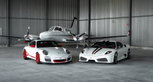
Beyond their white paintwork – Bianco Avus for the Ferrari, Carrara White for the Porsche – both examples were originally delivered in Germany and have remarkably low mileage. The 2010 997.2 GT3 RS, in single ownership from new, has covered 19,875 kilometres; the 2008 430 Scuderia, just 4,500 kilometres.
At the time, the question was which was faster, sharper or more advanced. Today, perhaps the more interesting point is how differently Porsche and Ferrari created a driving experience that is rarely found in new cars.
Photos by Marc Rosu / Courtesy of Moritz Werner