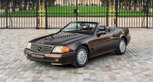
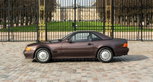
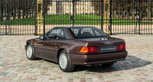
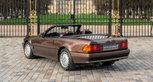
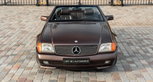
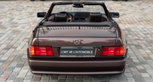
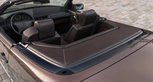
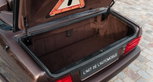
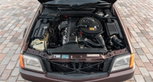
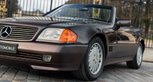
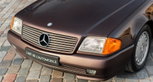
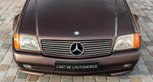
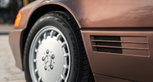

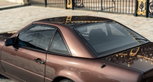



Who is the Mercedes SL R129 for?
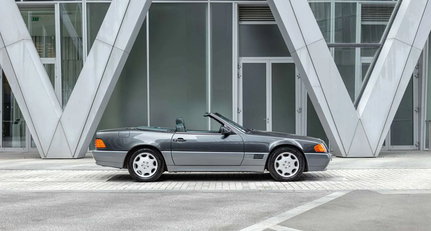
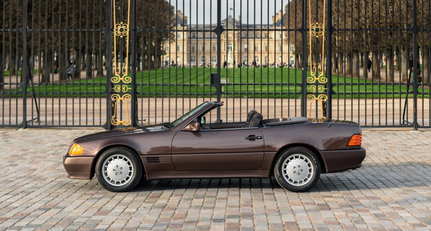
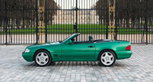
The fourth generation of the Mercedes SL can safely be described as a masterpiece. Compared to its predecessor, it represented a genuine revolution. When the R129 was unveiled at the Geneva Motor Show in March 1989, the R107 had already been around for a massive 18 years, which was an unusually long product cycle even for the Stuttgart brand. The baroque seventies design was history, replaced by simple, elegant lines penned by Bruno Sacco. The R129 also represented a paradigm shift in terms of comfort, powertrain, and chassis technology. Ultimately, the nearly 4.50-meter-long roadster, built on the shortened floorpan of the legendarily indestructible W124 sedan, was by far the most modern car in its segment.
Due to its rather refined character, the convertible long held the used-car image of a somewhat staid boulevard cruiser for the older generation. In the wake of the recent modern classic hype, however, a younger demographic has also succumbed to the charm of this timeless SL. This is reflected in significantly higher demand and rising prices.
Anyone looking for a purebred sports car will not be happy with it though. Lap records on the Nürburgring Nordschleife were never in the development specifications anyway. Instead, the engineers in Stuttgart pursued a comfort-oriented approach, just as they did with the technically closely related sedans of that era. The SL is characterized by smooth and powerful engines, balanced handling, and extensive comfort features. With its largely robust underpinnings, standard hardtop, a decent spare parts supply, and a usable luggage compartment, it remains almost unrestrictedly suitable for everyday use and long-distance travel even 37 years after its debut. Cruising down to the French Riviera in it with the top down is still a real pleasure today.


Which version should you buy?
That depends entirely on your personal preferences, whether you are simply looking for a comfortable convertible for a Sunday afternoon drive or a true autobahn dominator. While the SL may have only been available in one body style, buyers at the time had more options under the hood. The manufacturer offered almost the entire engine range of the contemporary S-Class in the roadster. During its twelve-year production run, Mercedes carried out two model changes on its flagship from the W126 to the W140 and ultimately to the W220. With a slight delay, these modern powertrains also found their way into the open-top cruiser.
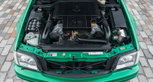
At the market launch, the range was still quite narrow, as the Swabians only offered three engines. The entry-level model was the 300 SL with its 190 hp, 3.0-liter inline-six engine featuring two valves per cylinder. Above that ranked the 300 SL-24, which boasted advanced four-valve technology to deliver 231 hp to the rear wheels. The immensely powerful M119 V8 of the 500 SL crowned the model range until the introduction of the prestigious twelve-cylinder. The newly introduced engine was a full 81 hp more powerful than its predecessor's V8 and exceptionally modern with its four valves per cylinder and four camshafts. From a displacement of five liters, the power plant produced 326 hp and later served as the basis for several AMG performance variants.


A good three and a half years after the market launch of the R129, the 600 SL joined the lineup. Its 6.0-liter V12 was a real sensation in this segment. Praised for its silky-smooth character, the engine put out a healthy 394 hp. The massive, high-torque eight and twelve-cylinder engines could only be combined with the four-speed automatic transmission, while a five-speed manual gearbox was standard on the six-cylinder models. However, automatic transmissions were also available for them as an option, and in the case of the 300 SL-24, even with five gears instead of four.
In June 1993, Mercedes completely revamped the nomenclature of its open luxury barge. From then on, the SL moved to the front. The 500 SL became the SL 500, while the twelve-cylinder was called the SL 600 from now on. At the same time, the veteran 3.0-liter inline-six engines were retired, replaced by two more modern four-valve engines displacing 2.8 and 3.2 liters, which powered the 193 hp SL 280 and the 231 hp SL 320. Meanwhile, the V8 of the SL 500 had to sacrifice six horsepower due to emission reduction measures, producing 320 hp from then on.


In the autumn of 1995, the nineties SL received its first comprehensive facelift. The visual changes were rather subtle, but under the sheet metal, the modifications were noticeable. The eight and twelve-cylinder models received a newly developed, electronically controlled five-speed automatic transmission with a torque converter lock-up clutch, which replaced the aging four-speed automatic. From mid-1996 onwards, the six-cylinder models also benefited from the modern five-speed automatic. Xenon headlights became available at the front, which not only provided greater safety at night but also gave the roadster a new face.
The most profound intervention in the powertrain technology finally came with the second facelift in the spring of 1998. Mercedes said goodbye to the smooth inline-six engines and ushered in the V6 era. A completely new generation of engines with three-valve technology and twin spark plugs succeeded the power plants of the SL 280, SL 320, and SL 500. The SL 280 now extracted 204 hp from its V6, the SL 320 reached 224 hp, and the new V8 of the SL 500 mobilized 306 hp. This came with consistently lower fuel consumption but also clear compromises in terms of refinement. Many fans view this move more as a step backward. Consequently, early examples featuring the unadulterated Bruno Sacco design and the smooth-running inline-six engines rank higher in collector favor than the later V6 SLs in their late nineties and early 2000s guise.


Only the V12 of the SL 600 was allowed to continue whispering silkily untouched, holding up the flag of 394 hp until the end of production. Even more demanding customers knocked on the doors of the Mercedes specialists in Affalterbach and Bottrop. AMG bored out the M119 V8 to six liters to create the 381 hp SL 60 AMG, the very first AMG SL to be featured on the official Mercedes price list. But even that was not the end of the line. Affalterbach coaxed up to 525 hp out of the twelve-cylinder in the SL 73 AMG, utilizing the exact engine that would later power the Pagani Zonda. Brabus in Bottrop went one step further and mobilized a brutal 582 hp in the SL 7.3 S. This propelled the two-seater beyond 300 km/h, making it the fastest convertible of its time.
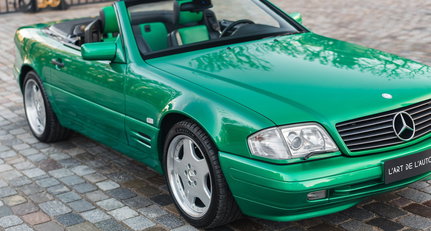
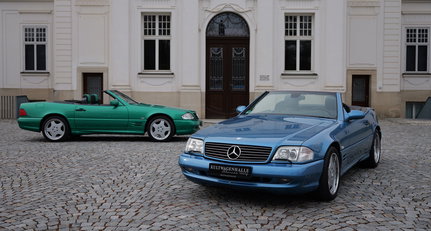
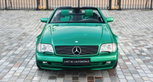
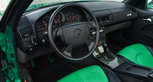
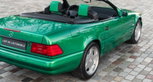
But the SL could be optimized according to personal demands beyond just what was under the hood. Even by the standards of the time, Mercedes offered an astonishingly broad individualization program featuring over 70 paint shades and bold color combinations that went far beyond the typical silver-and-black cliché. However, the Designo editions took the crown, offering highly exclusive special paints like the legendary Designo Mystic Blue or Edison Green paired with Nappa leather in vibrant tones. These were often produced only in extremely small series and are highly coveted collector's items today. Add to that special editions like the 1994 SL Mille Miglia, which for example was limited to just ten units.


What should you pay for a R129 SL?
In total, slightly more than 200,000 examples of the R129 SL rolled off the assembly line at the Mercedes-Benz plant in Bremen. It is therefore hardly surprising that the supply remains abundant even a good 25 years after production ended. The era of massive bargains is over due to a consistently significant increase in interest and its now officially achieved classic car status. Nevertheless, the common variants are still comparatively affordable. Acceptable six-cylinder models with less than 125,000 kilometers on the clock can be found starting at around 15,000 euros. For eight-cylinder models, on the other hand, the starting price begins with a two. Top examples can easily cost 50,000 euros or more.
There are no upper limits to this. Rare Designo versions can sometimes command six-figure sums, while RM Sotheby's is currently providing an estimate of 450,000 to 500,000 euros for a 1999 SL Brabus 7.3 S V12.


What are the technical problems?
Beneath the elegant shell of the R129 lie pioneering electronics and numerous comfort features that are often prone to faults today. A major financial risk is the electro-hydraulic soft-top mechanism, whose cylinders become leaky with age and cause expensive oil leaks. A similarly dreaded issue is a defective air conditioning evaporator because replacing it requires the removal of the entire dashboard. Early model years also stand out for brittle engine wiring harnesses. The biodegradable insulation used at the time crumbles over the years due to engine heat, which can lead to short circuits and irreparable damage to the control units.
Even the otherwise rather durable engines struggle with some age-related weaknesses. In early cars, the famous M119-V8 frequently suffers from moisture in the distributor caps, causing misfires. However, the internal plastic guide rails of the timing chain are far more dangerous here. These become brittle over the years, can break off, and cause a catastrophic engine failure due to a skipped chain.
Due to their design, the inline-six engines installed until 1998 and the mighty V12 power plant, which is structurally closely related to the six-cylinder family, frequently struggle with thermal loads. This causes the cylinder head gasket to yield and leak oil. With the twelve-cylinder, defective wiring harnesses for the electronic throttle bodies often add up as a costly source of error. While the V6 and V8 engines with three-valve technology introduced in 1998 are considered more robust in terms of chain guide rails, they are prone to leaking valve covers.


What problems occur with age?
Thanks to solid build quality and good factory corrosion protection, rust is rarely a major issue for the R129. In this respect, the SL proves to be significantly less troublesome than the Mercedes sedans of the same era. However, a restriction by production year must be noted. While early vintages remain virtually rust-free, late models from the 1997 model year onwards are more severely affected. Mercedes switched to water-soluble paints, which is why corrosion occurs more frequently on beads and edges here. In any case, moisture likes to settle under the plastic side skirt covers known as Sacco panels at the jacking points, creating unnoticed pockets of corrosion. The front suspension strut domes and the rear axle mounting points should also be thoroughly inspected on a lift.
The high vehicle weight of a good 1.7 to over 2.0 tons, depending on the version, also takes its toll on the suspension over the decades. Worn rubber mounts and tired shock absorbers lead to a spongy driving feel and knocking noises. Special caution is required with the optional ADS hydraulic suspension. If the pressure accumulators are worn out, the SL rides extremely hard, while leaking suspension struts entail astronomical replacement part prices.
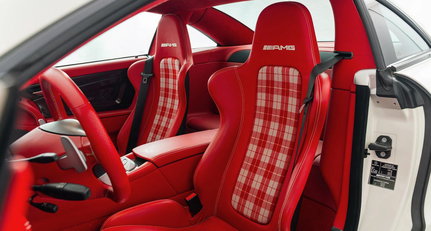
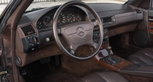
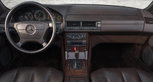
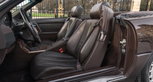
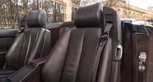
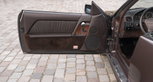
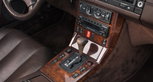
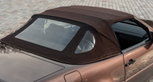
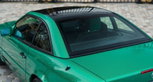
Depending on the classic SL's origin and previous ownership, UV radiation and wear can leave distinct marks in the interior. The bolsters of the heavy integral seats are often cracked or chafed through. In addition, the wood veneer is prone to fine stress cracks in the clear coat, and the plastic rear windows of the fabric soft top become milky over time and break easily.


Is it worth buying a Mercedes SL R129?
Definitely, if you are looking for a luxurious cruiser rather than a purist sports car and choose the right vehicle. The nineties SL is not only unusually comfortable and torsionally rigid for a roadster but also confidently motorized, lavishly equipped for its time, and stylistically pleasantly unobtrusive. Yet it represents the 1990s like hardly any other car, partly because it is the four-wheeled star of countless music videos and movies.
It is no wonder that demand has risen massively over the past five years and that the price curve is also pointing steeply upwards. The R129 should be a good long-term investment, especially if you opt for a sought-after and rare configuration. Although production numbers were high, special examples are always in demand, and the classic career of the roadster once dismissed as too grey-haired is only just really taking off.
Photos: L'Art de l'Automobile