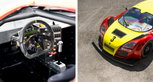









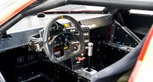
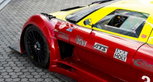





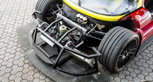


When enthusiasts around the world picture the heartlands of the German car industry, they tend to think first of Swabia, Bavaria and Lower Saxony. Yet they shouldn't underestimate the east, Thuringia above all, once the beating heart of East Germany's car industry. Some Opel models still roll off the line here, and between 2005 and 2012 the small town of Altenburg also turned out one of the most brutal supercars ever built, a machine that leaves even icons like the Mercedes-Benz CLK GTR and the Porsche 911 GT1 trailing when it comes to power-to-weight.
Weighing just 1.1 tonnes and making at least 650 hp, the Gumpert Apollo was the passion project of one of the most important figures in postwar German motoring. Back in the 1970s, Roland Gumpert helped develop the four-wheel-drive VW Iltis off-roader, and he later played a decisive role in readying Audi's groundbreaking quattro system for production. That drivetrain didn't just revolutionise the World Rally Championship; it laid the foundation for Audi's transformation from a rather staid, sensible brand into a globally successful premium marque.


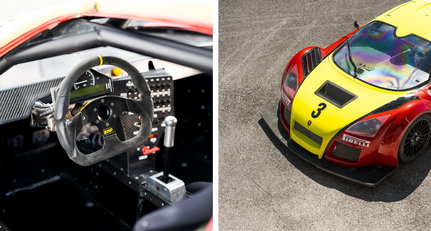
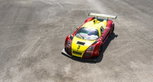
Gumpert put his expertise to work from 2002, setting out to build a road-legal racing car and partly leaning on his former employer's technology to do it. The first prototypes appeared in 2004, still in Ingolstadt, serving as test beds and promotional tools alike. While the white car crashed with a journalist at the wheel, the red development car was already racing by March 2005. The Apollo's motorsport debut lived up to the high expectations: Belgian driver Ruben Maes took it to the podium at the Divinol Cup in Hockenheim, finishing third at the very first attempt.
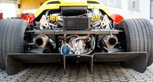
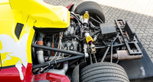
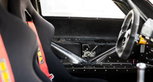
The crazy part is that the car is said to have driven to the event and back under its own power, because this prototype was also the first Apollo homologated for public roads. It is exactly this example, one of the most historically significant Apollos of all, that the French auction house Aguttes will bring under the hammer on 10 October at its Autoworld 2026 sale in Brussels. That significance is reflected in the estimate of 550,000 to 750,000 euros.


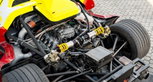
Chassis number 81009 has stayed in Roland Gumpert's own hands ever since it was completed 22 years ago, and it is now being sold for the first time. Power comes from a 4.2-litre twin-turbo V8 that traces its basic architecture to an Audi design but was heavily reworked. In the prototype on offer it makes the standard 650 hp and 850 Nm of torque; in its highest state of tune the engine sent a mighty 800 hp to the rear wheels through a sequential six-speed gearbox.


Series production at the Gumpert works in Thuringia started a few days before Christmas in 2005. The line had originally been laid out for an annual output of 60 cars, but that target was missed by a wide margin. No official production figures were ever published, yet it is thought that only around 70 Apollos were built across almost seven years. Not even a spectacular television appearance could stave off the sales flop and the company's resulting insolvency in 2013, though that same appearance etched the Apollo into the memory of petrolheads worldwide.


And that came down to more than Richard Hammond lavishing praise on the Apollo's performance while criticising it for its looks. Above all, in a Top Gear episode first broadcast on 27 July 2008, the anonymous test driver known as The Stig took the 700 hp version of the Apollo around the show's home track and burned a lap of 1:17.1 into the tarmac, beating the Ascari A10's previous record by 0.2 seconds and claiming top spot on the so-called Power Lap board. With that, the lightweight exotic from eastern Germany had left far more powerful giants such as the Bugatti Veyron and the Pagani Zonda behind it. It would be two years before Gumpert's creation was beaten by the 1,200 hp Super Sport version of the Veyron.
 Brussels, 10 Oct