

























What were the major changes?
In Miami Vice, James “Sonny” Crockett, played by Don Johnson, drove a white Testarossa. The 512 TR that Leonardo DiCaprio drove in The Wolf of Wall Street was also painted in that color. These two screen roles, plus its appearance in Sega’s video game Out Run (1986), made the Testarossa a poster car of the mid-1980s, even without any motorsport pedigree.
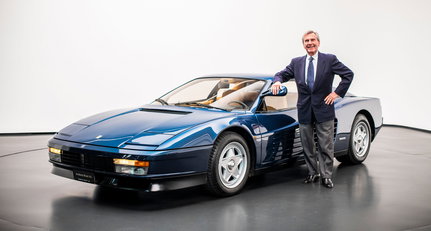
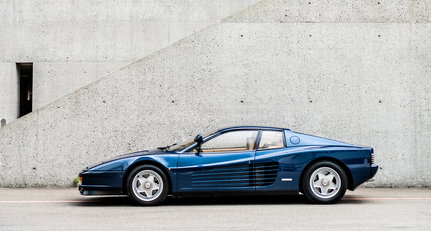
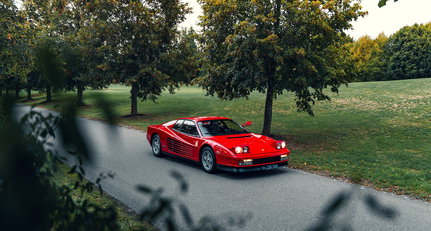
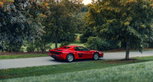
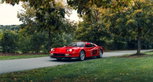
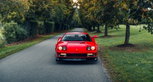
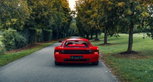
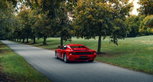
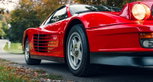
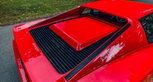
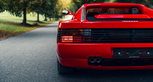
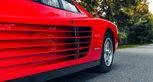
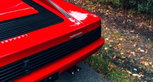
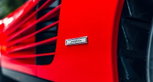
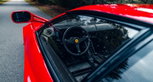
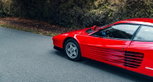
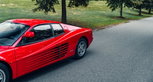
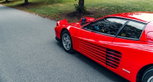
The successor to the more rounded 512 BBi broke new ground with the design language created by a Pininfarina team led by Leonardo Fioravanti: a pronounced wedge shape and a more angular body. The real pop-culture icons, however, were the side strakes feeding the air intakes (nicknamed “egg slicers”) and the black slats at the rear, which is considerably wider than the front end.


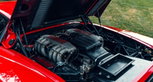
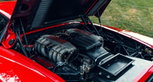
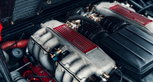
The Testarossa debuted at the 1984 Paris Salon. It was powered by the last flat-12 ever fitted to a production Ferrari (a V12 with a 180° bank angle), now with four-valve heads for the first time and, true to its name, red-painted cam covers. The mid-mounted DOHC engine (internal code F 113) produced 390 PS from 4.9 liters of displacement. That was enough for 0 to 62 mph in about 5.3 seconds and a top speed of 180 mph. Fuel metering was initially handled by the mechanical Bosch K-Jetronic.
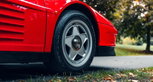
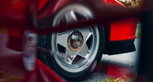
The bodies were built by coachbuilder Scaglietti in Modena, with final assembly in Maranello. Platform and chassis were largely carried over from the 512 BB, with a subframe for the engine and transmission that could be detached for maintenance. The early models ran on center-lock wheels with Michelin TRX tires, unlike the later cars with five lug nuts. That makes them especially popular with collectors today.


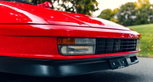
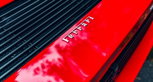
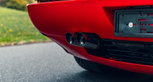
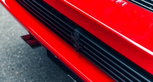
The 512 TR (“TR” standing for Testa Rossa) followed in 1991. Its 4.9-liter engine now pumped out 428 PS, and the new Bosch Motronic 2.7 also controlled ignition timing, throttle position, and other engine parameters. Externally, you can recognize it by its somewhat flatter nose, a newly shaped chin spoiler, and a trapezoidal grille in the style of the 348 tb. As on the original Testarossa, the grille remained a dummy, since the radiators sat at the sides ahead of the rear wheels. At the rear there was a flatter engine cover, an additional cooling slot, and a valance framing the four exhaust tips.
Technically, the 512 TR offered much more durable brakes, a less fragile transmission, an optimized suspension (optionally with ABS), and the lighter five-lug wheels with larger 18-inch tires. The result: sharper handling plus better safety and quality.


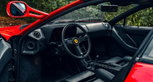
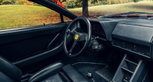
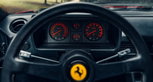
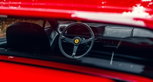
The F512 M (“M” for “Modificata”), also unveiled in Paris, in 1994, and built until 1996, stands out with fixed headlights and a modernized interior. Output rose further to 440 PS. At the rear, the last Testarossa carries two round taillights on each side, as the BB did before it, while also echoing the new 348.
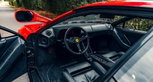
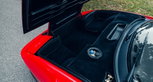
All models share lower heat radiation into the cabin compared with the 512 BB. Because the Testarossa is larger inside and out, there is a small shelf behind the seats in addition to the front trunk, and the higher roof also offers more headroom.


Which version should you buy?
The 512 TR offers the best value for money and is considered more refined than the first models. Its strengths are the improved suspension, the stronger Brembo brakes, the Motronic 2.7, the reworked electronics, and the smoother-running engine.
The F512 M stands out as the ultimate evolution, with the highest collector values, a more modern interior, and more safety technology. Equipment was also more generous and reliability higher. However, the front end with fixed rather than pop-up headlights didn’t please all fans, nor, for that matter, everyone on the Classic Driver team.
Early models, by contrast, are better suited to experienced collectors.


As a rule of thumb: a 512 TR for driving, an F512 M for collecting, and for the iconic driving experience of an ’80s sports car, go for an original, well-maintained Testarossa.
The “Monospecchio” models play a special role. From 1984 until early 1987, they were delivered with only one rearview mirror, mounted high on the driver’s-side A-pillar. Their rarity makes them especially sought after today. Ferrari officially justified the solution by citing the Italian registration rules of the day, which did not require a passenger-side mirror. At least it improved aerodynamics a little. Today, Monospecchio models typically fetch between $200,000 and just under $400,000. The exact production figure varies by source because the transition phase was gradual, with estimates of around 1,000 cars often cited.
With almost 10,000 units built in total, the trio was close to mass production by Ferrari standards. The original Testarossa accounted for 7,177 cars, the 512 TR for 2,261, and the F512 M for only 501, which explains its high prices.

How much should you pay for a Ferrari Testarossa?
Classic Trader sales data from 2021 through October 2026 show a steady to slightly rising trend, with wide variation by model, year, and history. For “classic” Testarossas (model years from the mid/late ’80s to the early ’90s), a realistic range is $135,000 to $230,000, and up to $290,000 for outstanding examples. The 512 TR typically trades higher, at roughly $230,000 to $300,000. The rare F512 M reaches $350,000 to $520,000.
After a speculative price surge from 2015 to 2018, when the best Testarossas briefly exceeded $350,000, prices have stabilized. A speculative object has become a genuine collector’s item. That makes the market more predictable for newcomers. Cars with “Classiche Red Book” certification, which confirms original specification and matching numbers, command premiums of ten to fifteen percent.


The most sought-after cars have low mileage, original condition, and a complete Ferrari service history. Color also matters: “Rosso Corsa” is the most desirable, followed by “Nero” and “Bianco.” Other colors (yellow, blue, silver) usually bring a slight discount, unless it’s a factory special paint.
Our tip: Invest in the best available example with a complete maintenance history. The extra expense pays off through higher reliability and better value appreciation.

What technical problems are known?
Drivetrain: Ferrari used a five-speed transmission throughout, slightly revised in 1988. It is very robust and requires little more than a regular clutch replacement (every 30,000 to 45,000 miles, depending on driving style). This can be combined with the timing belt change, since the engine has to come out anyway. The updated parts of the 512 TR extend service life. Regardless of condition, the gears, especially second, are hard to engage when the transmission oil is cold. The synchro rings tend to wear.
Engine: If regularly serviced, it rewards you with reliability and longevity. Prolonged idling and stop-and-go city traffic don’t agree with it, though (heat buildup). Drivers won’t enjoy those conditions anyway, because the car is very wide and offers about the worst all-around visibility imaginable.

Timing belts: A neglected drivetrain becomes extremely expensive. In addition to the annual inspection, both timing belts (one per cylinder bank) are due for replacement every three years or 18,600 miles. This requires removing the engine and costs $5,000 to $10,000, including belts, tensioners, and seals.
A snapped belt leads to repair costs of $17,000 to $35,000 or more. We therefore advise seriously reconsidering a purchase without documented timing belt replacement. Dated invoices, mileage, and the name of the specialist shop should be available and verifiable.

Water pump: On cars before 1989 it can fail prematurely; after that there was a factory update. Ask for proof of replacement. Replacing the pump requires removing the V12 and costs around $4,000.
Weak points fixed later: On the 512 TR, the brakes, transmission, differential, and the shaft between clutch and transmission input, roughly 31.5 inches long and only about 1 to 1.2 inches thick, were also strengthened. On earlier models this shaft tends to snap, especially after dragster-style launches from traffic lights.

What problems occur with age?
Missed maintenance leads to very high repair costs. Rubber hoses and A/C components age especially during long periods of storage. At over 3,500 pounds, the car wears through brakes, shock absorbers, and suspension bushings quickly. They should be checked regularly, the brakes at every second service. A pulsating brake pedal can indicate warped rotors.
Body and rust: The body consists of a combination of steel (structure), aluminum (most body panels), and composites (bumpers). The steel parts can rust, especially at the sills and around the taillights, where moisture collects. Aluminum parts are at risk of galvanic corrosion where they contact steel. Check the transitions between doors and sills, the hinges of the front hood, and the edges of the engine cover. Also watch for poorly repaired accident damage and bad paint jobs. Body panels should line up well, and the complex side members should be absolutely straight. You shouldn’t expect panel gaps like those of German mass-produced cars, though.

Side strakes: They are the strongest design feature but also a structural weak point. Moisture, road salt, and dirt collect in the strakes and the sill area behind them, usually unnoticed. This can only be reliably checked by a Ferrari specialist on a lift, if necessary with the strakes removed. A more extensive sill restoration costs about $10,000 to $21,000.
Rear window: The large laminated glass tends toward delamination with age (bubbles, clouding, layers separating). Replacement costs $3,000 to $6,000 including installation, and glass in the correct specification is only available in limited supply.

Electronics: They are a weak point; only the best-maintained cars work without faults. Test all switches and buttons. If the immobilizer or alarm system is outdated, we recommend having a specialist install a more modern, more reliable system.
US cars: Check the documentation for the recalls on the passive restraint seat belts and the steering column lock nut.


Is it worth buying a Ferrari Testarossa?
In principle yes, if you follow a few ground rules. Look for a complete service history, regular maintenance, originality, and an unmodified car. Check the cooling system, mechanicals, and original parts thoroughly, because repairs quickly get expensive.
Be realistic about parts supply as well. There are hardly any problems with the mechanicals, but many interior parts are rare. The independent parts market helps here, for example through UK-based suppliers such as eurospares.co.uk or scuderiacarparts.co.uk. Even hopeless cars are regularly broken up for the parts trade. Many body parts and the iconic five-spoke alloy wheels are no longer available from Ferrari. Michelin produces the TRX tires that fit the center-lock wheels only irregularly and in small batches.


The Testarossa is a diva. It demands attention, sometimes patience with spare parts, and deep pockets. Because it wasn’t always so desirable, some cars missed service intervals during the lean years, so rework may be necessary. Garage queens that sat unmoved for years also often need an elaborate recommissioning. High-mileage examples therefore shouldn’t be dismissed too quickly.
If you follow these basics, you’ll be happy with this Italian style icon. If you experienced the ’80s in your mid-twenties and dreamed of being able to afford one later, sentiment will play its part in the purchase too.

Add to that rarity, icon status, and stable prices, which make the Testarossa an interesting alternative to modern supercars. Above all, though, it offers the unfiltered analog driving experience of the last production Ferrari with a flat V12 and a five-speed transmission operated through the classic open gate.
Photos by Simon Gosselin for RM Sotheby's