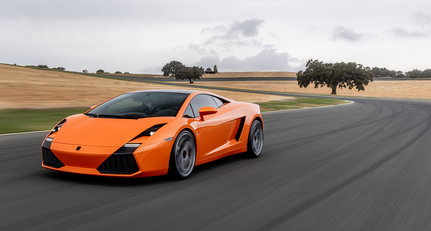


























It’s pretty rare in the automotive industry for a designer to be given the opportunity to return to their homework nearly thirty years later. Trends come and go, technology evolves, tastes differ, and above all, cars are often designed for the eras they find themselves in, meaning a 30-year reunion is more than likely going to bring up some different design elements along the way. That said, Fabrizio Giugiaro has just been handed that opportunity, and he is using it on one of the most successful supercars of the 2000s.


Freshly uncovered at the Concours at Wynn Las Vegas, a new company called CAVËN Atelier revealed HOMMAGE 26, the first project in its Designer Series. The starting point is a design Giugiaro conceived at Italdesign way back in 1998, which went on to become the Lamborghini Gallardo. That design, the same age as Classic Driver might we add, is one of purity and drama, with lines that felt as sharp as a knife upon first viewing, but over the decades have aged into a wonderfully considered work of art. Now, almost three decades later he has returned to it through GFG Style, armed with hindsight, modern technology and the freedom to try ideas that were out of reach when the original was being developed.


It is that freedom that is the whole point of the exercise, as CAVËN Atelier was founded on a simple question: what might an important car have become if its original designer had been allowed to revisit it years later, free of the commercial and industrial constraints of the day? Instead of hiring someone to reinterpret a classic, the atelier asks the person who drew it in the first place to carry on the work. It calls this Design Authorship, and the approach to the cars themselves goes by the name Respectful Evolution. Nobody is trying to restore a Gallardo to factory specification or chase headline numbers, the aim here is to see how far a great piece design can travel without losing the character that made it so great.


Giugiaro, co-founder of GFG Style, sounds like a man who has been looking forward to this for a while. “It’s an opportunity to show the world that many things can become better and better if we continue working on them with care, and in a delicate way,” he says. He calls it a beautiful challenge, because the job is to evolve an archived concept rather than start again from scratch. Some elements remain just as he drew them in 1998, particularly the front end, which bares many resemblances to the originally conceived design. Others, such as the rear design and some of the interior ideas, are completely new and contemporary.


Park it next to a standard Gallardo and you will recognise the proportions, but very little of the original bodywork is used. In fact, only five categories of parts carry over from the donor car, including the roof, side windows, windscreen, mirrors and mirror bases. Everything else is a new carbon-fibre body, complete with pop-down headlights, active aerodynamic flaps and a redesigned tail with an opening rear window above the engine bay, perfect to hear that engine howl through the rev range.

Thankfully for the keen drivers among us, the mechanical side follows the same thinking. The chassis gets new suspension with Comfort and Sport settings, upgraded brakes and 20-inch wheels. At its beating heart, Italtecnica has reworked the 5.0-litre naturally aspirated V10, which now revs to 8,500 rpm and is paired with a manual gearbox. If it's the horsepower figures you're scouring this article for, its figure is 540 hp in the GT version and 560 hp in the more aggressive Performance model. Those figures will not win many arguments in the era of thousand-horsepower hypercars, and they are not meant to, as the brief is a driver’s car that is equally happy on a long journey or a demanding road, and a naturally aspirated V10 with a manual gearbox and a carefully developed chassis sounds like a sensible way to get there.
Manual gearboxes have become the thing collectors hunt for, and a V10 that screams all the way to 8,500 rpm with a gear lever to shift through will appeal to those seeking the most engaging drive, but it also fits the atelier’s own belief that the experience of driving should remain central to the appeal of a significant sports car.


Even better news for collectors is the exclusivity of the HOMMAGE 26, with just 25 cars being produced, and the donor-car approach gives the project a nice sense of continuity, since every new car carries a genuine Gallardo underneath. Each one starts life as a first-generation donor car, either supplied by its future owner or sourced by CAVËN Atelier, with pricing starting at €900,000, excluding the donor of course. If you’re interested, it gets even sweeter, too, as by entering into CAVËN Atelier’s world, you’ll receive priority access to later chapters of the Designer Series, with projects are already in development and the next is expected in 2027. Each will be built around a different designer revisiting a significant car from the late twentieth or early twenty-first century, so collectors could eventually put together a garage organised by designer rather than by manufacturer or model year. The quesion is, what designer and car will we see reinterpreted next?