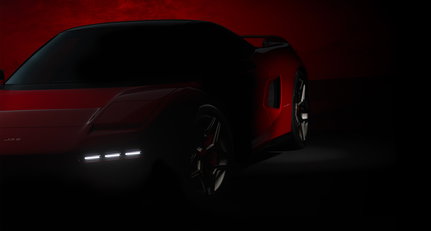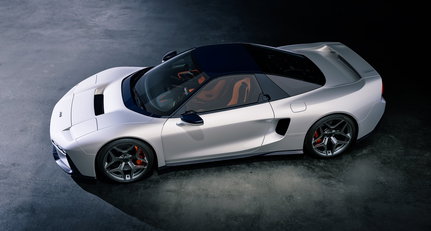









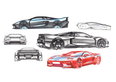



Named after the Japanese word for “rebirth,” the Tensei goes beyond the familiar restomod formula. Built on carefully selected early-1990s NSX donor cars, it features an entirely new carbon-fibre body and will be produced in an ultra-limited series at JAS Motorsport’s atelier in Arluno, with bespoke commissions handled by Pininfarina in Cambiano. For Pininfarina, the project carries historical weight. “JAS wanted to celebrate the NSX, a car that redefined supercars in the 1990s with its lightweight design, precision and everyday usability,” explains exterior design chief Dimitri Vicedomini. “But they wanted to do it in a meaningful way, which led them to collaborate with Pininfarina, a partner with deep historical ties to Honda.”
Those ties stretch back to 1984 and the HP-X concept — a mid-engined Honda vision that, in many ways, finds its modern counterpart in the Tensei. The new car, however, takes a far more assertive stance. With a longer wheelbase, wider track, lower ride height and reduced rear overhang, its proportions have been fundamentally reworked.


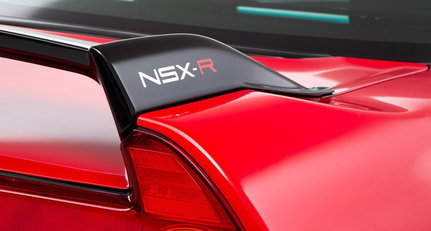
“The proportions are the most important thing for a designer,” Vicedomini continues. “Once we understood the extent of the possible changes, the car almost designed itself. There was no need to create illusions.”Design director Tigran Lalayan adds: “These changes completely transformed the road presence of the car. We emphasized the greater width through pronounced rear shoulders and flared fenders, creating triangular gestures in plan view — a signature often found in Pininfarina designs.” Despite the transformation, the Tensei remains visually anchored to its origins. Hallmark features such as the pop-up headlights, rectangular side intakes and integrated rear wing are retained and reinterpreted, ensuring the car remains instantly recognisable while adopting a more sculptural, contemporary language.


Inside, the philosophy of the original NSX lives on: clarity, ergonomics and a direct connection between car and driver, now elevated through more refined materials and execution. Beneath the carbon body, a naturally aspirated V6 — inspired by the original engine architecture — is paired with a six-speed manual gearbox, underlining the project’s commitment to analogue engagement. More than a tribute, the Tensei feels like a full-circle moment — a project that reconnects Pininfarina’s early vision for a mid-engined Honda with a modern interpretation. The result is a car that doesn’t simply look back, but confidently carries an icon into the present.