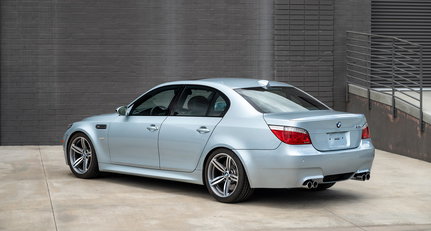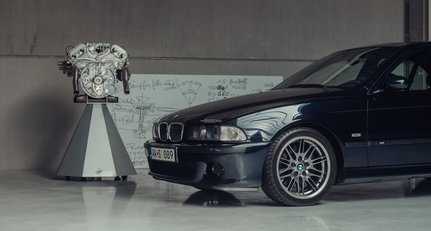



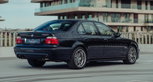
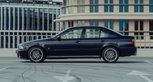
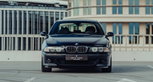
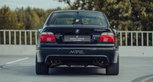
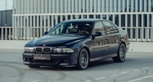

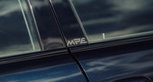
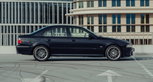
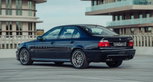
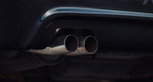
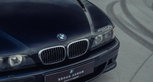
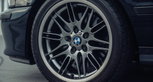
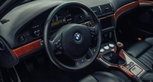


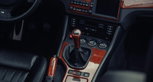
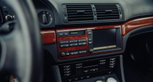
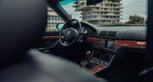







Ask fans to name the greatest BMW M5 of all time and many will say the E39. The Bavarian super saloon of the late 1990s and early 2000s blends driving dynamics and everyday comfort to perfection, and its 4.9-litre, 400 hp naturally aspirated V8 still sets purists' pulses racing, not least because the S62 engine was paired exclusively with a six-speed manual gearbox. The crowning touch is its restrained design: the sports saloon never felt the need to flaunt its power, relying instead on understatement in its purest form.
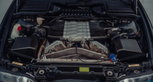
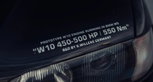
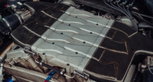
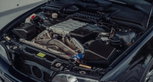
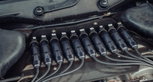
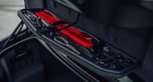
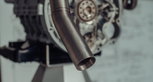
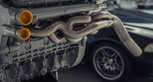
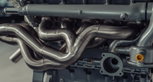
At its Zoute Sale in Knokke-Heist, Belgium, Broad Arrow is offering an extraordinary example that takes understatement to the extreme. Instead of BMW's own V8, the engine bay houses a prototype W10 that Ferdinand Piëch, then chairman of Volkswagen's board of management, commissioned in the late 1990s and had developed outside VW's own development department. Some 2 million euros is said to have been spent on the engine project.


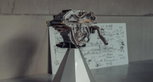
Three of these experimental engines were built, but only one ever made it into a car. A second engine will be sold alongside the VW boss's test mule on 9 October, and the auction house estimates the M5 with Volkswagen DNA, together with the spare engine, at 250,000 to 350,000 euros.
So why did Ferdinand Piëch, one of the defining figures in Volkswagen Group history and the mastermind behind the Bugatti revival, Audi's quattro all-wheel drive and the ultra-efficient VW XL1, commission such a wild cross between Volkswagen and BMW components? Partly because, at the end of the 1990s, none of the group's brands offered a credible rival to the BMW M5 or the AMG version of the Mercedes E-Class. The first Audi RS 6 would not arrive until 2002.


What the automotive giant did have, however, was its VR engine family, whose concept of closely spaced cylinder banks still had plenty of untapped potential. That line of development culminated in 2005 in the Bugatti Veyron's eight-litre W16 with more than 1,000 hp. The W10 from the M5 prototype is one of the group's early W engines, and a fascinating reminder of the period when Piëch was pushing this engine concept, bordering on the gigantic, towards production.
The aluminium engine produced 480 hp, delivered through a six-speed manual gearbox. Although the two engines were almost identical in displacement, the ten-cylinder, which never reached production, had a hefty 80 hp more than the BMW unit. And the S62 was hardly short of temper itself. That alone made the prototype no car for beginners, and the engineers made it even more demanding by switching off the traction and stability control as well as the ABS. Their aim was to get the most unfiltered impression possible of the car's handling and the engine's character during testing. According to the auction house, the W10 is exceptionally smooth, yet noticeably quicker to respond than the BMW engine.


Fortunately, the man behind the wheel was no novice: none other than the project's initiator, Ferdinand Piëch himself. According to Sabine Willeke, one of the engineers involved, this towering figure of the German car industry, as influential a manager as he was an engineer, drove the car on temporary plates for quite some time while it was being tested. Its current owner, who is from Slovakia, acquired it around ten years ago through contacts in the engineering world. Remarkably, the car is registered today and is still driven by its owner. Last year it underwent an extensive service, largely using components from the Volkswagen parts bin. Because it differs so substantially from the donor car, however, it has no EC Certificate of Conformity.


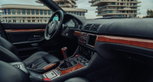
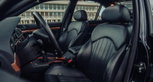
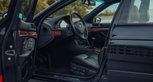
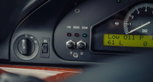
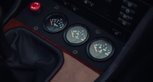
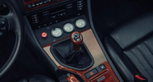
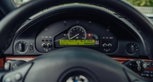
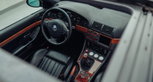
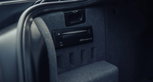
How far the car has travelled in total cannot be read off the instruments. The E39 M5's classic round dials have been replaced by a spartan panel with just an analogue rev counter, while road speed and fault messages are shown digitally. With a prototype this rare, the mileage hardly matters anyway. What counts is that it is a drivable witness to an era when German carmakers knew almost no limits when it came to engines.
 Knokke-Heist, 9 Oct