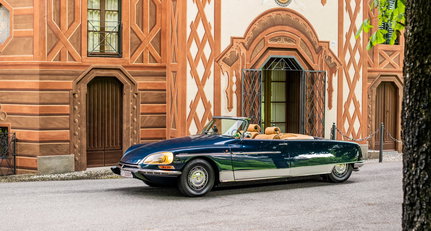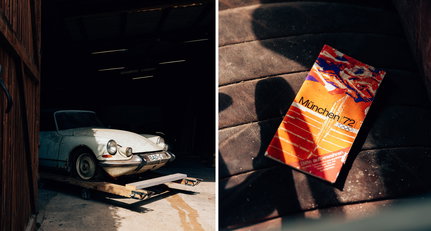

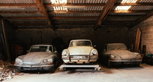














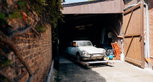
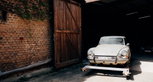
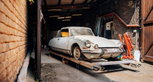
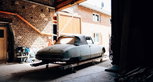





Finding an unrestored DS convertible is always something special, after all the Parisian coachbuilder Henri Chapron built just 1,365 examples of the DS and ID Cabriolet Usine, the factory convertible (called "Werkscabrio" in Germany), between 1960 and 1971. Even beyond its production run, the convertible was not only the most expensive but also the most prestigious member of the D model family, which is why collectors prized it from the outset and it was restored far more often than the roughly 1.5 million saloons and Breaks built in total.
Unlike Chapron's sometimes acquired-taste in-house creations on the DS, the lines of this open 2+2 come from Flaminio Bertoni, the French carmaker's genius head of design, whose sculptural goddess makes his original career as a sculptor obvious at a glance. Founded in 1919 and based in Levallois-Perret north-west of Paris, the long-established company was hired by the double-chevron marque purely to build the convertible version of their range's flagship.


The car that Fred Hoffmann, a Citroën enthusiast from the Rhineland, roused from its 53-year slumber last December is remarkable in many ways and stands out clearly from other DS factory convertibles, which in restored condition usually change hands for around 200,000 euros. For one thing, this DS 19 with the semi-automatic gearbox carries a saloon chassis number rather than a convertible one. That sounds odd at first, but it did happen now and then with factory convertibles built for certain export markets.


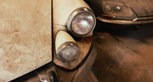
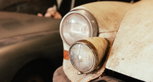
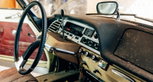
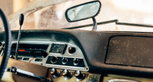
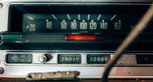
When the car was delivered to its first German owner in January 1963, as one of the first convertibles with the second front end, complete with the characteristic horns, and the new dashboard with its wide-band speedometer, the DS was still a genuine exotic in West Germany. With 12,617 cars sold that year, the Parisian carmaker held a market share of just under one percent in the country.
Even the saloon, for all its international fame, was a rare sight on the road. Its unveiling at the Paris Motor Show in October 1955 struck some observers as the most important media event since the end of the Second World War, yet for the largely conservative buyers of post-war Germany the DS was simply too avant-garde, with its unfamiliar aero styling and its innovative but quirky and, for the time, complex engineering. On top of that, barely two decades after the war, lingering prejudices against French products still played their part.


At 20,000 Deutschmarks new, the DS Cabriolet was expensive in 1963, roughly on a par with a Mercedes Pagoda. Unlike the Mercedes, though, the Citroën was built for unhurried gliding and relied on a four-cylinder whose basic design went back to a pre-war unit rather than a smooth, torquey straight-six, another reason for the small numbers east of the Rhine.
The open-top goddess lost value steeply in its early life. Three years after its first delivery it was sitting as a young used car at a Karlsruhe Citroën dealership, where the family that would later send it into its decades-long slumber in 1972 bought it for 6,500 marks. During the hydropneumatic era, Citroën drivers tended to drive their cars out of genuine conviction, whereas these buyers from Baden were more likely convertible fans without much brand loyalty. As the story goes, they turned up to collect their new dream car in October 1966 in their own rare VW Hebmüller cabriolet.


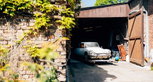
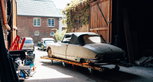
In the years that followed the car was used regularly, including for skiing holidays, with the still-young children perched on the tight rear bench of the 2+2. A few years later the family started building a villa in Baden-Baden, which was never finished because the necessary permits were missing. Part of it was a garage that was likewise not yet ready in 1972, so the car had to be manoeuvred inside with the help of an improvised wooden scaffold. The owners clearly had no further use for the French rarity, but rather than sell it, they took it off the road and put it into storage. Only a full 53 years later did the first photos of the barn find surface in an online forum, after the elderly owner's daughter had advertised the car for sale.
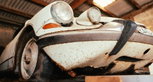
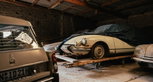
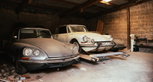
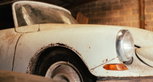
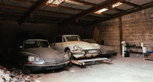
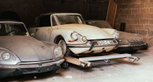
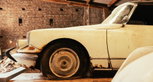
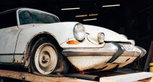
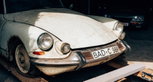
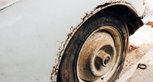
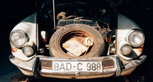
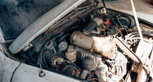
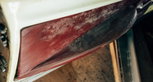
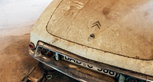
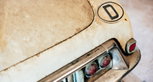
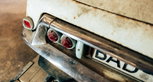
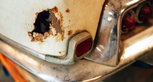
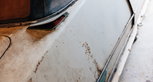
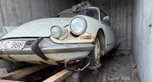
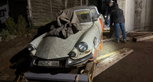
That the goddess's crypt had never been finished, and so was sadly not watertight, was obvious from the pictures. The moisture creeping in had taken a heavy toll over the decades, plain even from a distance in the fist-sized holes in the front apron and the rusted-through sills. The brown plague is so far advanced that the car almost threatens to fall apart, which is why it still rests on a supporting timber structure even after its recovery.


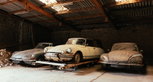
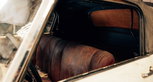
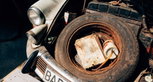
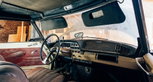
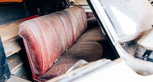
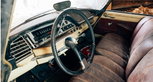
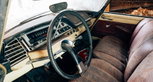
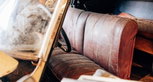
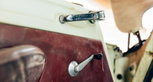
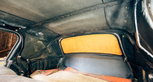
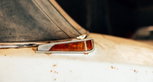
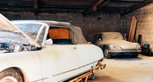
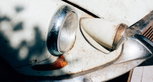
At the same time the badly ravaged goddess has a charm all of its own. The heavily patinated original paint in blanc carrare, the dusty burgundy leather and the verdigris-covered brightwork make it look like an artefact from a sunken temple. The original DIN number plate, still wearing the roadworthiness sticker that expired in 1972, together with a brochure found in the interior from the 1972 Munich Summer Olympics that were overshadowed by terrorist attacks, finally turn the garage find into a genuine time capsule.


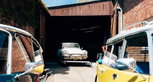
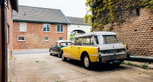
Where even seasoned classic-car enthusiasts would probably have thrown their hands up in horror at the condition, Fred Hoffmann saw a unique opportunity straight away. He contacted the selling family directly and quickly struck a deal. "It's the only DS Cabriolet I could ever have afforded," he says. While most car fans his age have a soft spot for sporty young classics from Germany, his passion for the double-chevron marque was in his cradle. The 33-year-old grew up on the back seat of his father's 1969 DS 21 Familiale, his father having driven hydropneumatic Citroëns for 40 years. Hoffmann's collection holds more old French metal too, among them a CX Break that serves as his daily driver, the endearingly quirky Ami 6, an early 2CV and the "yellow submarine", a bright-yellow ID 20 Familiale that was badly hit by flooding, but which he lovingly brought back to life.


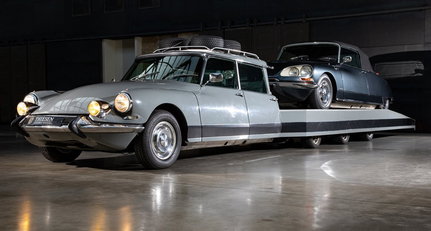
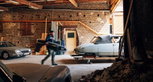
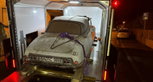
A few days after the verbal deal he set off for Baden-Baden with three helpers, a VW Crafter loaded with tools, materials and a generator, plus a tow car and trailer. Before the fully equipped recovery party arrived, the sellers had spent three weeks partly levelling and clearing the garden and having a shed torn down, since otherwise there would have been no way to reach the overgrown garage at all.


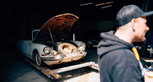
Once the tomb had been aired out, the real backbreaking work began for the four, channelling their inner Indiana Jones. They had to lift the car with four jacks to get it out of the garage, at times lying underneath the fragile find, which understandably made for an uneasy feeling. "Damn it, Fred, what have you gone and bought this time," the enthusiast thought to himself at first. After that the roughly 1.3-tonne convertible still had to be hauled up a 35-degree slope on wooden rollers.


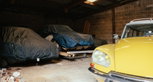
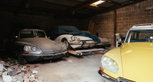
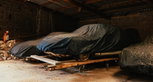
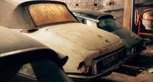
The DS now sits, surrounded by more dusty goddesses, in the barn on the farm belonging to Fred Hoffmann's brother. The real mammoth task still lies ahead of the passionate Citroënist. He wants to restore the car so that it is fully roadworthy while keeping as much original substance as possible. "I don't think it'll end up as a bling-bling convertible in the end. The car should keep telling its story," he says in his thick Rhineland accent. In his view there are already enough fully restored DS convertibles out there. At least, as a trained coachbuilder and classic-car restorer, he is well equipped for the job.


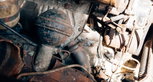
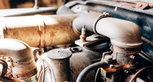
And there's no pressure either, since he has no fixed timetable for finishing it. For now he is also still unsure how original the drivetrain should ultimately be. The original 1.9-litre four-cylinder is probably beyond saving anyway, so Hoffmann is thinking about fitting the more powerful and smoother DS 21 engine paired with the gently shifting semi-automatic. "It's going to be our car," says the collector. Even though he has already had several lucrative offers for the relic, one thing is certain: reviving the DS 19 Cabriolet will be his project. "Everything has its price, but not everything has a seller," he says with a grin.
Photos: Jasper Schwering for Classic Driver © 2026 / Fred Hoffmann