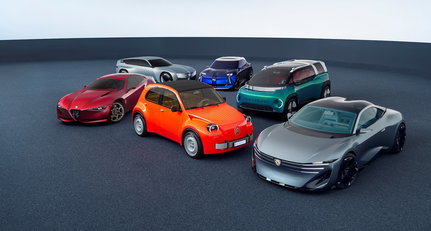













This year’s Paris Motor Show (12 to 18 October) is a nostalgic fireworks display of new cars, especially when it comes to the concept cars from the French manufacturers. While German premium brands such as Mercedes and BMW continue to focus their design efforts on China and the US, Peugeot, Citroën, Renault and Alpine are concentrating on their European home market and going all in on retro. They are spurred on by the success of the Renault 5, which has sparked a wave of enthusiasm and is now Europe’s best-selling small electric car. The Italians, once retro pioneers with the Fiat 500, are also embracing the theme more and more under the Stellantis umbrella.
By reinterpreting familiar classics for the modern age, they are playing to a strength that sets them apart from their fast-growing Chinese rivals: a rich heritage that makes brands appealing and, above all, likeable. Customers don’t even need to remember the originals from their youth, as Gen Z and millennials are just as easily seduced by the emotionally charged aesthetic. While EVs with deliberately futuristic styling tend to meet with resistance in Europe, familiar design is one of the most effective ways of easing people’s reservations about battery electric cars. And there is another trend to be seen in Paris: SUVs, which have dominated new car launches for more than a decade, appear to be losing ground, while coupés, MPVs and shooting brakes are making a comeback and pointing the way to the future at the same time.


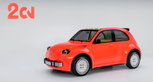
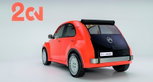
Citroën 2CV Concept
For a long time, Citroën resisted the idea of a modern 2CV, arguing that the brand stood for the avant-garde and that nostalgic design didn’t fit its philosophy. Given the huge success of Renault’s electric retro small cars, the 5, the 4 and the Twingo, the Stellantis brand appears to have had a change of heart. It would have been a missed opportunity not to capitalise on the fame of France’s most internationally known car. The concept unveiled in Paris draws not only on some of the original’s signature details but also on a cartoonish cuteness. At 3.76 metres long, the study is even two centimetres shorter than the original of 1948. Including all variants, more than five million 2CVs were built until 1990. The production version is due on the market at the end of 2028, where it will take on the Twingo in the city car segment. With a target price of around 15,000 euros, it is likely to be noticeably cheaper too. Just like in the old days, there is also a van: Citroën is showing the 2CV Fourgonnette Concept alongside it, although a production version has yet to be confirmed.


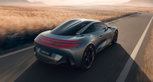
Peugeot RCZ Vision
When it comes to causing a stir with spectacular concept cars that ultimately never reach production, Peugeot is a true specialist. Especially where sporty coupés and roadsters are concerned, the chances of seeing them in a Peugeot showroom in some form or other have been close to zero in recent years. Even though tens of thousands of enthusiastic potential buyers signed a petition for a production version of the 2018 e-Legend, Peugeot decided against it. The RCZ Vision may well have better prospects, as the brand wants to strike a much more emotional note in future, and a successor to the RCZ built from 2009 to 2015 would fit that strategy perfectly. The study inherits its predecessor’s basic shape, including the signature double-bubble roof, while also showcasing Peugeot’s new “Feline Future” design language. For now, the figures are anything but production-ready: Peugeot quotes a WLTP range of up to 600 kilometres for the 500 hp electric four-seater with its solid-state battery, and a charging time of less than ten minutes from 10 to 80 per cent.


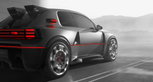
Peugeot E-T16
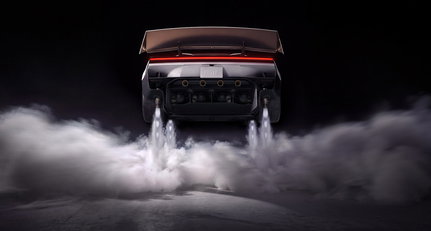
Peugeot has announced the next generation of its core model, the 208, for next year. To tease its design, the lion brand is building a bridge between its motorsport heritage and the future. The designers have combined the lines of the 2025 Polygon concept with the brutal widebody elements of the Peugeot 205 T16, the Group B icon that dominated the most spectacular era of the World Rally Championship, winning the titles in 1985 and 1986. The matt Winchester Grey paintwork with red accents and the yellow headlights pay tribute to the homologation special, of which only 200 were built. While the original’s 1.8-litre turbocharged four-cylinder produced 200 hp, the E-T16 has three electric motors, one on the front axle and two on the rear. Together they deliver 816 hp and propel the small car from 0 to 100 km/h in 2.5 seconds. 300 km/h is said to arrive after just 16 seconds, and thanks to 800-volt technology, the 85 kWh battery should charge quickly. As on its historic predecessor, the entire rear section tilts up. Inside, the rectangular “Hypersquare” replaces a conventional steering wheel. What looks like concept-car gimmickry is set to reach production with the next 208, thanks to steer-by-wire technology.


Alfa Romeo Cuorerosso
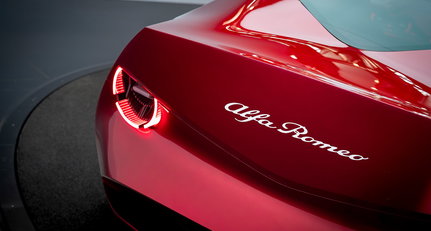
Alfa Romeo’s concepts make it onto the road surprisingly often, just think of the 8C, the 4C or the Brera. So it is no surprise that the Cuorerosso concept, unveiled by the Italians in Paris on the eve of the show, is attracting so much attention. Its format and front end are reminiscent of the Giulia: at 4.70 metres, the four-door coupé plays in the same segment, although the triangular headlights flanking the Scudetto are slimmer. Finished in “Liquid Ink Red”, the study references the brand’s heritage with golden telephone-dial wheels and a cockpit modelled on the 33 Stradale, yet deliberately avoids neo-retro. Instead, it embodies the new “Bellezza Necessaria” design language, which is already generating excitement among Alfisti online. Many are hoping for a new Giulia in this guise, especially as Alfa’s multi-energy approach means the V6 is able to live on.


Alpine A310 Vision
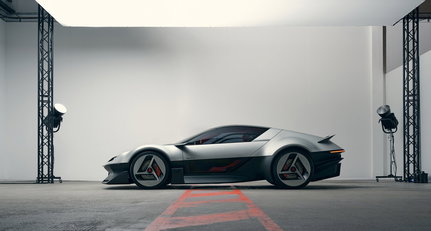
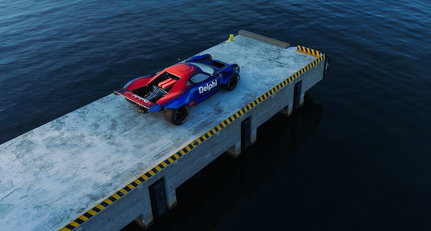
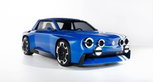
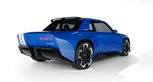
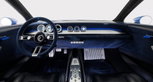
Under the name “Dream Garage”, Alpine’s electric model offensive is set to grow rapidly by 2030. From 2028, a big brother to the A110 will top off the range of the Dieppe-based sports car maker. It will be called A310 and borrow a few cues from the original. To mark the 50th birthday of the A310 V6 and the 55th anniversary of the original version from 1971, the Renault subsidiary has unveiled the spectacular A310 Vision concept at the Paris show. It adopts the striking widebody look of the optional Pack GT from the 1980s, combines it with cutting-edge Formula 1 aerodynamics and uses a pop-down effect to make the headlights emerge from the front only when the car is started. Enthusiasts shouldn’t get too excited or start saving just yet, though: while concepts usually tease upcoming production cars, Alpine stresses that this retro-futuristic coupé is not a preview of the forthcoming 2028 model. A cruel game to play with the fans, who must now fervently hope that the French are bluffing.


Renault 8 Gordini Concept
Renault really kicked off the retro wave in France and seems determined to keep riding it. The Renault 8 Gordini Concept, one of the undisputed stars of the brand’s stand this year despite being unveiled a few weeks earlier, pays tribute to the dream car of French boy racers in the 1960s. Tuned by the Italian-born engine specialist Amédée Gordini, the compact saloons ran rings around far more powerful rivals on rally stages and, thanks to their rear-biased layout, were a thrill to drive. In the reinterpretation, an electric motor naturally replaces the small four-cylinder in the rear. With 270 hp, it gives the two-seater, inspired by the café racer aesthetic of the custom motorcycle scene, a serious turn of speed. While the original always came with four doors, the concept is a two-door coupé.


Renault E-Space Concept
Is the SUV trend drawing to a close? Renault’s study of an MPV with three rows of seats, essentially a flexible living room on wheels, could be seen as a sign that it is. With the first Espace in 1984, the French created the European MPV segment and a design classic at the same time: with its straight, angular lines and forward-sloping front, it was often compared to the TGV, the technological flagship of the Grande Nation at the time. After Renault let the current generation of the Espace mutate into a humdrum SUV, its designers have now translated the ancestor into the modern age. Admittedly, the concept looks considerably more rounded by comparison. In the light-filled cabin of the 4.70-metre MPV, six individual seats await passengers on a completely flat floor. The two second-row seats swivel through 180 degrees to form a group of four with the third row, which Renault itself calls a “carré TGV”, after the facing seats on the high-speed train. Meanwhile, the driver and front passenger have the huge OpenR Panorama screen in front of them. Renault has not released any technical details of the powertrain, and there are currently no plans for a production version. But as spacious business shuttles are enjoying great popularity in China, the E-Space Concept could well be read as a harbinger of an MPV comeback in Europe too.
Photos: Stellantis / Renault Group