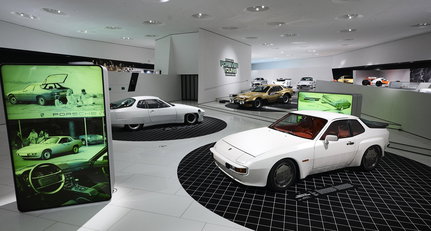




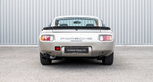
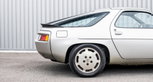
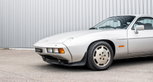

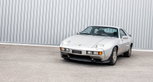


The 1970s were a challenging era for Porsche. The sports car manufacturer was hit hard by the aftermath of the oil crisis, while increasingly stringent emissions and safety regulations, combined with a growing demand for luxury, made life difficult in its primary US market. Purebred sports cars were no longer the crowd-pleasers they used to be; by the middle of the decade, sales of the iconic 911 had slumped significantly. Furthermore, the carmaker struggled to make its air-cooled flat-six engines comply with American environmental standards. Consequently, Porsche management had decided earlier in the decade to completely realign its model strategy, commissioning the development of a long-distance, high-end luxury coupe, perfectly tailored to the taste of American customers and road conditions in the United States.
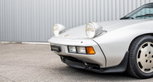
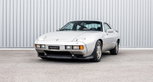
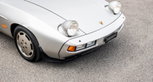
The resulting Porsche 928 made its debut in March 1977 at the Geneva Motor Show. It brought the transaxle concept, which had been introduced two years prior with the entry-level 924 and represented a revolution for the brand, into the premium Gran Turismo segment. Instead of an air-cooled flat-six hanging over the rear axle, a water-cooled V8 now hummed beneath the front hood. This mechanical layout was wrapped in an unusually futuristic silhouette penned by Wolfgang Möbius under the direction of chief designer Anatole Lapine. Despite its distinctive pop-up headlights and novel proportions, the new flagship was instantly recognizable as a true Porsche.


Porsche aimed to conquer the Gran Turismo market
Compared to the 911, the newcomer was tuned for significantly more comfort, offered a roomier cabin, and was tailored for high-speed Autobahn cruising rather than tackling tight Alpine passes. The 928 was designed to challenge not only domestic rivals like the Mercedes-Benz SLC and the BMW 6 Series (E24), but also more exotic offerings such as the Jaguar XJS, the Ferrari 400, and the Maserati Khamsin.
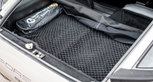
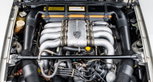
With 240 hp, the entirely newly developed 4.5-litre all-aluminium V8 packed plenty of punch. At the same time, the powerplant displayed excellent manners and a class-typical fuel consumption averaging between 15 and 18 liters per 100 kilometers. This, combined with a reasonably sized luggage compartment beneath its characteristic glass dome, made the 928 an exceptionally pleasant long-distance companion.
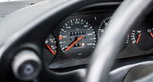
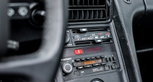
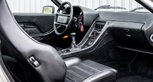
However, a true highlight was the modern interior, particularly the clearly structured cockpit, which was years ahead of its time and stood as a prime example of ergonomics. The centerpiece was an adjustable instrument binnacle that tilted together with the steering wheel, ensuring optimal readability at all times, which was a unique feature for a production vehicle back then. The perfectly legible round dials and distinctive, vertically stacked switch clusters required almost zero adjustment time. The dashboard was complemented by elegantly sporty seats offering excellent lateral support, draped in eye-catching fabrics, including the famous, psychedelic "Pascha" racing flag-pattern.


A far cry from the intended 911 succession
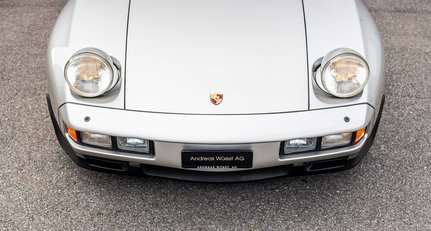
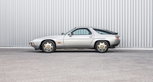
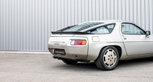
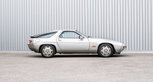
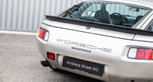
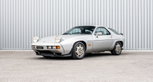
Yet despite its numerous qualities, overwhelming commercial success remained elusive. "The 928 was originally conceived as a successor to the 911, but it was never truly accepted by the buyers. Key customers remained sceptical. This happened even though in 1978, it became the first, and so far only, sports car ever to be crowned European Car of the Year," notes Swiss specialist dealer Andreas Wüest, who currently offers the 1980 928 S pictured in this article.
Nonetheless, the model endured for an impressive 18 years in the Swabian manufacturer's lineup, undergoing several extensive updates during its lifecycle. The initial model began to evolve with the 928 S introduced for the 1980 model year, which saw its output grow to 300 hp thanks to a displacement increase of roughly 0.2 liters, complemented by subtle aerodynamic spoilers and new wheels.
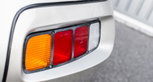
By the time the 928 S4 arrived in 1987, the visual and technical revisions were so comprehensive that it could almost be considered a completely new car. The aluminium V8 was upgraded with 32-valve technology and bored out to five liters, pushing output to 320 hp. Simultaneously, the styling was modernized to fit the zeitgeist, becoming even smoother. The rear lights, for instance, were now integrated flush into the rear apron.


The GTS reaches impressive 275 km/h
In 1992, the model line reached its zenith with the introduction of the 928 GTS. The 32-valve engine known from the S4 was enlarged to 5.4 liters and, thanks to a new crankshaft and higher compression, produced a potent 350 hp. To rein in this power, an upgraded Brembo braking system with four-piston calipers was installed, which was a vital investment considering the car's impressive top speed of 275 km/h. The sprint from zero to 100 km/h took just 5.7 seconds.
"In terms of driving dynamics, the biggest evolutionary leap was from the S to the S4. Any other manufacturer would have changed the model designation entirely or called it something like a 928.2 after such massive updates. To me, the most harmonious variants are either the original version from the first three production years or the final two years of the GTS. But of course, that remains a matter of personal taste," Andreas Wüest points out.
Ironically, the very car that was meant to redefine the Zuffenhausen brand in the late seventies and replace its greatest icon was widely shunned by Porsche purists even after its production run ended. Although prices have been rising in recent years, a 911 from the same era remains significantly more coveted and expensive, even though its larger Gran Turismo sibling arguably offers more car for the money. Ultimately, choosing the classic Porsche experience with an air-cooled flat-six in the back over the 928 is rarely a purely objective decision, despite the hefty price disparity. Character-wise, the two cars inhabit entirely different worlds.


Bargain hunters will not find happiness with a 928
When dealing with supposed bargains, however, the Swiss expert urges caution, especially if buyers lack a substantial financial cushion. Due to its complex mechanical layout, extensive equipment, and advanced onboard electronics - the 928 featured cruise control and air conditioning from the very start, and a tire pressure monitoring system was added for the 1989 model year — it is no secret that running costs for Porsche's former flagship are significantly higher than those of a comparable G-series or 964.
Andreas Wüest confirms this reality: "The assumption that the maintenance budget is higher than that of a 911 is fundamentally correct. For cheaply advertised cars priced between 15,000 and 30,000 euros, it is not uncommon for the initial repair bills to equal the purchase price." Compounding the issue is a parts supply that can be problematic in places, making the 911 a much more stress-free classic to own in comparison.

Everything stands and falls with the timing belt
Anyone contemplating 928 ownership must be fully aware of the model's specific weak points, as these can quickly result in catastrophic expenses. On the aluminium V8, the timing belt serves as literal life insurance for the engine and should always be replaced alongside the water pump and tensioner pulleys. Adhering to maintenance schedules is paramount here: the recommended interval is six years or 80,000 kilometers. Extended periods of storage with low mileage should never be taken as a free pass, as rubber degrades over time regardless of distance driven. Furthermore, the ignition's vacuum lines require close inspection, as they can draw unmetered air with age, leading to fatal long-term consequences for the powerplant.
For models equipped with an automatic transmission, a design-related pitfall awaits: the so-called flexplate between the engine and the gearbox can warp over the years due to continuous pressure exerted by the transaxle shaft. This increasingly stresses the crankshaft thrust bearing, which in the worst-case scenario ends in total engine failure. "Given how 928s are used today, this issue is no longer a frequent occurrence. However, it is vital to pay attention to any vibrations and have the system inspected immediately if anything feels unusual," says Wüest.


The gearboxes themselves are considered robust
The sophisticated Weissach rear axle also demands close attention. Its rubber bushings, which enable passive rear-wheel steering and ensure stable, self-correcting handling, harden with age and lose their efficacy. Worn bushings manifest as unstable handling and a vague sense of straight-line stability. Because of the labor-intensive disassembly required, fixing them is a costly affair that must be verified when inspecting a potential purchase.
Overall, however, the mechanical components of the 928 are solid. This applies equally to the automatic gearboxes, which feature either three or four speeds depending on the version and were sourced from Mercedes-Benz. The five-speed manual gearbox is also highly durable; its typical weak spot is limited to the hydraulic clutch actuation, where the master and slave cylinders can wear out over time.
A literal "pot of spaghetti" for the faint of heart
The true Achilles' heel of the model lies within its electrical system. While the array of electronic features was once celebrated as proof of the vehicle's cutting-edge modernity, it can cause severe headaches today. Insulated copper wires grow brittle, solder joints fail, and relays and fuses give up the ghost. The main fuse box, affectionately yet accurately dubbed the "spaghetti pot" within the enthusiast community, is a notorious trouble spot.
"When it comes to the availability of new spare parts, the 928 lags noticeably behind its 911 sibling," Andreas Wüest notes. Additionally, the 928 utilizes a multitude of proprietary connectors that become brittle over time and can rarely be disconnected without breaking, adding another layer of frustration to the search for replacements. The advanced interior has also not been spared from the passage of time; dashboards are prone to cracking, while headliners frequently lose their shape and sag.


The rear glass dome is prone to leaks
From a bodywork perspective, Zuffenhausen's Gran Turismo proves to be rather forgiving, as the doors, front fenders, and hood are made of aluminium, the aprons are plastic, and the remaining steel body shell is fully galvanized. Nevertheless, a meticulous inspection is mandatory, as vulnerabilities exist here too. The seals on the signature glass dome tend to shrink over the years, leaving gaps that allow moisture and exhaust fumes to seep into the cabin. Furthermore, the adhesive bonding of the rear window frame is equally prone to degradation, making a thorough look beneath the trunk carpets and into the side pockets behind the rear wheel arches an absolute necessity.
Body rust is primarily found on poorly executed repairs from past accidents. "The 928 was exceptionally well-protected against rust and featured a galvanized body. On the bodywork front, you should focus much more on aging plastic components and substandard repairs," Wüest explains. He adds that a devastating backlog of deferred maintenance and repairs is common among many examples, because past upkeep costs were often entirely disproportionate to the car's low used-market value at the time. Consequently, meticulously maintained examples are rare.


The undervalued Gran Turismo is catching up
Porsche built slightly more than 61,000 examples of the 928 between 1977 and 1995, which was a modest figure compared to the 911, and this should benefit the model's long-term market value. While Zuffenhausen's big grand tourer spent decades alongside its four-cylinder transaxle siblings, the 924 and 944, as well as the Boxster as one of the cheapest entry points into Porsche ownership, the tide has turned drastically.
The original 928 and the 928 S have made significant gains in recent years. Well-maintained examples with comprehensive documentation now start around 30,000 euros, catching up rapidly, though restoration projects can still be found for under 15,000 euros. The price level for the S4 is still slightly higher but not dramatically so, as solid cars command between 30,000 and 45,000 euros, with overall condition and service history remaining the deciding factors. "Early series cars have caught up in price, whereas the S4 marketplace has largely stagnated," Andreas Wüest explains.
Things become way more expensive with the GT, and even more so with the GTS. For what was once the most powerful production Porsche of its era, which made a serious statement in 1992 with 350 hp and 500 Nm of torque, buyers must now budget between 55,000 and 90,000 euros for an example in very good condition. Only 2,831 GTS units were ever built, and the rare manual variants, of which just 667 examples rolled off the assembly line, command a significant premium.


The Club Sport plays in a league of its own
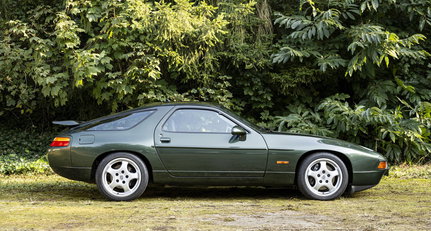
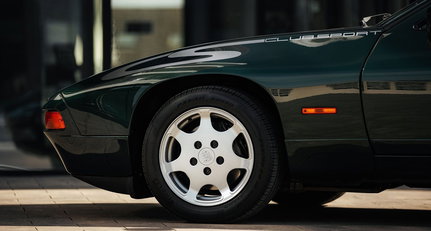
An absolute anomaly among 928s is the 1988 S4 Club Sport (CS). Porsche put the heavy grand tourer on a radical diet, shaving off roughly 120 kilograms. Sound deadening, electric seat adjustment, and other luxurious amenities were stripped out. In their place came manual sports seats, a limited-slip differential, a 20 mm lower ride height, and wider magnesium wheels. The result was the most engaging and driver-focused 928 ever built. Unsurprisingly, it is also the rarest variant. Of the 27 units produced, including prototypes, only 17 customer cars were ultimately delivered. Such rarities operate in a pricing league of their own today, occasionally trading hands at auctions for well over 200,000 euros.

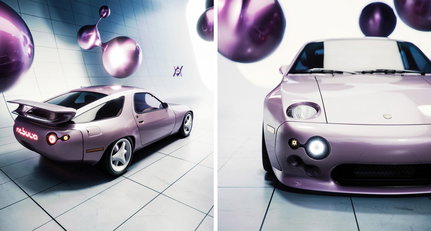
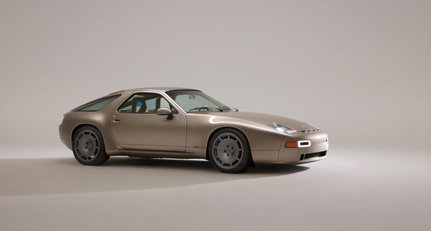
For those looking to buy a 928, prioritizing originality is almost always the safest bet. While contemporary modifications by tuners like Koenig or Strosek have their own dedicated cult following and fetch high prices if preserved in period-correct condition, an unmodified, factory-standard state remains the more value-stable choice for the classic collector market.
And speaking of originality: anyone opting for a 928 GTS should be aware of a quirky footnote in automotive history caused by its substantial width of 1,890 millimeters. At the time, Porsche had to explicitly warn owners that transporting the car on European motorail trains was impossible due to its muscular proportions. The wide flagship simply had too much hip for the narrow train carriages, which would have resulted in severe damage to the rear tires. Although the contemporary Mercedes-Benz S-Class (W140) suffered from the exact same limitation, it serves as proof of just what an imposing and exceptional machine the 928 was in its ultimate form.
Photos: Rémi Dargegen for Andreas Wüest AG