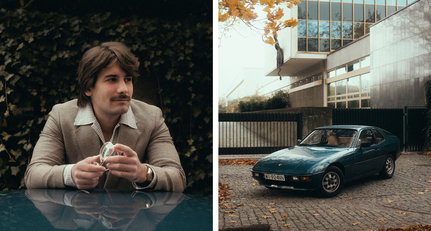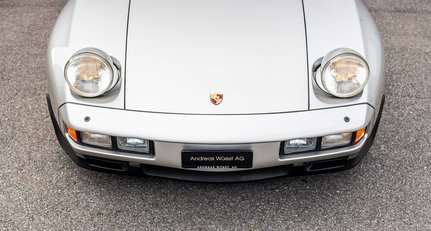


In the beginning, there was something of a stepchild. For originally, Porsche was commissioned by Volkswagen to develop a successor to the mid-engined VW-Porsche 914, codenamed EA425. With the intention to incorporate it into the product lineup of Audi. But then came the oil crisis; VW faced financial difficulties and already had a sports coupé – the Scirocco – in its line-up. Consequently, Porsche bought back the rights to its "baby" and developed its new entry-level model—christened the "924". By using a front-mounted, water-cooled four-cylinder engine, sourced from Audi's parts bin, along with many technical components from within the corporate group. It was a handsomely styled 2+2 coupé featuring pop-up headlights, a large glass tailgate, and a transaxle gearbox mounted at the rear axle. Production commenced in November 1975 at the Audi/NSU plant in Neckarsulm, as the facilities in Zuffenhausen were already being reserved for the next transaxle model in store: the four-seater 928 which debuted in 1977.
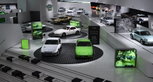
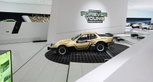
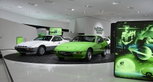
For a long time, the transaxle models were not recognized as full-fledged Porsches by the community of 911 devotees—particularly those devoted to air-cooled engines. That has long since changed; so when the Porsche Museum now honors the 50th anniversary with a special exhibition titled "Forever Young, Celebrating Transaxle," it does so with justifiable pride.

All told, over the course of nearly 20 years, the Stuttgart manufacturer built almost 400,000 units across the 924, 928, 944, and 968 model lines – with the 944 emerging as best-seller. The pinnacle of performance was the 968, produced until 1995 and as a final hurrah channeling 240 hp and 305 Nm of torque to the rear axle via its transaxle driveshaft. In its Clubsport (CS) variant it also served as the work tool for a popular German one-make racing series. Indeed, the transaxles enjoyed considerable success in motorsport in other arenas, too—most notably at Le Mans, where in 1981, Jürgen Barth and Walter Röhrl drove a 924 GTP (the prototype for the future 944) to a seventh-place finish, earning a special award for the shortest total pit-stop time (just 56 minutes over the entire 24-hour race). As early as 1980, a 924 had claimed the title in the American SCCA Championship.
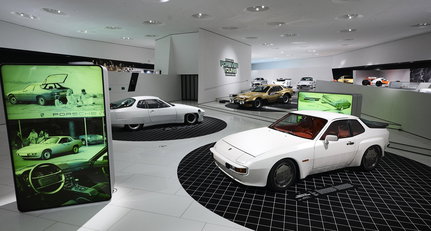
Instead of a classic, static special exhibition, the Porsche Museum's newly launched anniversary exhibition adopts a dynamic concept featuring rotating, compact pop-up installations that offer diverse perspectives on technology, design and motorsport, with the installations drawing on the vibrant cultural context of the 1980s. The first focuses on the 924 and 924 Turbo and runs until June 7; it is followed by a second installation featuring the 944 and 968 as protagonists (August 25 – October 4), and a third dedicated to the 928, which opens on November 24 and closes on January 17, 2027.