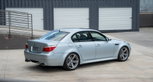

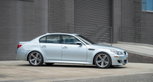



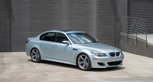

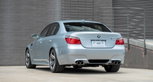










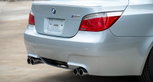
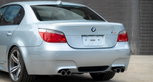

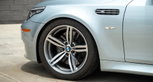

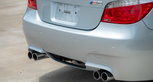
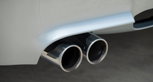


Who is the BMW E60 M5 for?
The German automotive industry in the 2000s followed a single motto: higher, faster, and further. Since the Second World War, no era saw the industrial giants of the Bundesrepublik fit so many cylinders into mass-production cars without any real necessity, demonstrating what was technically possible. Volkswagen, previously known as a down-to-earth volume manufacturer, equipped its flagship Phaeton sedan with a monstrous W12, while even the Touareg SUV was offered with a twelve-cylinder and a V10 diesel. Sister brand Audi crowned the first-generation Q7 in late 2008 with a massive V12 diesel delivering 500 hp and 1,000 Newton meters of torque.
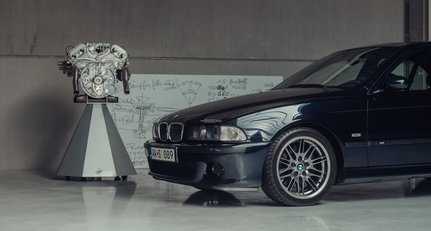
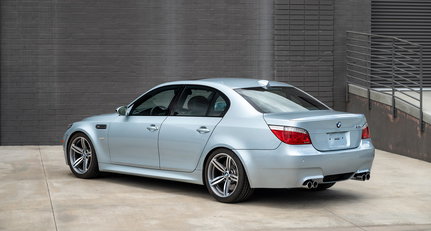
BMW was anything but modest at the time and joined the arms race with enthusiasm. While the first two generations of the M5 relied on inline-six engines and the E39 adopted a V8 from 1998 onwards, the Bavarian brand pulled out all the stops for its fourth generation. After the Concept M5 study provided a preview at the Geneva Motor Show in March 2004, the production version was unveiled at the Paris Motor Show in September of the same year. The E60 M5 caused a sensation, not only due to its polarizing design created under chief designer Chris Bangle (which had debuted on the standard 5 Series the previous year), but primarily because of its advanced ten-cylinder engine.

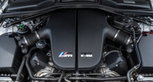
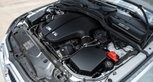
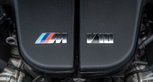
The 5.0-liter, 507 hp engine with the internal code S85, whose concept BMW drew from its Formula 1 program, fundamentally altered the character of the high-performance executive class. While earlier, more subtle predecessors prioritized understated looks and nimble handling alongside excellent performance, the E60 M5 was defined above all by raw force. Pressing the Power button on the center console raised output from 400 to 507 hp, and stepping hard on the accelerator delivered a fierce driving experience that felt almost like an American muscle car. At the same time, the S85 produces one of the most magnificent sounds in automotive history in certain registers.

Yet the model possessed two distinct personalities. Driven gently, the powertrain showed a civilized side, turning the M5 into a comfortable daily driver, provided the owner was willing to accept steep fuel bills. In mixed driving conditions, this heavyweight of just over 1.8 tonnes easily consumed 17 liters per 100 kilometers or more. All in all, the flagship of the long-dismissed E60 range was far from perfect, but its sheer irrationality and uncompromising nature make it even more desirable two decades later.
BMW M enthusiasts tired of downsizing and electrification, as well as purists who love unadulterated engine engineering, will find the E60 M5 deeply rewarding, provided they possess the budget required for demanding maintenance and high running costs. The car appeals through emotion and nostalgia for a vanished era of compromise-free engineering rather than perfection or sensible logic. The recent sharp rise in market values comes as little surprise.


Which version should you buy?
During its five-year production run, the core powertrain remained essentially unchanged, keeping the 5.0-liter V10 with 507 hp and 520 Newton meters of torque. The Bavarian engineers saw no need for power upgrades, considering the optional top speed of 305 km/h (190 mph) and a 0 to 100 km/h sprint time of 4.7 seconds.
The transmission was revised in 2006, when the hydraulic pump for the SMG III automated manual gearbox was replaced with a more durable component, significantly improving overall reliability. Software updates also refined the shift logic across its eleven selectable programs, allowing skilled drivers to swap gears at lightning speed. However, early pump failures gave the gearbox a bad reputation, and many customers had wanted a traditional manual from the start. Calls for a classic manual transmission were answered in 2007, though paradoxically only in North America, where automatics traditionally dominate the market. When manual six-speed E60 M5s appear in Europe today, they are either US imports or aftermarket conversions.

Enthusiasts who found sedans and wagons insufficiently sporty could choose the mechanically identical M6 Coupe (E63) starting in 2005, followed by the Convertible (E64) the following year. They also remained technically untouched, as even the subtle facelift given to the M5 in 2007 was limited to cosmetic tweaks, headlights, and iDrive updates.
European buyers enjoyed exclusive access to the E61 M5 Touring wagon version, introduced in 2007, which is highly sought after today for both its practicality and extreme rarity. Only 1,025 units rolled off the line at the Dingolfing plant before production ended in April 2010, accounting for just five percent of total fourth-generation M5 production. Its sleeper appeal caused plenty of surprised looks on the Autobahn, where few expected an F1-inspired V10 inside an ordinary-looking BMW wagon.
Ultimately, model years from 2006 onwards represent a clear recommendation due to the upgraded hydraulic pump. Older examples are not necessarily bad choices, as many had the updated pump installed under warranty. Checking service history is doubly worthwhile to verify whether the replacement took place and which software version is installed.


What should you pay for a BMW E60 M5?
High maintenance requirements, a controversial technical reputation, and the initially disliked Bangle styling kept demand low for many years. Around ten years ago, prices hit absolute rock bottom, with usable examples available for under 20,000 euros, while higher-mileage cars or those with gearbox flaws dipped below 15,000 euros. This was a dramatic drop for a model that originally carried a base price over 94,000 euros, significantly higher than its E39 predecessor, and easily exceeded 110,000 euros when equipped with options like the Head-Up Display, comfort seats, Individual leather, and Navigation Professional.
Maintaining the ten-cylinder engine still demands deep pockets today. An oil change requiring nearly ten liters of specialized oil costs around 400 euros, while a major inspection with filters and spark plugs runs into four figures. Known wear items are particularly expensive: a replacement clutch costs about 3,000 euros, and preventive rod bearing replacement ranges from 3,000 to 5,000 euros. Skipping this preventive service risks engine failure costing more than double that amount.


Given a total production run of roughly 20,600 units and the growing appeal of its high-revving engine over time, a price turnaround was only a matter of time. A new generation of enthusiasts has discovered the E60 M5, driving up market values.
Decent examples currently start around 35,000 euros, with the majority of offers positioned between 40,000 and 50,000 euros. Top-tier specimens approach the 100,000-euro mark, and mint-condition cars change hands for six figures in exceptional cases. Rare Touring wagons are much more sought after, commanding prices up to a third higher on average, while purists pay up to 50 percent more for original manual cars.


What are the technical problems?
The V10's reputation as a technical diva is partially justified, as the high-revving engine suffers from three infamous weak points. The most feared among them are the rod bearings. To achieve an 8,250 rpm redline, BMW engineered roughly half the industry-standard bearing clearance, which creates a dangerously thin oil film when combined with the specified thick 10W-60 oil. A spun bearing on the crankshaft will, at worst, destroy the engine. Replacing rod bearings preventively every 80,000 to 100,000 kilometers (50,000 to 62,000 miles) is considered mandatory by specialists, and proof of this work is worth more to a buyer than any optional equipment.
Engine rattling on cold starts does not always signify disaster, as it can simply indicate low oil levels or a stretched timing chain. Checking oil levels regularly must be routine because the V10 consumes oil, and low oil is a primary trigger for bearing damage. The second feared problem area involves the two electric throttle body actuators. Their internal plastic gears wear down and often damage the circuit board, triggering limp mode. Replacements cost around 700 euros per unit.

The third major concern is the high-pressure VANOS system. Faulty solenoid valves lead to noticeable power loss, while leaking high-pressure lines or damaged gears on the VANOS pump cause erratic camshaft timing. Overhauling the system quickly runs into four figures. Crucially, worn rod bearings also cause oil pressure drops that trigger VANOS fault codes, meaning a VANOS error code can be the first symptom of a far more severe bearing problem.
Regarding the transmission, the SMG III hydraulic unit remains a potential failure point even after the 2006 update, manifesting as sluggish gear shifts and dashboard warnings. Dry clutch lifespan varies drastically, lasting up to 145,000 kilometers (90,000 miles) on highway cars, while city-driven examples barely reach 50,000 kilometers (30,000 miles).
A crucial detail that has cost many owners unnecessary money is a failing release bearing (throw-out bearing), which feels identical to a worn clutch during launches. Replacing the entire assembly for 3,000 euros without inspecting the release bearing wastes significant money. Additionally, a weak battery generates sporadic SMG and DSC faults that mimic gearbox failures, so the electrical system should always be tested before diagnosing expensive transmission repairs.

What problems occur with age?
Beyond the drivetrain, the 1.8 to 2.0-tonne curb weight causes wear across several areas over time. Worn hydro-bearings in the front tension struts cause steering wheel shimmy under braking, while replacing the electronic EDC dampers requires significant expenditure. At the rear axle, the M differential demands attention: binding or chatter during low-speed maneuvers requires BMW's specialized synthetic oil with friction modifier, while dull clunking sounds indicate worn differential bushings. Differential shaft seals are also prone to fluid leaks. Brake wear is costly with 507 hp on tap, and M5-specific brake parts cannot be substituted with standard 5 Series items.
Rust is rarely an issue thanks to excellent factory corrosion protection, but the chassis features a unique construction with an aluminum front structure bonded and riveted to a steel passenger cell. Poorly repaired accident damage risks galvanic corrosion or loss of structural integrity. In daily use, clogged sunroof drains pose a serious hazard: trapped water backs up into the trunk area, submerging electronic control modules and potentially causing system-wide failures.
Interior wear appears as peeling soft-touch paint on the steering wheel, switchgear, and contact surfaces. Optional active seats occasionally suffer from failing air compressors or valves. The CCC infotainment system fitted until late 2008 is another frequent headache, as aging circuit board components lead to reboot loops or complete iDrive failure.


Is it worth buying a BMW E60 M5?
If a well-maintained example becomes available and your budget covers the running costs, the answer is definitely yes. The E60 M5 transformed from the black sheep of the lineup into one of the most celebrated M5 generations, if only because it will forever remain the sole V10 M5 in history. Initial reservations about complex mechanics and unconventional styling no longer deter younger enthusiasts, as data from US insurer Hagerty shows that 58 percent of current interest comes from buyers under 40.
Values have risen significantly since 2020, with market prices for this performance sedan increasing by roughly one third between 2020 and 2024. This upward trajectory is expected to continue. Hagerty included the fourth-generation M5 on its 2026 Bull Market list of eleven cars projected to appreciate substantially in value. The once-unloved super sedan has matured into a coveted modern classic, combining a thrilling powertrain with strong investment potential.
Photos: Robin Adams for RM Sotheby's