





Which version should you buy?
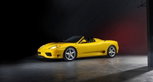
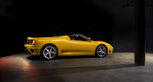
The 360 came in three flavours. The Modena coupe is the most accessible entry point and the purest driver's car of the three. The Spider commands a slight premium due to lower production numbers and the open-air experience, but sacrifices very little dynamically — thanks to the rigidity of the aluminium structure, Ferrari engineered the Spider in parallel from the very beginning rather than converting an existing coupe, resulting in an exceptionally high level of torsional rigidity for an open sports car. The Challenge Stradale is a completely different animal — lighter, rawer, and dramatically more expensive. For most buyers, the Modena is the sweet spot, ideally with the six-speed manual gearbox, which is rarer, more engaging, and increasingly sought after by collectors.
F1 gearbox or manual with gated shifter?
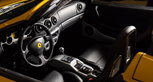
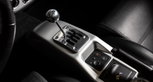
This is probably the most important decision a prospective buyer faces. The F1 automated manual transmission is fascinating and delivers rapid shifts by the standards of the era, but it is less enjoyable at low speeds and during city manoeuvring, and it comes with meaningful ownership risks that are detailed below. The six-speed manual, with its elegant metal shift knob, open gated shifter, and legendary metallic click during gear changes, is the more rewarding and increasingly more valuable choice. But it is also significantly rarer – only around 30 percent of 360 buyers went for this option. If budget allows, always prioritise the manual. Ferrari no longer offers a manual gearbox in its current lineup, which makes gated shifter examples increasingly desirable to collectors and the 360 a particularly sound investment, provided it was ordered in the right spec.


What should you pay?
When new in 2004, the Modena started at around 128,200 Euros in Germany, with the F1 gearbox adding roughly 8,000 Euros. Today, the market has flipped: manual gearbox cars command a significant premium. High-mileage coupes in questionable condition can be found from around 65,000 Euros, but buyers looking to avoid costly pitfalls should budget at least 80,000 Euros for a documented, well-maintained example. Pristine manual coupes have already surged well past the 100,000 Euro mark. The Spider was around 18,000 Euros more expensive when new and commands slightly higher prices today due to its lower production numbers and the sought-after open-air experience. The Challenge Stradale plays in its own league, with entry prices starting at around 250,000 Euros — and rare specifications or pristine examples can easily push the value toward one million Euros or even higher.


Is the Ferrari 360 a good investment?
The 360 offers solid and growing value stability. Manual gearbox Modenas and Spiders are appreciating steadily, and the Challenge Stradale has already entered serious collector territory. Dramatic price spikes are unlikely given the relatively high production volume, but well-maintained, correctly specified examples should continue to build value. Ultimately, a complete and well-documented service history from recognised marque specialists remains the only reliable insurance against a financial disaster. Consulting a brand expert for a pre-purchase inspection is strongly recommended. As one of the last truly affordable Ferraris, the window for buying at current prices may not stay open much longer.
What are the main ownership risks?
The 360 is considerably more reliable than its reputation suggests, but several areas demand a thorough check before purchase. The maintenance costs shouldn't be underestimated — we're still talking about a Ferrari after all.
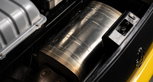
The 360 offers significantly better service accessibility than the F355, thanks to an inspection hatch located behind the seats that allows the timing belt to be replaced without removing the engine. Nevertheless, servicing a Ferrari remains an expensive endeavour. An annual inspection is mandatory, and the timing belt along with its tensioner pulleys must be replaced every three years without exception. Ignoring these intervals risks catastrophic engine damage due to the interference design of the V8 valvetrain. Gearbox oil should be changed every two years to safeguard the complex shifting mechanics. With proper upkeep, these cars are technically robust and defy common reliability stereotypes.


Transmission red flags
The electrohydraulic F1 transmission requires close scrutiny during a pre-purchase inspection, as faults can easily generate four-figure repair bills. The hydraulic pump should become audible as a distinct hum the moment the driver's door is opened. If the pump primes every few seconds during a test drive, the pressure accumulator is on its way out. The factory shifting relay is also prone to sticking, causing the pump to run continuously until it burns out — a known fix is proactively upgrading to a heavier-duty 50-amp unit. The ultimate financial nightmare is an internally corroded oil-water heat exchanger located deep within the engine valley: if coolant and engine oil mix, the consequences for the entire drivetrain are severe and extremely costly.
Exhaust manifold risk
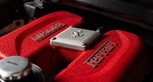
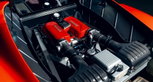
The naturally aspirated V8 is fundamentally reliable, but it carries significant risks in its peripheral components. The original exhaust manifolds with their integrated pre-catalytic converters tend to degrade internally under extreme thermal loads. If the resulting ceramic debris is ingested by the engine, it scores the cylinder walls and necessitates a massively expensive engine rebuild. A review of the service records should ideally show a replacement with upgraded aftermarket headers. For cars built before 2001, confirm that the factory camshaft variator recall has been completed to rule out catastrophic piston-to-valve contact.


Suspension wear
The 360's suspension is known to accelerate component wear. Upper and lower ball joints along with the rear tie rods frequently develop play after just 15,000 to 25,000 kilometres — wear that reveals itself through a clunking noise over speed bumps during a test drive. While body rust is not a concern thanks to the aluminium spaceframe, buyers should inspect carefully for aluminium oxidation, which typically manifests as paint bubbling around the nose, mirror bases, and rear roof struts. A thorough inspection requires removing the front undertray to check the chassis legs for trapped moisture.
Interior gremlins
The soft-touch coating on the switchgear and controls degrades over time, leaving a sticky residue — an irritating but cosmetically fixable issue common to Ferraris of this era. More seriously, the integrated battery in the factory alarm siren leaks with age, corroding the circuit board and triggering electrical short circuits that can disable the climate control and other vehicle systems. A permanently illuminated red LED on the dashboard is the telltale warning sign.


What makes the Ferrari 360 special?
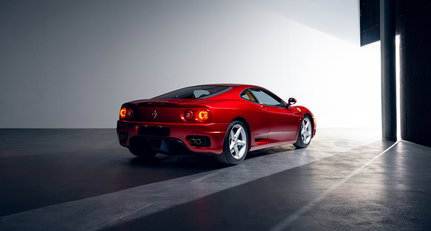
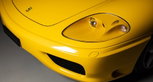
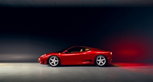
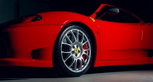
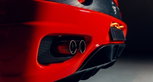
Introduced just in time for the turn of the millennium, the 360 was a landmark car for Ferrari. It ditched the steel chassis of its predecessor, the F355, in favour of an innovative aluminium spaceframe, bringing greater rigidity and meaningful weight savings. Titanium connecting rods served as an additional weight-saving measure, helping to offset the additional onboard technology. A flat-plane crankshaft ensured a high-revving nature and a visceral, spine-tingling exhaust note. Pininfarina clothed it in flowing, elegant bodywork that permanently abandoned the sharp wedge profiles of the previous decade — a timeless design direction that Ferrari and Pininfarina had first explored with the front-engined 456 GT, and one so enduring that the F430 was essentially an evolution of the same theme.
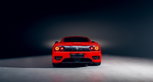
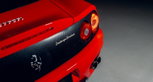
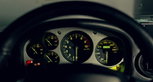
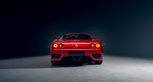
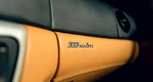
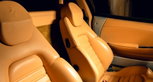
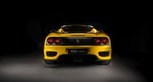
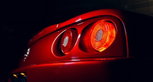
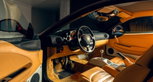
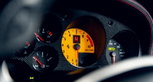
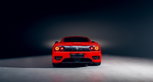
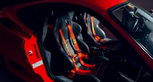
The clearly structured, focused cockpit feels beautifully minimalist compared to the display overkill found in today's performance cars. More than 17,000 examples were built before production ended in 2005, making it the best-selling Ferrari up to that point. It's a car that still looks as fresh today as it did then. The recently unveiled and hotly debated Luce, Ferrari's first electric car, even echoes the 360's signature circular twin taillights, making it look from behind like a 360 wrapped in a much larger shell.


Who should buy a Ferrari 360?
The 360 is the right car for anyone who wants a genuine Ferrari experience without stretching to F430 or later money. It sits in a sweet spot: modern enough to be reliable and safe, analogue enough to feel truly connected and exciting. It was built during a brief historical window when sports cars already benefited from modern technology and improved safety without sacrificing a wonderfully analogue, unadulterated connection to the road. It rewards enthusiastic driving, sounds spectacular at high revs, and has aged beautifully inside and out. It is not, however, a car for buyers who are unwilling to invest in proper maintenance or who shy away from specialist repair bills.
How fast is the Ferrari 360?
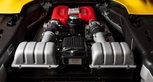
The Modena's 400 hp, 3.6-litre naturally aspirated V8 delivers its peak output at an astonishing 8,500 rpm, just before the redline, and shines with an incredibly sharp and immediate throttle response. It propels the 1.4-tonne sports car to 100 km/h in 4.5 seconds, eventually topping out at 295 km/h, falling just short of the magic 300 km/h barrier. The Spider is fractionally slower due to its roughly 60-kilogram weight penalty, reaching 293 km/h and requiring an extra tenth of a second for the sprint to 100 km/h. The Challenge Stradale, with 425 hp and up to 110 kilograms stripped out, hits exactly 300 km/h and reaches 100 km/h 0.4 seconds faster than the standard coupe.


The absolute pinnacle: the Challenge Stradale
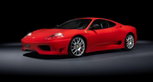
In 2003, Ferrari crowned the model range with the uncompromising 360 Challenge Stradale. Inspired by the factory Challenge racing series, this hardcore variant gained 25 additional horsepower while undergoing a radical diet. The engineering team stripped out a significant portion of the comfort amenities and reduced sound insulation, replacing standard components with extensive carbon fibre parts and carbon-ceramic brake discs sourced from the Ferrari Enzo, saving up to 110 kilograms compared to the standard Modena.
As the founding member of a legendary line of track-focused V8 berlinettas that later included the 430 Scuderia and the 458 Speciale, the Challenge Stradale is limited to just 1,288 examples and remains one of the most viscerally exciting road cars of its generation. Evaluating it purely on raw statistics fails to capture its captivating essence, which is defined by its raw nature, a sympathetic uncompromising character, and a brutal exhaust note that is in a class of its own. The minimalist cabin features plenty of exposed carbon fibre, and the CS came standard with the electrohydraulic F1 automated manual transmission.
But even setting the Challenge Stradale aside: the right example of the Ferrari 360 rewards its owner with an intoxicating driving experience and a sound investment in one of the last truly accessible Ferraris.
Photos: Simon Gosselin and Neil Fraser for RM Sotheby's