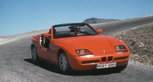

BMW adopted a distinctly experimental approach during the second half of the 1980s, largely driven by BMW Technik GmbH, which was founded in 1985. The organization was tasked with developing and building prototypes, design studies, and concept cars. Occasionally, designs from the team led by Ulrich Bez even made it into series production. This included the Z1, which was introduced in 1987 and entered production by the middle of the following year, based on a design by Harm Lagaay, who was the design chief of the subsidiary at the time.

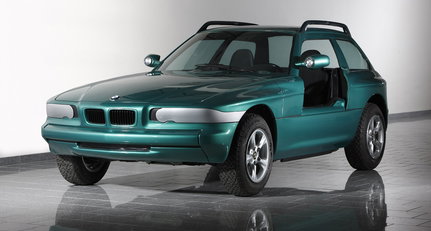
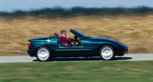
Thanks to its futuristic design, a limited production run of just 8,000 units, and its unconventional door concept, the model already achieved absolute classic status years ago. Although the open-top two-seater was the only version to actually reach BMW showrooms, it was not the only creative exercise built on the rear-wheel-drive roadster platform. In 1988, the Munich studios created the Z1 Coupé prototype. While virtually forgotten today, it was progressive and trendsetting in multiple ways, both conceptually and in terms of design.

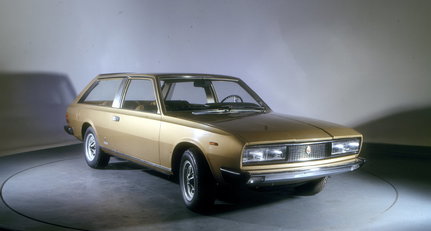
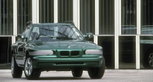
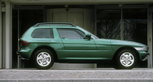
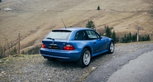
The front end, featuring wide headlights, narrow kidney grilles, and a forward-curving bumper, clearly foreshadowed the face of the Z3, which hit the market around seven years later as the Bavarian response to the roadster revival of the nineties. There was also a healthy dose of the BMW 8 Series in the mix. In 1997, a coupé version of the Z3 was unveiled at the Frankfurt Motor Show. This version went into series production in 1998, roughly ten years after BMW Technik GmbH had already provided a concrete preview of the shooting-brake-style design. BMWs creative department were clearly far ahead of their time. The closed variant of the Z3 had a rather controversial image for a long time and was initially mocked as the "clown shoe." It is only in recent years that it has truly surged in popularity, and today the nickname is used affectionately rather than disparagingly.


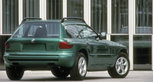
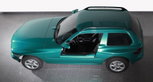
Additionally, the emerald green prototype was an early representative of the crossover trend. While it retained the classic layout of a front-mounted six-cylinder engine and rear-wheel drive, it rode on off-road tires and featured rugged roof rails alongside increased ground clearance. This was intended to give it the visual appearance of being ready for the occasional off-road adventure. Technical data for the study is scarce, but according to the Munich-based automaker, the coupé could reach speeds of up to 225 km/h thanks to its 170 hp, 2.5-liter inline-six engine, which was originally borrowed from the E30 325i. In this discipline, it was every bit the equal of its open-top sibling. Yet pure numbers cannot truly express just how far ahead of its time BMW's experimental department was with this lifestyle vehicle.
Photos: BMW Group, Leuba Collection