




In 1969 Fiat launched the 130, with which Turin hoped to recapture former glories. In its early years Fiat had been a genuine luxury manufacturer, and its powerful models ranked among the finest the Italian car industry had to offer well into the 1920s.
After the Second World War the focus shifted. The priority now was to supply war-weary Italians with affordable bread-and-butter cars and compact sports models. The upper segments were not abandoned entirely, though. Through the late 1950s and 1960s the six-cylinder 1800 and 2300 saloons kept the flag flying in the upper reaches of the market, even if they remained exotic outside Italy.
With the 130, everything was meant to change. The saloon was to hold its own on the international stage against German, British and French rivals, while also supplying the Italian government with dignified official cars.


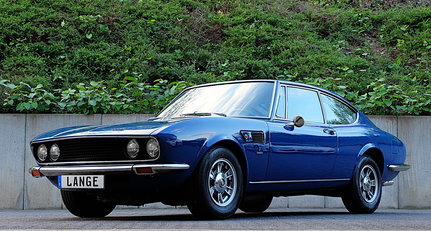
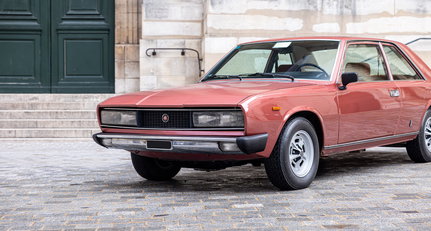
Like its predecessors, the Fiat 130 was designed by Pininfarina, both the saloon and the coupé that followed in 1971, the latter penned by Paolo Martin. Among enthusiasts the two-door is now regarded as an underrated design classic, admired for its clean lines and understated elegance. At 4.84 metres, however, the coupé was decidedly large by Italian standards.
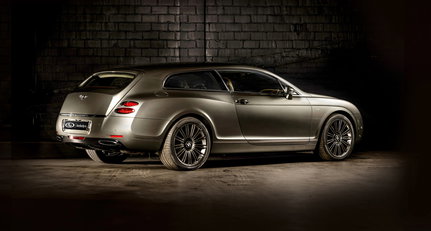
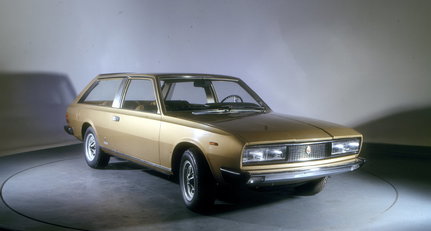
Pininfarina experimented with further body concepts on the two-door 130. In March 1974 the renowned design house unveiled an elegant shooting brake - or coupé da caccia in Italian - at the Geneva Salon. The Fiat 130 Maremma was named after a coastal region between Tuscany and Lazio. Behind the broad, chrome-trimmed B-pillar rises a angular, generously glazed estate rear with a slanted tailgate.

Two details catch the eye from the outside. First, the louvres ahead of the C-pillar, which subtly recall the side-window blinds of the Mercedes SLC, and second, the fixed roof spoiler that resembles a ducktail and is meant to keep the tailgate from getting dirty. That tailgate features a ledge which gives the Maremma a hint of a notchback, making it a genuine one-off within the estate segment.
Pininfarina evidently saw great potential in the shooting brake concept during the 1970s, for the Italians presented several two-door estates on coupé underpinnings, especially in the first half of the decade. One example is the conceptually similar Peugeot 504 Riviera of 1971. The Maremma was not Pininfarina's only exercise based on the 130 Coupé either. In the same year the coachbuilder produced the 130 Opera, a four-door version of the coupé that was unveiled at the Paris Motor Show.

The company reportedly hoped these appealing reinterpretations would persuade its client Fiat to expand the luxury range. Nothing came of it, for several reasons. At the height of the first oil crisis, no one in Europe was waiting for yet another expensive V6, and sales of the saloon and coupé had already fallen short of expectations. Taken together, only around 19,500 examples left the line during the eight-year production run. By then the Fiat name was associated more with clever small cars than with luxurious, solidly built flagships.
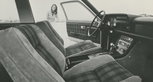
At first glance, the practical 130 Maremma, fittingly powered by its 3.2-litre Lampredi V6 and three-speed automatic, had everything it needed to become the leisure car of choice for Italy's upper class. Not least because of its classy metallic gold paintwork and its luxurious interior with thickly padded velour seats, one of the three cars even featuring blue checked seat centres.

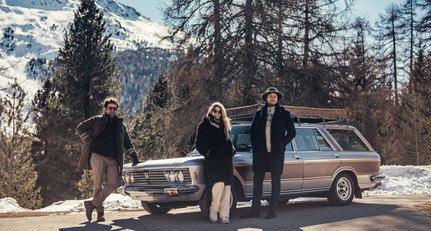
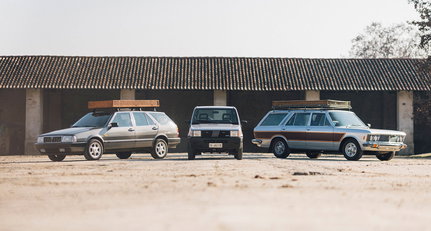
Three cars? Yes, the Maremma is not a one-off. According to reports, three examples were completed. After the creation had been shown in Geneva in 1974 and in late autumn at the Turin Motor Show, Gianni Agnelli, nicknamed the Avvocato, had one of them registered in his name in 1975, having taken a liking to the luxurious estate. That gave the godfather of the Fiat empire his second estate based on the Fiat 130, since he had already secured one of what were probably three Familiare in the early 1970s. He used that large estate, clad in wood in the American woodie style, as his holiday car in St. Moritz.
He drove his 130 Maremma for three years before selling it to a private collector. In 2013, after 35 years, it resurfaced at the Le Auto dell'Avvocato exhibition at the Museo Nazionale dell'Automobile (MAUTO) in Turin. The second example was long said to reside in Pininfarina's company museum, but the coachbuilder denied this when asked. The third Maremma is considered lost. Perhaps, at this very moment, it is slumbering under a layer of dust in an Italian shed, waiting to be rediscovered.
Photos: Pininfarina S.p.A., Stellantis