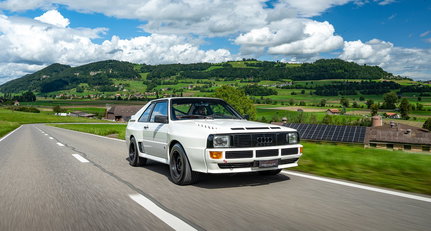
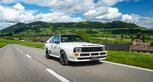



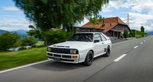
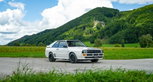
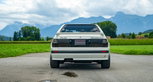
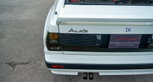
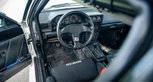
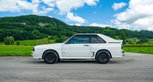
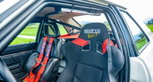
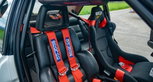
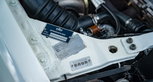
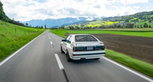


When Audi gate-crashed the world of rallying in 1981, it didn’t knock politely. It arrived sideways, turbo whistling, and promptly won the Manufacturers’ World Championship in 1982 with the Quattro. A year later, Hannu Mikkola added the Drivers’ title to the trophy cabinet, and it seemed Audi had struck gold with their newest creation. But rallying, like fashion, waits for no one, and by 1983, the opposition had turned up with mid-engined terrors such as the Peugeot 205 Turbo 16, and Audi’s production-based Quattro was starting to look somewhat sensible. The response? The Audi Sport Quattro, one of the rarest to ever grace the open road and now heading to Oldtimer Galerie Toffen upcoming sale in Gstaad on December 29.


That response from Ingolstadt was characteristically overengineered. Their mission was simple; build something shorter, lighter, louder, and totally unhinged. Thus, the Sport Quattro was born, affectionately nicknamed “the short one”. Superficially similar to the standard Quattro, it actually shared little more than a name and, crucially, Audi recruited Walter Röhrl for 1984, less to collect trophies and more to provide brutally honest feedback while driving at improbable speeds.

The Sport Quattro was a modular masterpiece, from the B-pillar forward it was Audi 80, from the B-pillar back it was Quattro, only a whole 320 millimetres shorter. This shorter wheelbase allowed the Quattro much improved agility, while the tailgate was made of fibreglass-reinforced plastic, whereas much of the rest of the body employed exotic aramid fabrics and epoxy resins supplied from Switzerland. Never before had so many cutting-edge materials been thrown together in a road car, where Audi were required to create registered vehicles to pass homologation regulations.


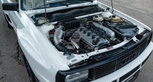
Under the bonnet sits the Quattro’s party piece. Displacement was carefully trimmed to 2,133 cc to sneak under the three-litre limit once the turbo was applied, with believed figures of the road version producing a hearty 306 horsepower, though competition cars could be wound up to a frankly terrifying 650 horses. Those outrageous figures, while weighing under 1,000 kilograms, made for a thrill ride unlike anything else at the time, or since.
It was first unveiled at the 1983 Frankfurt Motor Show, with around 214 examples been built to satisfy Group B homologation rules. Upon launch, it was expensive, uncompromising, and utterly brilliant, and has since become one of the most collectable machines of the great Group B era. It is a homologation special in its purest, most gloriously excessive form, now commanding an estimate of almost 700,000 euros. We predict the only way is up for this fire-spitting machine!

 Saanen / Gstaad, 29 Dec