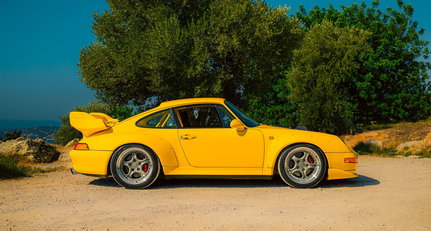



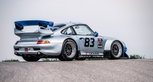



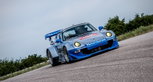
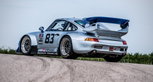




In the early 1990s, international GT racing was reorganized and immediately became popular again with manufacturers, teams/drivers and fans alike. This was mainly driven by the new BPR series, jointly founded by Jürgen Barth, in charge of all customer sport activities at Porsche, and Frenchmen Patrick Peter and Stéphane Ratel. Porsche, traditionally very engaged in GT racing as a direct sales booster for its road cars, responded to the new era with a series of homologation specials, all based on the air-cooled 993 generation of the eternal 911.
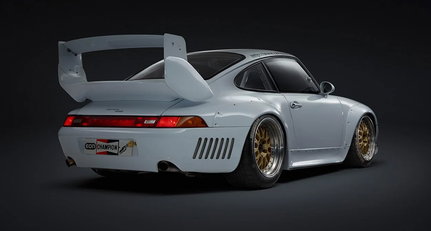
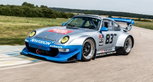
In accordance with the regulations of the BPR and the 24 Hours of Le Mans (ACO), the first GT2 arrived for the 1995 season. It was equipped with a tuned version of the 993 twin-turbo flat-six (450 hp in GT2 and 550 hp in GT1 version), an aggressive-looking front spoiler with upturned side winglets, wider bolt-on wheel flares and a huge rear spoiler with integrated air scoops. Using two-wheel drive instead of the production Turbo's all-wheel system helped to reduce the weight to 1150 kilos. But it soon became obvious that, in order to be competitive in Le Mans/BPR GT2-class events, Porsche needed something even more extreme. So the 911 GT2 EVO entered the stage in 1996, built in only eleven units.


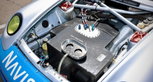
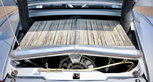
The Weissach wizards started to take another 50 kilos of weight out of the car and fitted the M64/83 engine, which, thanks to larger turbos (KKK 24 with 40.4 mm restrictors) and several other modified engine components, managed to produce 600 horsepower and 650 Nm of torque, making the GT2 EVO the most powerful 911 in history at the time.
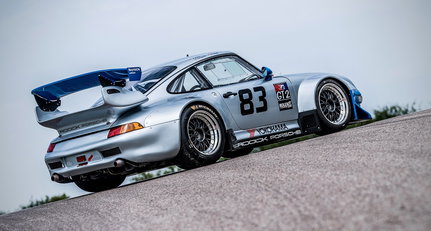
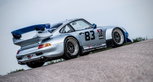
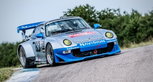
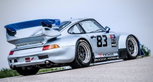
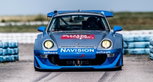
For the EVO, which inherited the modified body of the 911 GT2, the regulations not only allowed wider tires. The aerodynamics received particular attention, too. Around the rear end, the already massive wing of the GT2 received yet another airfoil on top, resulting in a two-tier device as high as the roof. This was complemented by a completely redesigned front spoiler with generous air intakes.

GT2 and GT2 Evo were initially campaigned in the BPR Global GT Series as well as several other smaller national series, and earned seven class wins out of eleven rounds during their first full BPR season in 1996, as well as class victories in the 1996 and 1997 24 Hours of Le Mans.
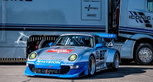
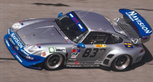
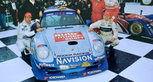
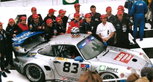
The 993 GT2 offered by our friends from Art & Revs in Luxembourg had its greatest hour late in the career of the 993 GT2 EVO. At the 1999 24 Hours of Daytona, driven by Germans André Ahrlé and Hubert Haupt, Italian Raffaele Saguioli and its owner, British property tycoon David Warnock, the car finished an impressive seventh overall and first in GT2. During the Florida classic, the team beat strong opposition not only from 13 other 993 GT2s, but also from an ORECA Dodge Viper factory car and two Pratt & Miller Chevrolet Corvette C5-Rs. As it turned out, this was to be the last victory of an air-cooled 911 in a major endurance race.


The team behind this Daytona triumph was Roock Racing from Leverkusen (near Cologne). Founded by brothers Fabian and Michael Roock in 1984, it entered the racing stage in 1991. As early as 1993, a Roock-entered 911 won the 24 Hours of Spa, followed by a GT2 class win at the 1996 Le Mans 24 Hours. In 1997 they came second at La Sarthe and lost the drivers' championship of the FIA GT series by a single point – with Swiss Bruno Eichmann against Viper driver Justin Bell, son of Derek.
The 993 on sale now was originally one of four bare chassis delivered to Roock for 1998, bearing the Porsche shell number 0480053 but later given the Roock number 98 RST 530 003. Its early life was linked to David Warnock, who happened to race one of Roock's 993 GT2s at the 1998 Le Mans. He finished 22nd overall and was so impressed by the car that he ordered one for himself, to compete in the British GT Championship instead of the Saleen Mustang he raced before. He received his car just in time to enter it for the Donington race in September and to score two podiums and two seventh places overall in the remaining rounds.


After the triumphant Daytona race, Warnock continued to enter the car in the British series, but from the third round onwards switched to the GT1 category and a Lister Storm. The 993 GT2 was since loaned and continued to appear in British GT and FIA GT rounds (Donington/Zolder). In 2003 it was even raced once in the Michelin Porsche Open Series at Oulton Park before being purchased by a French collector in 2007, who cosmetically restored it to the 1999 Daytona livery.
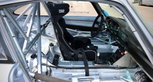
In 2011 it was sold – already via Art & Revs – to its former driver Hubert Haupt, who commissioned Michael Roock to carry out an unrestricted restoration; invoices totalling €237,000 were issued for these works. Haupt only tested it twice in private and never raced it in vintage events, but in 2014 the car was on display at the Porsche Museum – accompanied by a large photograph of the car in Daytona's Victory Lane, thereby acknowledging its significant historical importance. Today RST 530 003 is in fabulous race-ready condition, after it successfully completed a ten-lap shakedown to ensure its perfect working order. It still bears its 1999 Daytona scrutineering tag, the 1998/99 FIA GT plumbing and 2000 FIA GT sticker in the roll cage.


Potential buyers will acquire the wildest and fastest 993 GT2 Evo ever built – thanks to more in-house upgrades by Roock. To start with, by omitting the zinc coating they saved around 25 kilos in weight. More ballast was reduced by the removal of sheet metal parts where not needed, a very light carbon outer skin, electric steering instead of hydraulic power steering, a wiring harness of particularly lightweight material and very light head- and taillights. The fuel tank was installed 150 mm lower than in a standard GT2, and an expanded roll cage reinforced the chassis.
After FIA GT regulations had changed and the ACO introduced the new LM-GTS category for its 1999 race, an even more extreme spec for the former GT2 cars was permitted. Roock took immediate action by widening the body and tracks even more, fitting a custom-made new front spoiler and an enlarged 3.8-liter powerplant. With dual ignition, six individual ignition coils and KKK turbos type K24/26, the power – limited by air restrictors – culminated at 580 hp and 755 Nm.
Roock retired from the FIA GT series at the end of 1999 and continued in 2000 in the American Le Mans Series, before closing the racing department for good at the end of 2001. While Manthey started its meteoric rise to become the top Porsche customer GT team, Roock disappeared from the scene. Today Michael Roock specializes in the restoration of classic Porsche GT road and race cars, still based in Leverkusen, under the company name Roock Sportsystem. This 993 GT2 Evo is a testament to the Roock private customer team at the pinnacle of its activities and to the final evolution of a full-blown air-cooled 911 GT racer.