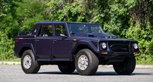
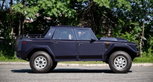
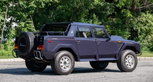
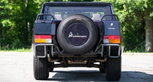





While Lamborghini was renowned for its mid-engined supercars of Countach fame, the Italian manufacturer took an unexpected and lesser-known turn in the 1980s. The underlying idea behind it was an all-terrain vehicle with potential military-grade applications – mirroring what Mercedes-Benz had in mind for its G-wagon, too. To lure the US Army, which was seeking a successor to the Jeep, the Italians built a prototype dubbed the "Cheetah" – powered by a Chrysler V8, rear-mounted high in the back and with a modest output of 180 hp. But the car, on display at the 1977 Geneva Motor Show, proved to be too exotic for the military, which instead decided in favor of the HMMWV by AM General, more commonly known as the Humvee or, in civilian form, the Hummer H1.
But Patrick Mimran, who had taken over as Lamborghini's CEO in 1980, took a liking to the idea of an all-wheel-drive SUV and, with a view to potential customers from the Middle East oil industry, rolled out another design study in 1981. This "LM001" was still based on the Cheetah, now with an AMC-sourced V8 still mounted in the back, which compromised both handling characteristics and rear interior space. To address these flaws, Mimran assigned chief engineer Giulio Alfieri, formerly at Maserati, to engineer something more suitable. The result debuted in 1982 as the "LMA" ("A" for "Anteriore"), again in Geneva, but with an entirely new chassis and—most importantly—a front-mounted powerplant.


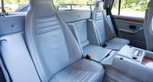
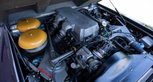
This time there was no underpowered American V8, but nothing less than the final carbureted 5.2-liter V12 of the Countach LP5000 QV, sending 450 hp into the AWD system and returning about 4 to 5 mpg under heavy driving and towing. This major upgrade improved handling and weight distribution while also increasing interior space, although the broad, high center tunnel meant that only two people could be seated comfortably in the rear.
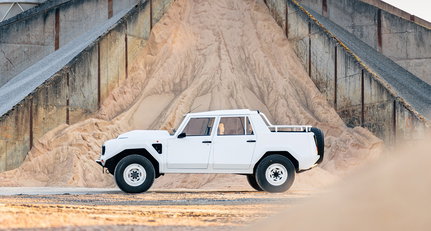
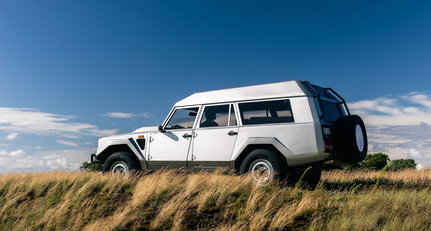
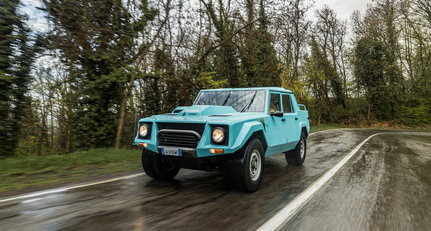
The new off-road Lamborghini received the serial designation LM002 and was officially launched at the 1986 Brussels Motor Show. It soon earned the nickname "Rambo Lambo," helped by the fact that Sylvester Stallone was among its first illustrious VIP owners. The LM002 was luxuriously equipped and stood on specially designed Pirelli Scorpion run-flat tires for rocky and sandy terrain. It also featured an early GPS system intended for the energy executives Lamborghini imagined traversing remote desert oil fields in the car.


Though positioned principally for wealthy clients, the LM002 was also perfect for off-road racing. One example was prepared for the Paris-Dakar Rally, though never entered, while another was campaigned by Sandro Munari at the 1988 Pharaoh Rally.
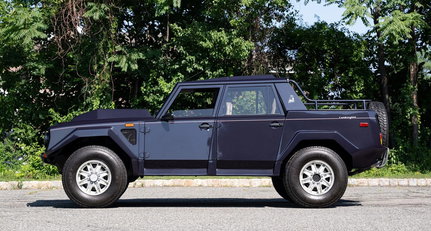
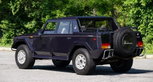
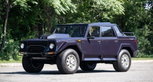
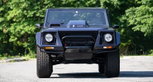
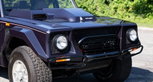
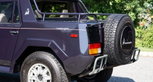
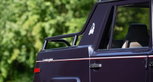
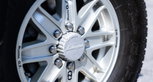
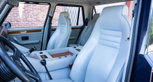
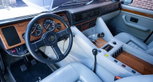
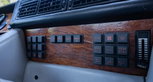
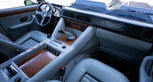
Eventually, just 328 examples of the "Rambo Lambo" were built at Sant'Agata between 1986 and 1993, with later cars receiving fuel injection. This sparingly used 1988 LM002 had various American owners until it was acquired in 2015 by its most recent owner, a Texas-based private collector. It stands out for its O.Z. wheels and the combination of stunning Acapulco Blue paint with a gray leather interior, complemented by a Nardi steering wheel and wood accents in the doors, dashboard, and center tunnel.


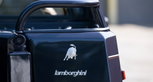
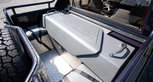
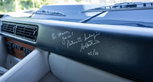
Famous Lamborghini test driver Valentino Balboni signed the car's upper dash in 2011, reportedly stating that it was one of the most original examples he had ever seen. The rare LM002 is accompanied by a factory-optioned toolbox, tonneau, and owner's manuals and will cross the block at the forthcoming Pebble Beach auction by Gooding Christie's on August 14–15.
Given the popularity of luxury SUVs today—not least Lamborghini's very own Urus—the groundbreaking LM002 was clearly decades ahead of its time and will surely be a star at any future concours or in the collections of owners who favor exotics of all stripes and ages.
 Pebble Beach, 15 Aug