





















Since the Second World War, the core competencies of the French auto industry have primarily lain in cleverly designed and affordable everyday cars like the Renault Twingo, agile hot hatches such as the Peugeot 106 Rallye, and comfortable, innovative luxury models like the Citroën DS. Mid-engine sports cars do not immediately come to mind. Yet, the Grande Nation is among the absolute pioneers of this layout, which allowed for unprecedented balanced weight distribution and thereby revolutionized the sports car world.
French engineer René Bonnet pursued a consistent lightweight philosophy similar to Colin Chapman in England. In October 1962 at the Paris Motor Show, he presented the Djet, a compact sports car with a fiberglass body and the engine located ahead of the rear axle. This small sports car manufacturer thus offered the mid-engine concept in series production about three years before the first De Tomaso Vallelungas were delivered to customers. It was not until 1966 that Lamborghini and Lotus firmly established the concept in the industry with the Miura and the Europa.


While other mid-engine models would follow with the humble Matra sports cars and the brutal homologation icon Renault 5 Turbo, the French did not bring this layout to the Gran Turismo segment for a long time, unlike their Italian and British competitors. The segment of luxurious sports cars suitable for cross-continent trips was neglected by domestic manufacturers anyway. Only the futuristic Citroën SM flew the flag from 1970 to 1975, though its Maserati V6 curiously sat behind the front axle as a front-mid engine.
In the 1980s, two minds who had already made a name for themselves in the domestic auto industry set out to restore the country's GT pride. Designer Gérard Godfroy, who co-designed the best-selling Peugeot 205, teamed up with experienced engineer Claude Poiraud, who had earned his spurs at Alpine and the coachbuilder Heuliez. Together, they founded MVS (Manufacture de Voitures de Sport) near Nantes in western France to put mid-engine sports cars with French savoir-faire on the road.


After a first prototype named Ventury featuring a Volkswagen Golf GTI four-cylinder was unveiled at the 1984 Paris Motor Show, the first production model Venturi followed two years later. By 1990, this model designation was also adopted as the brand name. The basic recipe of a reinforced tubular frame and an aerodynamically shaped fiberglass body remained the same, but the German powertrain of the concept car had meanwhile been replaced by the famous domestically produced PRV V6. The small manufacturer produced roughly 600 to 750 cars in total before its insolvency in 2000, depending on the source.
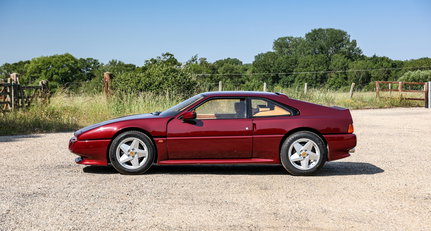
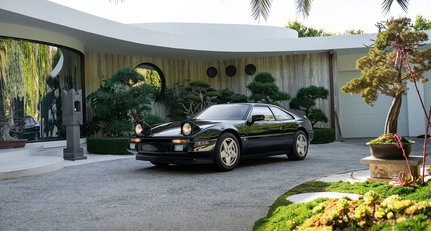
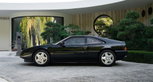
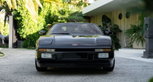
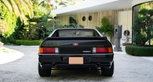
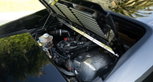
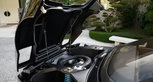
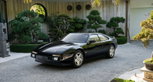
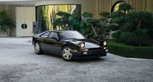
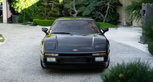
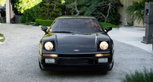
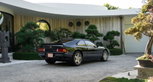
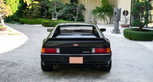
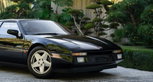
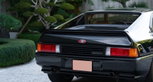
On August 14, auction house Broad Arrow will bring one of the rarest Venturi creations to the block during its The Quail auction at Monterey Car Week. It is one of only three 111 Cups built specifically for the Italian market in 1991, and it is expected to change hands for around 75,000 to 100,000 dollars. The reason for its existence was the country's regulations at the time. Cars with more than two liters of displacement were subject to a 38 percent tax increase. Therefore, Venturi replaced the coupe's 2.5 to 3.0-liter V6 with the four-cylinder from the Renault 21 Turbo, which featured just under two liters of displacement, fuel injection, and 185 horsepower.


The Renault engine positioned in front of the rear axle may be weaker than the six-cylinder, but it fundamentally suits the character of the Venturi well. Paired with a five-speed manual transmission, the power plant is not only more economical but also significantly lighter and more compact, which has a positive effect on handling. Contemporary sources list the top speed at 235 km/h, while the zero to 100 km/h mark is said to be reached in under seven seconds. The six-cylinder was about half a second faster in this discipline.
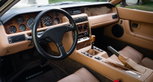
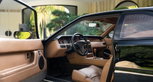
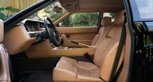
According to the auction house, the offered example was ordered by the Italian Venturi agency and remained in their possession for years. Later, the car was shipped to the United States, where the current owner purchased it at Broad Arrow's Amelia Island auction in 2023. However, he does not appear to have driven it much, as the odometer of this extremely rare Italian market Venturi showed only 2,000 kilometers at the time of cataloging. The future owner now has a choice. They can either preserve the coupe, lined with Magnolia leather and fine burr walnut, as a time capsule, or push its dynamic capabilities to the limit on narrow mountain roads, just as the two Venturi founders once intended.
 Carmel, 14 Aug