

























Who is the BMW E46 M3 for?
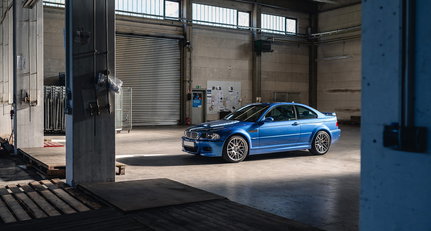
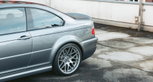
Built from 2000 to 2006, the third generation of the BMW M3 is often hailed as the best of them all. The flagship of the E46 line-up stayed true to the original concept while becoming significantly more powerful, agile, and modern in the best sense, without falling into electronic overkill. It also boasts an absolutely timeless, stylish design that has matured beautifully over the past two decades, combined with much greater daily usability than its two predecessors.
This sporty 3 Series offers four proper seats, a decently sized boot, and remains pleasantly compact at 4.50 meters in length. To this day, the E46 embodies core BMW brand values and has long been regarded as a modern classic. The M3's cult status among millennials is largely driven by the V8-powered BMW M3 GTR race car, which took center stage as the automotive star in the legendary video game Need for Speed: Most Wanted, becoming the ultimate object of desire for players.
Even though the bargain prices of recent years are firmly a thing of the past, the E46 M3 remains affordable compared to the E30 M3. It is also technically manageable, making it highly recommended for newcomers looking for a sporty youngtimer that requires very few compromises.


Which version should you buy?
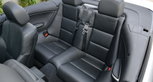
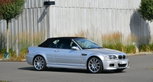
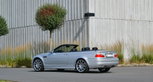
As usual, BMW offered the third M3 as a classic two-door coupé and a four-seater convertible. A total of around 85,000 units were built in Regensburg, with the closed variant favored by enthusiasts due to its superior structural rigidity and slightly sharper handling. The convertible was particularly popular in the US market, while it played a secondary role in Europe.
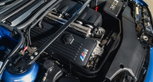
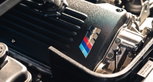
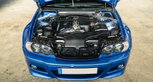
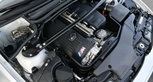
Power always came from the S54 engine, which featured an inline-six layout like the E36 but differed significantly from its predecessor. The newly developed engine received new camshafts, the brand's signature double-VANOS variable valve timing, and higher compression. Furthermore, the engineers pursued a high-revving philosophy, meaning the 3.2-liter engine delivers its maximum output of 343 hp at 7,900 rpm, just before the redline.


The engine was more than just a high-revving screamer though; it was a true powerhouse that led the industry in specific output at the time and offered excellent mid-range pull with its 365 Newton meters of torque. Weighing just under 1.6 metric tons, the coupé accelerates from zero to 100 km/h in an impressive 5.2 seconds, while the convertible, which is 160 kilograms heavier, takes about 0.3 seconds longer. Top speed is electronically limited to 250 km/h by default.
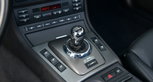
Purists today look for the exceptionally crisp and direct six-speed Getrag manual gearbox that came as standard. BMW never offered a conventional automatic transmission for the E46 M3. Instead, they offered the technically related SMG automated manual transmission, where the clutch is operated by a hydraulic and electronic unit rather than the driver's left foot. The driver still initiates gear changes via steering-wheel paddles or the gear selector. Shift harshness and speed could be adjusted across multiple levels. The main advantage of this setup was that no power was lost in a torque converter. On the downside, the SMG can be quite jerky in city traffic, and repairs to the hydraulic pump can drive up ownership costs.


The pinnacle of the range is the M3 CSL, which is not only 17 hp more powerful but, crucially, 110 kilograms lighter. This weight reduction was achieved partly by stripping out comfort features, meaning the electric seat adjustment, rear bench, and sound system were removed, while thinner glass was fitted and sound insulation was largely omitted. This was paired with the extensive use of lightweight materials, such as a carbon-fiber-reinforced plastic roof. The lightweight model accelerates 0.3 seconds faster to typical highway speeds and sounds significantly throatier, thanks to a new carbon-fiber intake system with an exposed airbox behind the front apron. The only catch is that the CSL was never available with a manual gearbox.
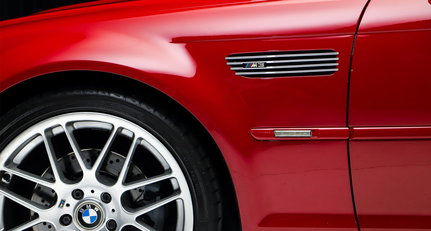
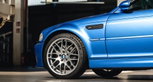
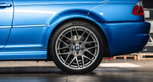
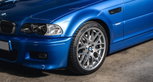
Introduced at the end of 2004 as a final version of sorts, the Competition Package partially resolved this drawback. It combined the manual transmission and engine of the standard M3 with the aesthetics of the M3 CSL, including the stylish 19-inch wheels. However, the package was far more than just show, as it also featured the upgraded brakes, a quicker steering rack, and the sharpened suspension of the flagship model. While the Competition lagged behind the CSL in terms of power and absolute weight reduction, this version, with around 3,000 units produced, represents an excellent compromise and a top buying recommendation.


What should you pay for a E46 M3?
The era of bargain prices for the E46 M3 is firmly in the past. While usable cars could be bought for under 20,000 euros just a few years ago, even the less desirable convertibles in decent condition now command 35,000 euros or more. Well-maintained standard coupés with fewer than 150,000 kilometers on the odometer usually start north of the 40,000-euro mark. Pristine examples with a full service history and low mileage trade between 60,000 and 80,000 euros.
Naturally, the CSL, with only 1,383 units ever built, operates in an entirely different price bracket and well into six-figure territory. Anyone looking for a car with a fully documented history in good condition will struggle to find anything under 120,000 euros, while top-tier examples are sometimes listed for over 200,000 euros.


What are the technical problems?
The E46 M3 is rightly considered a modern classic, but buyers must be highly vigilant regarding maintenance. Alongside the previously mentioned issues with the SMG hydraulics, other weak points exist, most notably the S54 engine's rod bearings. Due to the immense piston speeds of the high-revving unit, the bearing shells wear out quickly by design, making preventative replacement every 80,000 to 100,000 kilometers mandatory to avoid catastrophic engine failure. Closely linked to this is the VANOS variable valve timing unit, where the sprocket bolts are prone to shearing off. The oil pump's pressure regulating valve should also be monitored, as it wears down with higher mileage and, if it fails, causes oil pressure to drop instantly, resulting in immediate consequences for the rod bearings.


Away from the drivetrain, the cracking rear subframe mount is the most notorious issue of this generation. Over the years, torsional forces cause fatigue cracks in the sheet metal around the mounting points of the rear axle carrier. Although BMW recognized this severe flaw back in the day and partially repaired many vehicles under a generous goodwill program, there was never an official recall. BMW's voluntary action back then offers no guarantee today. Many cars only developed cracks long after the deadlines had expired, or they were simply never brought to an authorized dealer at the time.
If the metal is already flexing today, the only solution is usually the highly labor-intensive welding of special reinforcement plates. Anyone considering a purchase should have the underbody thoroughly inspected despite any past factory actions. It is also crucial to ensure that the manually adjustable valve clearance was regularly checked during major services, as a comprehensive service history is absolutely essential for this high-performance engine.


What problems occur with age?
The body of the E46 M3 is well protected from the factory, so rust is rarely a major issue on well-maintained summer cars. However, if you are looking at an example that was driven in the winter, you should meticulously check the wheel arches, jacking points, and the areas behind the front wings for trapped dirt and oncoming corrosion.
Regarding the suspension, the sporty setup and engine performance usually take their toll around 80,000 to 100,000 kilometers. Worn control arm bushings, tired shock absorbers, degraded trailing arm bushings on the rear axle, and worn rear top mounts noticeably dilute the once razor-sharp handling.
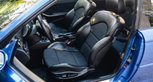
Inside, the M3 shows typical aging signs inherent to the E46 generation. These include rattling interior trim pieces, widespread peeling of the soft-touch paint on the center console and door handles, and fabric linings on the A- and C-pillars that tend to unglue due to heat. The heavily contoured side bolsters of the M sport seats are also prone to severe wear from careless entry and exit. However, if you maintain this classic regularly and protect it from continuous UV exposure, you will look at a cockpit that has fully preserved its sporty, premium appeal even after more than twenty years.


Is it worth buying a BMW E46 M3?
Definitely! BMW's sporty compact executive car has aged beautifully and still drives fantastically. In terms of both looks and driving feel, the third generation offers exactly what many enthusiasts miss in the current sixth generation: a timeless but by no means boring design and, especially in the manual base model, an unadulterated, thoroughly mechanical character.
The E46 M3 has always been a popular car in its segment, and due to the recent Y2K hype, demand and prices have risen significantly. However, the ceiling has likely not been reached yet, meaning further appreciation can be expected, particularly for rare, highly sought-after specifications and the CSL. Therefore, the model is also worthwhile as an investment, even though driving pleasure should always remain the top priority.
Photos: Tom Wood, Maximilian Vogl and Keno Zache for RM Sotheby's