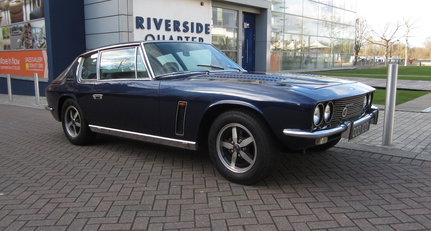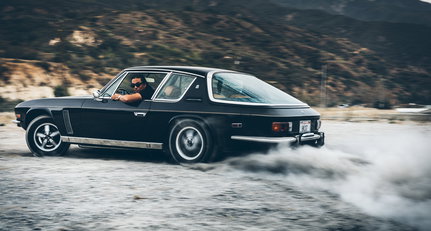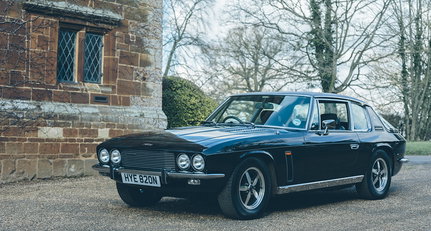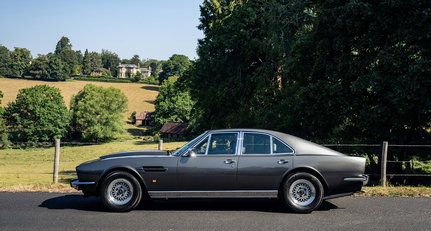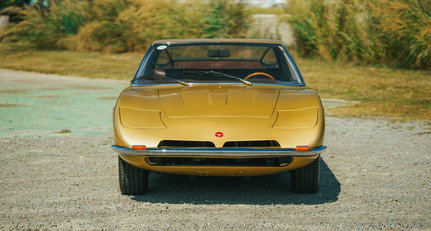














From 1966 to 1976, the Interceptor made automotive history as a powerful and luxurious Gran Turismo from Midlands manufacturer Jensen Motors. It was an explicitly international creation, as the coupé was designed by Touring in Italy and powered by a large-displacement Chrysler V8 from Detroit. The closely related FF, of which only 320 units were built, was also the first series-production road car with permanent all-wheel drive and an early form of ABS, making it the technological flagship of the British automotive industry at the time.
There are therefore good reasons why Jensen International is now putting a completely new Interceptor on the road following its Interceptor R restomod project. While the company is not a direct successor to the original Jensen Motors that collapsed in 1976, the historical ties are close. These connections are primarily channelled through Jeff Qvale, who is overseeing the development of the GTX. His father was once the main shareholder of Jensen Motors, and Jeff himself worked his way through various factory departments as a teenager in the seventies.


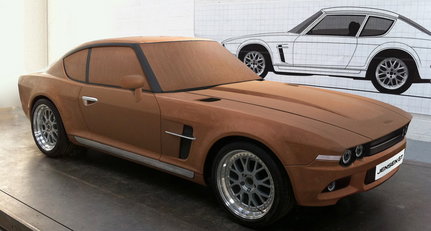
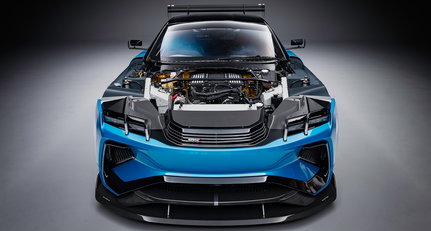
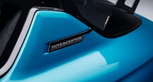
The recently unveiled Interceptor GTX is far more than just a technically and visually modernised evolution of the classic from the sixties and seventies. Instead, it is a car developed entirely from scratch. Although it adopts several design elements from the original, it does not share a single nut or bolt with its predecessor. The modern-era Interceptor is also cut from a completely different cloth in terms of character. It's a genuine modern muscle car that cares very little for the Gran Turismo comforts of its ancestor.
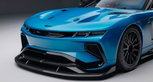
When it comes to the design language of its first completely new model, the company partnered with the independent studio Avant Design. The new Interceptor GTX does retain the basic proportions, particularly in profile, where the long bonnet, the set-back passenger cabin and the large panoramic rear window remain instantly recognisable. However, thanks to modern details like narrow headlights featuring vertical LED elements and a continuous light bar at the rear, this track-focused prototype is firmly anchored in the year 2026.


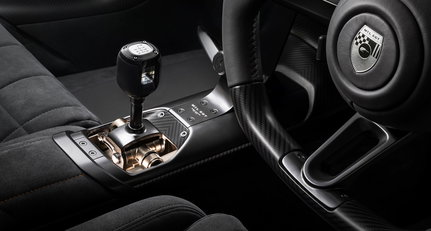
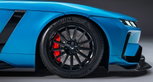
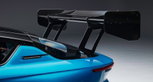
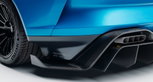
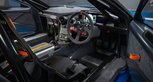
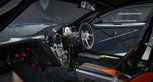
While Touring opted for understatement with the original Interceptor, giving the almost five-metre-long fastback coupé a distinctly dignified appearance, the modern track prototype looks unusually brutal. This is largely due to its 20-inch Vossen wheels, wide side skirts, gaping air intakes, functional carbon aero elements, a massive rear diffuser and a carbon rear wing. These exterior upgrades are by no means purely for show, as the adjustable rear wing alone is designed to generate over 350 kilograms of downforce. The cockpit has been stripped back to the essentials, although the British team did not neglect aesthetics, using Alcantara and exposed carbon fibre on the centre console and dashboard. The bucket seats are also made of carbon fibre, and an FIA-approved roll cage ensures safety if things go wrong on track.
The aluminium body of the Interceptor GTX is handcrafted by Coventry Metalcraft, even though it was largely developed digitally. For the sake of pure driving pleasure, Jensen still relies heavily on analogue technology for its first modern model. For example, the coupé is equipped with hydraulic power steering rather than an electromechanical system.


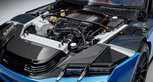
Just like at the original Interceptor's premiere at the 1966 London Motor Show, a powerful American-built eight-cylinder engine sits under the long bonnet. This time, however, it comes from the General Motors corporate parts bin rather than from Chrysler. Jensen International uses an LT V8 but emphasises that the engine has been completely reworked, meaning less than 20 per cent of the components actually come from GM.
The British company commissioned the performance specialists at Late Model Engines in Houston to build and refine this powerhouse. The Texans upgraded the engine with genuine motorsport components and increased the displacement to an impressive 6.8 litres. When called upon, the V8 will rev to the 7,000rpm mark. A 2.65-litre Roots supercharger with electronic boost control ensures the GTX produces 960 bhp, which is roughly 973 PS. Depending on the selected engine map, the unit is actually designed to handle up to 1,200 bhp (about 1,217 PS) and over 1,100 lb-ft (roughly 1,490 Nm) of torque. Thanks to the motorsport-derived MoTeC engine management system, these extreme figures should not compromise the engine's longevity.


"From the outset, exceptional performance and a genuinely involving driving experience were always hugely important to the Interceptor programme, particularly in this first track-focused GTX form," explains Duerden, Managing Director of Jensen International. "But durability, drivability and reliability mattered just as much. We wanted to create a car that feels mechanical, responsive and properly analogue, but also something capable of absorbing sustained hard use without compromise. That's why we chose to work with Late Model Engines and why we've used only the very best proven motorsport-grade engineering solutions throughout the project. The GTX is an extreme car in terms of performance, but it also needed to feel robustly engineered, usable and dependable."
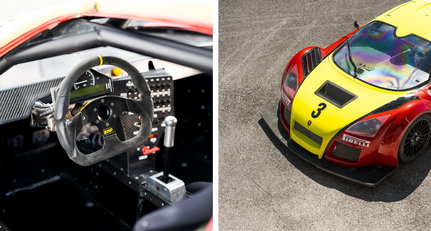
Power is sent to the rear wheels via a six-speed sequential gearbox. The driver can change gears using either the lever on the centre console or the shift paddles behind the steering wheel. However, Jensen International has already hinted that future road-going versions might also receive a classic manual transmission. The track-focused GTX will undergo extensive testing in the coming months, as it is not intended to remain the only modern-era Interceptor in the long run. While no specific timeline has been communicated yet, the British manufacturer plans to develop a street-legal version derived from the GTX, which will bear the GTR moniker. Following that, a comfort-oriented version designed more as a Gran Turismo has been announced, perfectly bringing the story full circle back to the original from 1966.