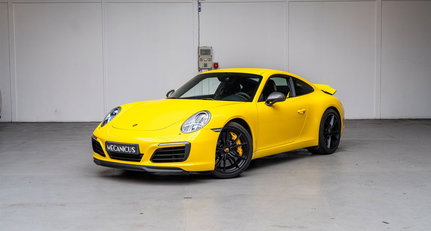
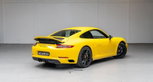
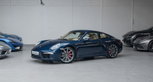
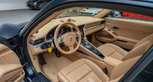
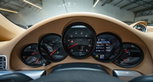


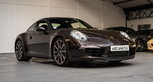


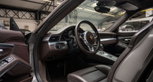
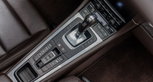
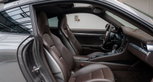
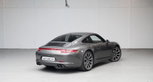
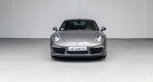




Who is the Porsche 991 Carrera for?
Following the 996 generation's transition to water cooling, the 991 underwent another conceptual shift with its mid-cycle refresh. Starting with the 991.2, unveiled at the 2015 IAA, Porsche introduced twin-turbocharging even to the base Carrera. Excluding the iconic 911 R and GT3 models, the entry-level variants of the 991.1 were the last series-production 911s with naturally aspirated engines, making them particularly interesting to purists. These enthusiasts often avoid the optional PDK transmission, opting instead for the seven-speed manual gearbox— a Porsche innovation and technical specialty found otherwise only in the Corvette C7, which was introduced two years later.
The entire seventh generation of the 911, produced from autumn 2011 to the end of 2019, represents an excellent compromise between modern technology and classic values. This is especially true for the relatively down-to-earth Carrera models. Compared to its predecessor, the 997, the 991 is more torsionally rigid and significantly larger, having grown by about six centimeters in length, with the wheelbase stretched by ten centimeters. Compared to the current 992, which is notably wider and more overtly modern, it appears almost delicate. This is another point that appeals to fans of classic Porsche values. and also largely prevents bargain opportunities; while the 991 Carrera is significantly cheaper than a brand-new 992 Carrera, the difference is smaller than one might expect for a model that is nearly fifteen years old in its original version.


Which version should you buy?
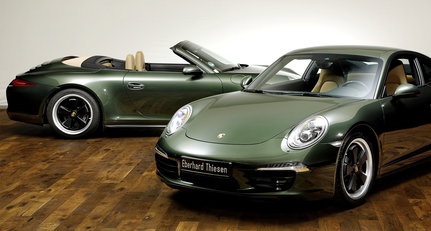
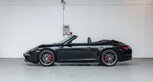
Since the early eighties, the 911 Cabriolet has been a staple in Porsche's repertoire alongside the Coupé, and the seventh generation is no exception. While both are sporty, the closed two-door model is slightly more agile due to its higher body rigidity and lower weight, while its better aerodynamics are also subtly notice-able in performance. The 3.4-liter naturally aspirated engine used before the facelift, equipped with direct injection from the start, produced 350 hp and 390 Nm of maximum torque. Even though the driving differences in terms of dynamics are only marginal in this generation, the Coupé remains the first choice for performance-oriented drivers. The same applies to the manual transmission, even if the dual-clutch gearbox offers an advantage in acceleration.
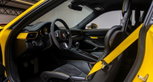
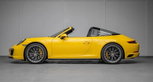
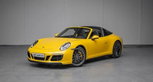
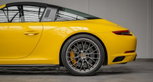
The 911 Targa, introduced in 2014, represented a good compromise between the dynamics of the Coupé and the open-top romance of the Cabriolet; it featured the characteristic Targa bar for the first time in generations, recalling the original 911. It was available exclusively with all-wheel drive. For the Carrera S, Porsche used a naturally aspirated 3.8-liter flat-six engine with 400 hp. Both the Carrera and Carrera S were optionally available with all-wheel drive.
The 2016 model update brought several improvements, including a modernized infotainment system and improved steering. The 991 generation debuted the first electronic power steering for the 911, which unfortunately offered less feedback than the hydraulic system of the 997. With the facelift, engineers addressed this deficit by using the steering system known from the GT3 even in the base version. Above all, however, was the new twin-turbocharged engine generation, which involved some trade-offs in sound but was a significant improvement on many fronts.


The 3.0-liter biturbo flat-six provides higher maximum torque across a wide rev range from 1,700 to 5,000 rpm, making the drivetrain feel much more effortless in everyday traffic. In the discontinued naturally aspirated engines, peak torque was not reached until 5,600 rpm. The new turbo engines rev from idle up to 7,500 rpm — for a turbocharged engine, the boxer is exceptionally rev-happy. At the same time, fuel consumption decreased, and Porsche Active Suspension Management became standard after the revision.
The only argument against the modernized version is the dampened sound, which can be a dealbreaker for many interested in the purchase of a sports car. All in all, Porsche fans who want to drive their 911 in everyday life are better served by the 991.2 Carrera, while purists who want to enjoy driving their car over mountain passes on weekends will probably be happier with the early naturally aspirated cars thanks to their goosebump-inducing sound. Even the rear-wheel-drive models have good traction; the all-wheel-drive versions are particularly recommended if you want to get through tough winter conditions and occasionally strap a ski box to the roof.
If you fancy something even more special and purist, the 911 Carrera T, which was introduced in 2018 as a late addition to the 991.2 lineup, is well worth seeking out. Porsche stripped it back to the essentials: a shorter-ratio manual gearbox, a standard mechanical rear limited-slip differential, and a modest weight reduction through thinner glass and deleted rear seats, all combining to deliver the most visceral and engaging driving experience in the regular Carrera range.


What should you pay for a 991 Carrera?
Anyone looking to purchase a 911 Carrera of the 991 generation should have at least 65.000 euros set aside. For that money, you can get a solid 991.1 Carrera built before the facelift, though you should not be put off by the corresponding mileage. Top-maintained cars with a complete history and not many kilometers on the clock start more around 90.000 euros.
There is plenty of room upward. A good Carrera S or a Cabriolet with a nice specification can break the 100,000-euro mark. The 991.1 Coupé represents the "sweet spot" because you get the naturally aspirated engine character at an acceptable price. The 991.2 models with turbo engines are generally a bit more expensive due to modern technology, their younger age, and higher daily driver suitability. Service is due every two years and costs at least 800 to 1,500 euros, depending on the scope; for more extensive inspections, including transmission oil changes and brake fluid replacement, the amount can be significantly higher. You should always plan a buffer for wear parts such as tires or brakes. However, those who maintain the car professionally will be rewarded with a level of reliability that is surprisingly high for sports car standards.


What are the technical problems?
The 991 is considered one of the most reliable 911 generations, but it is not entirely free of weaknesses. In the 991.1, the switching valves in the cooling circuit are one of the most common issues: the plastic valves can develop cracks over time, which manifests as sporadic "Cooling system fault" messages. In the 991.2, the problem shifts to the water pump — especially in cars from the 2017 and 2018 model years, the coolant line on the pump housing can leak. The notorious IMS intermediate shaft problems of previous generations are fortunately no longer an issue with the 991.
However, the potential for bore scoring in the 991.1 should be taken seriously. In the larger 3.8-liter engines of the Carrera S, the design occasionally encourages deformation of the cylinder walls, which in the worst case can lead to piston seizure — typically in the range between 70,000 and 90,000 kilometers. This problem occurred much more frequently in the 997.1 though; in the 991.1, the risk is noticeably lower, but an endoscopy check of the cylinders at higher mileage remains a recommended investment.


For the turbo models (991.2), prospective buyers should watch for sporadic power loss, which can indicate defective boost pressure control valves. Even more important, however, is to check whether the technical bulletin regarding turbo oil lines has been completed: in cars built between 2015 and 2018, aluminum shavings from production sometimes remained in the oil tanks, leading to bearing damage. Replacing the lines costs around 3.000 to 4.000 euros, while a complete turbo replacement per pair at the local Porsche center can cost up to 8.000 euros.
The PDK is robust with scheduled maintenance, but the mechatronics units are prone to failure at high mileage, which can become quite expensive. During a test drive, you should listen for a quiet idle and clunking noises from the chassis during throttle transitions — both are early warning signs of costly consequential damage. A complete service history is not a luxury but a requirement for the 991. Before buying, it should also be checked whether the Takata airbag recall (gas generators) has already been carried out on the respective car, as it affects several model years of the series. Anyone wanting to buy a 991 Carrera with the optional Sport Exhaust System (PSE) on board should also take a close look at the exhaust flap actuators: corroded actuators can get stuck in the open or closed position, and since Porsche workshops often replace the entire muffler, costs can quickly reach up to 1.500 euros.
What problems occur with age?
Thanks to the high aluminum content, the body is excellently protected against corrosion — rust is hardly an issue in a well-maintained 991. Only in the wheel arches and under the underbody panels is it worth looking more closely for dirt accumulation and damp spots in Carreras driven regularly in winter.
In terms of the suspension, worn wishbone bushings and shock absorbers often appear from 80,000 to 100,000 kilometers, which significantly impairs handling. In the interior, rattling trim parts, degrading soft-touch surfaces, and wavy leather dashboards are known signs of aging. However, those who do not park the car permanently in the sun and take care of its maintenance will find an interior that has in no way lost its premium appeal, even after ten years.


Is it worth buying a Porsche 911 991?
If you have the necessary budget, the answer must be "yes" without a doubt. The 991 is not only one of the most robust generations of the 911, but also one of the most carefree modern sports cars in general. Since it had a naturally aspirated flat-six in the rear until the facelift and the design is emphatically timeless and classic, the series is referred to as "the last true 911” by many connoisseurs.
Porsche is said to have further developed or redesigned almost 90 percent of all components compared to the predecessor 997, making the seventh generation a huge leap in the more than sixty-year evolutionary history of the 911. At the same time, it is anything but an insider tip — the high demand is reflected in a high price level, even for the standard Carrera. In the long run, prices are likely to rise further, which is why you can do little wrong from a financial perspective with a well-maintained and thorougly documented 991.
Photos: Mecanicus