





Who is a Porsche 996 for?
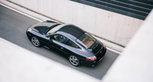
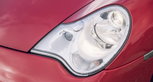
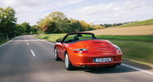
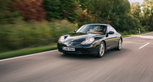
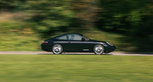
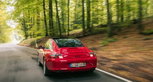
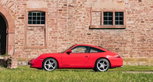
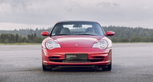
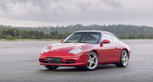
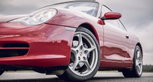
Broadly speaking, it is for anyone wanting to fulfill the dream of owning a Porsche on the most favorable terms. It is also for those — mostly from younger buyer demographics —who are no longer bothered by the "fried-egg" headlights (mocked at the time of launch) and do not miss the raw, throaty engine note of the 964 or 993 — a sound worshipped by the die-hard air-cooled faction. Styled by Pinky Lai under design director Harm Lagaay, the 996 has long since shed its reputation as the "black sheep" of the 911 family, even though its design betrayed the fact that Porsche — then in dire financial straits — had to count every penny. Consequently, the 996 shared 38 percent of its components with the 986 Boxster, primarily at the front end and in the interior.

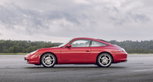
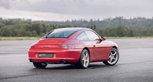
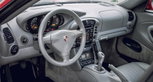
Its increased dimensions also led some 911 customers to conclude that the sports car had morphed into a soft GT. Yet its performance figures (a top speed of 280 km/h and 0–100 km/h in around five seconds) remain respectable even by today's standards. Furthermore, the 996's rounded design has aged better than one might have expected, and even the overlapping instrument dials rarely bother anyone these days — especially since the ignition lock is, thankfully, still located to the left of the steering wheel!
At the same time, thanks to a combination of Boxster parts on the front axle and 993 components on the rear, the 996 is far easier to handle at the limit than its rather capricious predecessors. Moreover, it offers modern customers a largely analog driving experience—something many appreciate once again today.
Ultimately, despite all the doomsayers, Porsche sold 175,262 units of the 996 from 1997 till 2005 — almost three times as many as the last air-cooled model, the 993. It was also thanks to the success of the 986/996 duo that the struggling Zuffenhausen-based company managed to turn things around.

Which version should you buy?
One of the 996's key advantages is its engine, which runs pleasantly quietly on the highway thanks to water cooling. The 130-liter luggage compartment holds enough for a small weekend shopping trip, and all-round visibility is superior to that of a modern 911. However, the need for Porsche to cut costs was evident in the interior: in standard trim, the door panels and dashboard were made of cheap plastic. Automatic climate control, Porsche Stability Management (PSM), and a rear wiper were all optional extras. Before the facelift, a glove compartment wasn't available at any price.
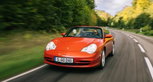
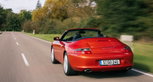
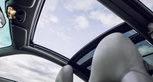
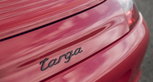
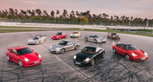
On the plus side, there is a wide range of models to choose from. The lineup offers something for every taste, ranging from the relaxed everyday sports car (Carrera 2) and the mighty Turbo to uncompromising, road-legal race cars (GT2/GT3). Entry-level buyers might opt for the Carrera, all-weather drivers for the Carrera 4 or 4S, and sun-seekers for the Targa or even the Cabriolet — the latter featuring a fabric roof that opens and closes electro-hydraulically in just 20 seconds, unlike the 993 version, whose electrically operated top still required the front roof latch to be released and secured by hand. Thanks to permanent all-wheel drive, the Carrera 4 and 4S offer greater safety in poor weather, though their steering feels slightly less agile due to the extra 110 pounds of weight.


For model year 2002, Porsche introduced a facelift—internally designated the 996.2. Key changes included an engine displacement increase from 3.4 to 3.6 liters, boosting output from 300 to 320 hp and torque from 258 to 273 lb-ft. The VarioCam camshaft adjustment system was upgraded to VarioCam Plus, featuring variable valve lift. The car also received a visual refresh: the controversial "fried egg" headlights were replaced by units with clear lenses and bi-xenon lighting that better evoked the classic 911 look. Interior tactile quality and overall material feel were improved as well. Additionally, the new 320-hp Carrera 4S adopted the wide-body styling of the Turbo.
A 996 from the 2002 model year onwards — with the 3.6-liter engine and the new headlights — offers the best value for money. However, condition is more important than the specific model: a well-maintained 996.1 with a replaced IMS (intermediate shaft bearing; see the section "What Are the Technical Problems?") is a better choice than a neglected 996.2. Arguably the safest bet is a 996.2 with an IMS that has been replaced by a specialist workshop — especially since Porsche had already improved the bearing's durability by that stage.

What should you pay for a Porsche 996?
The Porsche 996 offers the most affordable entry point into the world of the Porsche 911. For the price of a brand-new, base-model VW Golf 8, you can get a Carrera 3.4 — a genuine Porsche featuring a rear-mounted engine, the unmistakable 911 silhouette, and top-tier performance. Mobile.de has recorded a 32 percent increase in the value of the 996 Carrera over a four-year period, rising from €19,000 in 2021 to €25,000 in October 2025. Classic Data identifies a peak in this upward trend in 2023, noting that values have dipped slightly since then. The market research institute currently lists a price of €28,200 for a Carrera 3.4 in "Condition 2," while a "Condition 1" example commands €44,900. For the facelifted 3.6-liter model, current figures stand at €53,200 (Condition 1) and €44,900 (Condition 2).
What about the cost of ownership? Running costs — insurance, tax, servicing, and repairs — add up to between 3,000 and 5,000 euros a year. Major repairs can cost anywhere from 7,000 to 10,000 euros, while an engine failure could run to 15,000 euros or more. A good rule of thumb is this: if you cannot afford the purchase price twice over, you would be better off waiting a while and building up some savings first. After all, even a 996 remains a 911.

What are the technical problems?
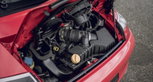
When discussing this topic, it is impossible to overlook the M96/97 engine — which was entirely new at the time — and its failure-prone intermediate shaft bearing, or IMS. Even the air-cooled engines of the Mezger era used such a shaft to drive the camshafts. It rotates within a ball bearing known as the IMS bearing. If this fails — often due to the aging of the internal grease — the intermediate shaft itself breaks. This frequently causes the timing chain to skip a tooth, throwing the camshafts out of sync; the pistons then strike the valves, and in a worst-case scenario, the engine sustains irreparable damage.
Porsche revised the IMS bearing three times throughout the 996's production run. According to Porsche engine experts, the issue is fortunately far less alarming today than it was a decade ago — not least because the 996 is rarely used as a daily driver anymore.
That said, it is worth recalling the warning signs of impending IMS failure: oil leaks between the engine and transmission, metal shavings in the oil, rough idling, and knocking metallic sounds from the rear of the engine. A highly reliable replacement solution comes from LN Engineering in the form of a dual-row ceramic hybrid bearing or a cylindrical roller bearing, both offering higher load-bearing capacity than the original factory parts.

However, these still require replacement after six years or 45,000 miles. In contrast, an oil-pressure-lubricated plain bearing requires no further replacement. Spending 2,000 euros on this optimal solution is therefore a sound investment — and affordable compared to a five-figure engine rebuild. Since replacing the IMS requires separating the engine and transmission, it makes sense to simultaneously replace the crankshaft seal — which is prone to leaking — and the clutch, if necessary.
Another risk lies in the Lokasil cylinder bores, where damage typically develops gradually. The cylinders begin to warp into an oval shape; scoring occurs, running clearances increase, and piston slap ensues. Warning signs include high oil consumption (starting at just 0.5 to 0.7 liters per 620 miles) or blue exhaust smoke on the passenger side during a cold start.

Scratched cylinder bores are merely the visible consequence of a fundamental design flaw of the M96/M97 engine: the "open-deck" architecture. In this design, the upper section of the cylinders lacks full support from the engine block, allowing the cylinders to deform under mechanical and thermal stress—leading to the aforementioned damage. Even with regular oil changes, this type of failure typically occurs after 110,000 to 125,000 miles. For a permanent, worry-free solution, specialists such as "FLAT – Porsche experts" recommend that affected owners opt for a rebuilt engine fitted with more durable grey cast-iron liners.
Early PCM versions (Porsche Communication Management) often boot up only as far as the Porsche logo before restarting. The most common causes are a faulty hard drive within the PCM or other internal system errors. However, Porsche Classic now offers a solid retrofit solution: the PCCM Plus. It features Apple CarPlay and Android Auto interfaces as well as DAB+ reception, priced at €1,277 (excl. VAT). Pixel errors in the onboard computer are also not uncommon and are expensive to fix.


What problems occur with age?
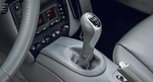
The gathered leather found in early 996 models is prone to significant wear over the years — something particularly noticeable with lighter leather colors. The soft-touch coating on the center console — unless it was painted in body color as an optional extra — is highly susceptible to scratching, as are the handbrake lever and gear shift knob. Leather steering wheels often show signs of wear or cracking, and the rubberized coating on the switches tends to become sticky. In general, the materials are superior to those of the 993 but not quite as high-quality as those found in its successor, the 997.
The latch mechanism for the rear center console storage compartment is prone to failure, and the replacement part is expensive; the same applies to the door speaker grilles, which are no longer available in every color.
The oil-air separator frequently clogs, oil leaks at the rear crankshaft seal or camshafts are common, and the plastic coolant reservoir becomes brittle over time — though this is to be expected for a car that is over 20 years old. Porsche replaced the separate, front-mounted oil cooler of the 993 with an oil-to-water heat exchanger in the 996; this component, too, can eventually fail.

Another issue affecting various Porsche 911 models concerns the water radiators and air conditioning condensers located in the two outer front air intakes. With year-round use, leaves and moisture tend to accumulate there; combined with stone chips, this leads to radiator corrosion. It is therefore advisable to have the debris removed every six months to avoid potential air conditioning failure.
Finally, one must anticipate that — beyond a certain mileage — components such as strut mounts, control arms, tension struts, and other suspension parts, as well as rubber bushings in general, will reach the end of their service life and require replacement.


Is it worth buying a Porsche 996 Carrera?
Since production ended in 2005, the 996 has evolved from an unloved problem child into the last affordable 911. Its image has improved significantly, shifting from an underrated used car to a sought-after modern classic. The 996 offers a great balance between the classic 911 driving experience and more modern technology. Its hydraulic power steering is direct and communicative, while water cooling makes the engine more practical for daily use — eliminating worries about overheating in traffic jams or the need for elaborate warm-up and cool-down routines. Additionally, the VarioCam system delivers a robust torque curve alongside improved fuel efficiency.

While the notorious IMS bearing failure was a major talking point a decade ago, it is now rare to find a car that hasn't already had a replacement bearing installed. Nevertheless, before signing a purchase agreement, it is wise to verify that the replacement was carried out by a Porsche specialist; a 996 with a documented IMS bearing replacement commands a premium of 5,000 to 10,000 euros. However, one shouldn't buy a 996 solely as an investment — ultimately, it is a sports car, not a savings account. And should something break, the supply of spare parts remains excellent; components are widely available, and an active online community is on hand to help track down parts quickly if needed. The IMS is undoubtedly the most hyped weak point of this engine generation in the media, yet it is effectively no longer a major issue in engines built from around 2005 onwards. By comparison, the condition of the cylinder bores is the more critical mechanical issue — and one that therefore warrants special attention when inspecting and technically evaluating a 996.
You can find plenty Porsche 911 of the 996 generation for sale in the Classic Driver Market
Photos: Porsche