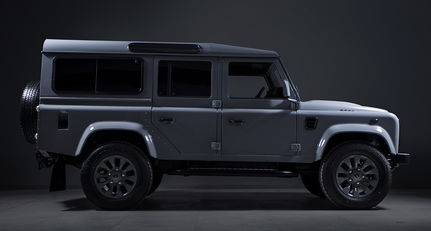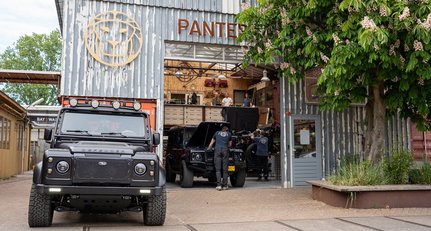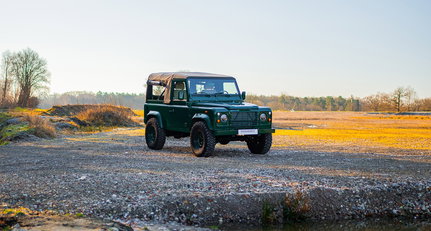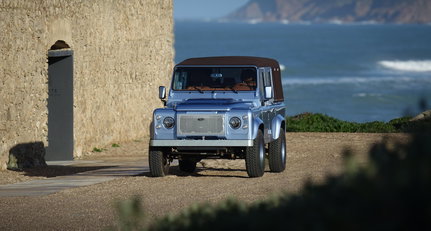



















Originally intended for agricultural use, the Land Rover was something of a British answer to the American Willys Jeep. Today, the classic Landy is widely regarded as an off-road icon, and many fans have given the cold shoulder to the all-new Defender introduced in 2020, remaining steadfastly loyal to the much-loved old workhorse.
1983 was a pivotal year in the history of the Land Rover, which dated back to 1948, as the British manufacturer replaced the existing Series III models with the new "One Ten", named for its 110-inch (2.80-metre) wheelbase. The "Ninety" followed a year later with a significantly shorter distance between the axles, exactly 92.9 inches, or 2.36 metres. Yet another year later, the longest variant of the trio arrived: the "One Two Seven", boasting a wheelbase of 127 inches (3.23 metres).


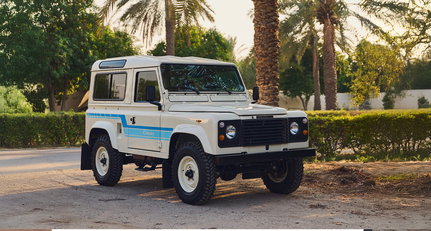
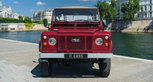
Visually, the successors to the Series III were distinguished by a radiator grille that was no longer recessed, a larger, single-piece windscreen and more pronounced wheel arches. The most significant technical advance came from the permanent four-wheel-drive system derived from the Range Rover, featuring a two-speed transfer case and a lockable centre differential. Coil springs on both the front and rear axles improved ride comfort and axle articulation. The interior and the engines (one diesel, two petrol) were updated as well.
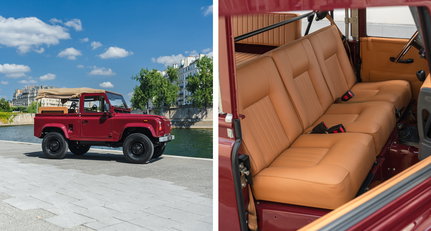
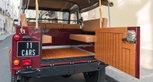
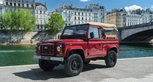
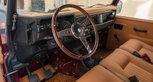
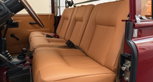
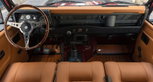
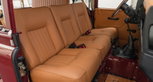
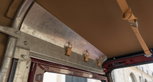
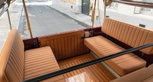
Offered by French dealer Eleven Cars, this example was originally built in May 1985 and manages the feat of accommodating up to seven passengers within the short wheelbase of a Land Rover "Ninety". The front row alone seats three occupants comfortably abreast, while in the rear there are two benches mounted perpendicular to the direction of travel. When needed, their seat bases can be folded down, providing space for two more passengers on each side. Like the inner door panels, these rear seats are upholstered in the same beige leather found on the front seats, while the floor and the inner panel of the side-hinged rear door are clad in fine teak.


The complete restoration of the box-section frame and the bespoke work, including the stunning Bordeaux red paint, the leather upholstery and the wooden flooring, consumed more than 1,300 man-hours. It also included the installation of a new soft top to shield the rear passengers from the elements. Conversely, with the top down, they can enjoy an authentic convertible experience and, while driving along unpaved national park trails, an unobstructed view of wildlife and scenery. Reliable propulsion is provided by the 2.5-litre four-cylinder petrol engine, introduced in 1985 as a replacement for the previous 2.25-litre unit (74 hp) and delivering 83 hp to the permanent four-wheel-drive system via a five-speed gearbox.


If you have always dreamed of a classic, compact Land Rover 90 but would like to share your adventures with friends, and to do so in an upscale setting, then this tastefully customised "Landy" might be just the car for you.