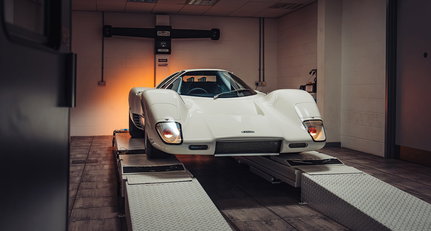
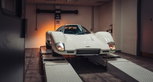












Before McLaren turned the sports car world upside down with the F1 in the early 1990s, the British company with roots in New Zealand focused exclusively on race cars without road homologation. Superficially, this assumption might seem correct. However, anyone who delves deeper into the brand's history will come across the road-legal M6GT, which was designed and built in 1969 and 1970 in cooperation with the production partner at the time, Trojan.
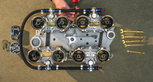
With this project, Bruce McLaren wanted to prove that the technical expertise of his company could also work on public roads. Therefore, based on the open-top race cars of the M6A program that dominated the North American Can-Am series in the late sixties, he created a closed coupe that, more than 55 years later, looks like the ancestor of today's McLaren supercars. The M6GT pioneered the basic recipe that makes McLaren models like the 750S or Senna modern icons. The mid-engined sports car, trimmed for lightweight construction and aerodynamically optimized, was powered by a powerful eight-cylinder engine — in this case, Chevrolet's famous small-block V8 fitted with four Weber carburetors. A total of three units were built, comprising one fully functional prototype and two show cars. The former was driven by Bruce McLaren on the roads of England and used for commuting to business meetings.


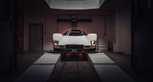
Although development was obviously already well advanced, the M6GT never went into series production. The reasons for this were changes to the Group 4 regulations and the sudden death of Bruce McLaren in June 1970. The racing driver and engineer lost his life while testing the next-generation Can-Am race car, the M8D, at the Goodwood Circuit. Not far from the site of the accident, at the Goodwood Festival of Speed, held on the famous estate in the south of England from July 9 to 12, McLaren will commemorate how far back its own supercar lineage reaches. MSO (McLaren Special Operations), the sports car manufacturer's bespoke division specializing in exclusive customer requests, has built a fourth example of the M6GT.


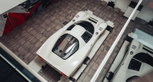
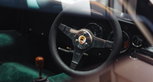
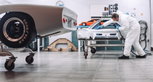
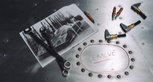
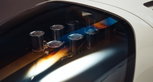
To preserve the founder's spirit, the special operations department proceeded extremely meticulously during construction, utilizing historical drawings and reference materials from the company archive. The chassis originates from an M6A race car built during that era and was verified using historical McLaren reference vehicles. The corresponding cockpit, also derived from the M6A race car, forms the core of the vehicle. Around it, MSO hand-crafted hidden structural components such as the roll bar, the rear frame support structure, the internal reinforcement of the body panels, and the wiring harness. The body itself was created using original molds rediscovered in the United Kingdom, which feature historical modifications and thus impressively document the evolution of the design at the time. The suspension utilizes extensively restored original M6GT hardware, requiring the sourcing of bearings in imperial measurements that have long been out of regular production.
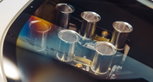
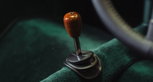
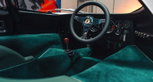
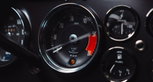
The respect for history extends down to the smallest details, evident in the use of closed aluminum dome rivets installed by aerospace specialists in exact accordance with the historical template. Inside the spartan yet stylishly appointed interior, a hand-turned solid walnut gear knob meets green vinyl seats with stitched heat-sealed details. Just like its historical predecessor, the car is powered by a small-block V8 with so-called camel hump cylinder heads built to the original specification, paired with the same gearbox as back then. The new addition to McLaren's heritage collection is painted in a white shade called Colnbrook. Combined with the green interior, this pays homage to the livery of Bruce McLaren's very first Formula 1 car, the 1966 M2B.


This rolling piece of history will now be exhibited at the McLaren House during this year's Goodwood Festival of Speed. There, it is intended to bring the founder's vision of bringing motorsport to the road vividly to life for the audience. The presentation acts as an immersive journey through time, skillfully bridging the gap between the past and the brand's current supercar portfolio. Thus, the faithful homage not only stands side-by-side with historical milestones like the M8A, the Austin 7 Ulster, and the F1 GTR, but also builds a bridge to the latest supercars such as the W1 and the Artura. Without Bruce McLaren's pioneering spirit of the late sixties, these vehicles would likely never have come to fruition.
Fotos: McLaren