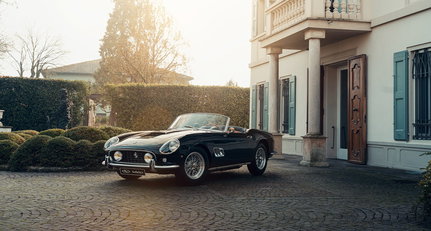

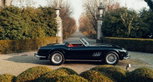
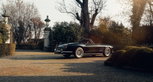
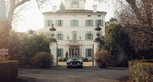
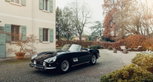
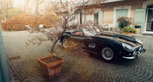
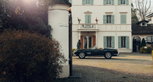
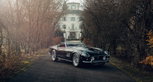


There are certain cars that transcend their mechanical purpose and become cultural artefacts rather than just cars. They become rolling expressions of beauty, ambition and human creativity, and among those select few, the Ferrari 250 created a lineage of thoroughbred racers, concours winners and the kind of sports car every Hollywood A-lister during the 1950s desired. Of all the incredible iterations of the 250, the GT SWB California Spider remains one of the most desirable Ferraris ever built, garnering the title as one of the most beautiful and significant cars of all time, a machine that defines an era and continues to shape our understanding of what a great sports car should be. All of those accolades have made it the pinnacle of many prancing horse collectors, with few examples ever leaving collections as prices continue to rise. This, therefore, makes it a very special moment before us, where RM Sotheby’s upcoming sale in Paris on January 28th will see this gorgeous Nero drop-top find its new loving home.

Born during Ferrari’s golden age, the 250 series represented a moment when competition success, road-car refinement and artistic design aligned perfectly. At its heart lay Gioachino Colombo’s legendary 3.0-litre V12, an engine that combined racing pedigree with surprising civility, delivering performance that thrilled without ever overwhelming. By 1960, Ferrari had refined the formula into the Short Wheelbase configuration, creating a car that was lighter on its feet, more agile and more responsive than its long-wheelbase predecessors. The result was a driving experience that felt alive in the hands, tactile, communicative and deeply engaging, and those lucky enough to experience it in period simply couldn’t get enough, especially those in the USA.
As the name might suggest, the California Spider was conceived with a particular audience in mind, where Ferrari recognised the growing appetite among American enthusiasts for high-performance open-top cars that could devour long coastal roads as effortlessly as Alpine passes. Named after the sun-drenched West Coast lifestyle it was intended to evoke, the California Spider became the ultimate expression of glamorous grand touring. Yet, unlike many luxury roadsters of the period, this was a Ferrari through and through, a car that retained the soul of a racing machine beneath its elegant skin.


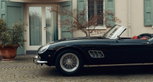
That skin, crafted by Scaglietti, is where the California Spider’s legend truly takes shape. Its proportions are sublime. A long, sensuous bonnet flowing into gently sculpted wings, a low windscreen framing the cockpit, and a perfectly balanced tail that seems to taper away with effortless grace. Every line has purpose, every curve feels inevitable. It is a design that rewards contemplation, revealing new details with each glance, yet never feels busy or overstated. Even among the most beautiful Ferraris, the California Spider truly is in a league of its own.
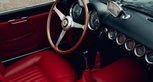
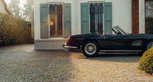
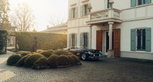
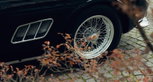
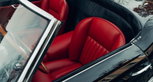
What makes this particular 1960 example especially compelling is the way it encapsulates everything the 250 lineage stood for. It is a car that can be admired as a sculpture, yet fully comes alive when driven. Believed to have been originally finished in Bianco paint over a Nero interior, the Ferrari was sold in October 1960, where it resided in France for much of its early life, often undoubtably turning the already beautiful streets of Paris into true artwork. Over the years the car would be repainted in Rosso, but in February 1996 the Ferrari was sold by Mr Bartolomeo to the current owner, a sophisticated marque collector based in Germany who owned many of the finest Ferraris, Maseratis, and Alfa Romeos. The 250 GT was promptly sent to marque specialist Carrozzeria Campana Onorio in Modena, for a two-year nut-and-bolt restoration that included a refinish of the coachwork in Nero. More recently, in late 2025 the interior was re-trimmed with period-correct surface-dyed Rosso leather.

Beyond its aesthetic and dynamic brilliance, the California Spider holds immense historical and cultural significance. These cars were built in limited numbers, assembled by hand at a time when Ferrari was still a relatively small manufacturer driven by Enzo Ferrari’s uncompromising vision. Each example carries with it the DNA of the marque’s racing dominance and the aspirations of a brand establishing itself as the ultimate symbol of automotive excellence. Decades later, that aura remains undiminished, and it has cars like this to thank for that. With an estimate of 12-14,000,000 Euros, we’ll be watching closely to see just how badly a collector wants this drop-dead-gorgeous drop-top in their stable!
 Paris, 28 Jan