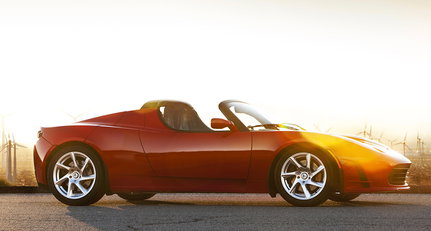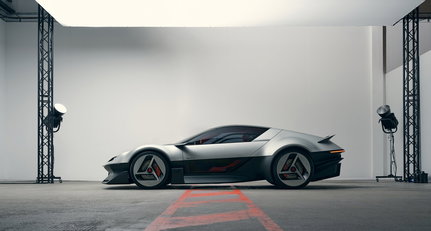
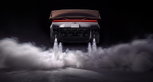


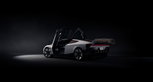
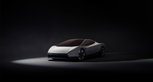
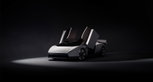
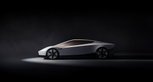
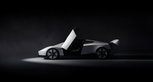
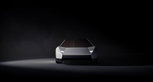
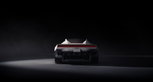
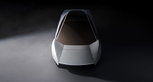
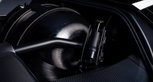
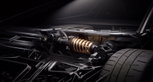
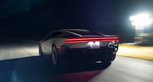


On the same evening, two opposing visions for the future of the sports car collided. On a pier in the New York City borough of Queens, against the backdrop of the Manhattan skyline, Porsche unveiled the “Mission S,” a mid-engine, combustion-powered hypercar marking a deliberate return to analog values. At SpaceX’s facility in McGregor, Texas, Elon Musk presented pretty much the opposite: the new Tesla Roadster, roughly nine years after its first unveiling, whose promised launch never materialized. The car drove up a curved ramp, fired its cold gas thrusters, performed a barrel roll in mid-air, and landed safely. In another stunt, it jumped over a row of parked Teslas.


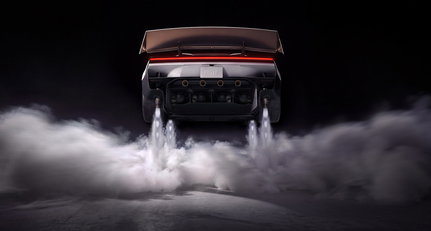
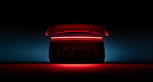
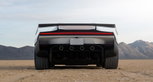
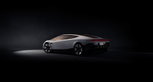
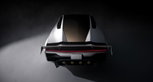
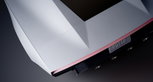
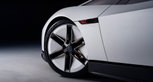
The design, with its scissor doors and extremely angular, minimalist design language, recalls both Lamborghini and Tesla’s own Cybertruck. Hidden headlights, a full-width taillight, and flush aerodynamic elements make the body look smooth and seamless—until a massive wing extends from the rear.
The futuristic Roadster is to be offered in three variants. Even the base “Performance” version features active aerodynamics and a multimode suction system that draws air from beneath the car for maximum downforce. According to Tesla, this creates so much negative pressure that the Roadster could even stick to a ceiling while standing still. The “Thrust” version adds cold gas thrusters. At the top of the range sits the “Rocket,” available by invitation only. It replaces the passenger seat with a high-pressure air tank feeding thrusters around the perimeter of the body, allowing the four-wheeled rocket ship to move forward and upward and even perform lateral rotations.


The “Thrust” version is said to accelerate from 0 to 60 mph in 0.8 seconds, making it quicker than a Gen4 Formula E race car, which takes 1.8 seconds. The “Rocket” is claimed to need just 0.59 seconds, but it would require a separate safety assessment before it could be approved for road use in any country.


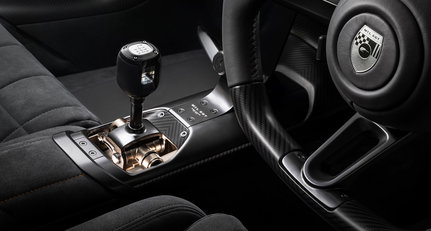
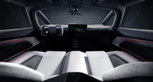
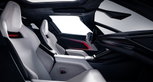
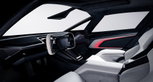
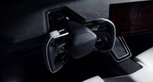
Inside, Tesla stays true to its minimalist design philosophy: a steer-by-wire steering wheel, a central display, and additional readouts in front of the driver. The interior is finished in white with gray microsuede accents.


While Tesla intends to focus solely on fully autonomous models in the medium term, the Roadster is to remain manually drivable, at least in its base version. At the presentation, 2028 was given as a possible start of production. Battery capacity, range, production weight, and price remain to be determined, as does the question of road approval.