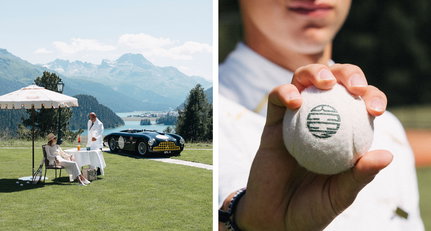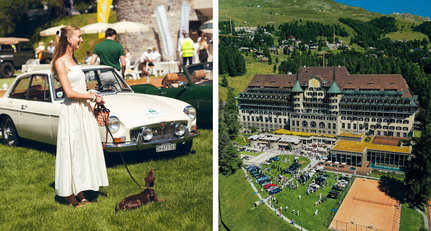






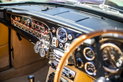

















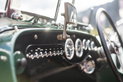








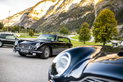










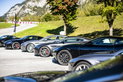







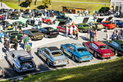

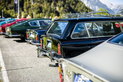








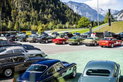


Officially, England is governed from within Downing Street and the Houses of Parliament. But in reality, the truly decisive moves and deals are traditionally sealed over a glass of whisky in the exclusive gentlemen's clubs, sports clubs, and member societies of the British capital. Whoever gains entry gains influence — this applies to intellectual debating houses like White's or Brook's Club in London St. James's as well as to ambitious sporting associations like the Marylebone Cricket Club, the Royal Thames Yacht Club, or the St. Moritz Tobogganing Club, which operates the Cresta Run, the unofficial embassy of eccentric English club culture in the Swiss Alps. And, because London's elites have traditionally been addicted to automobiles, the capital's centres of power also include the venerable Royal Automobile Club, the Bentley Owners Club, and the Aston Martin Owners Club, or AMOC for short, which celebrates its 90th anniversary this year.


It's likely, one might speculate, that "poster boys" like James Bond, the Cresta Run, and the internationally oriented AMOC contributed more to Britain's fame and reputation in Europe in the post-war decades than the British Diplomatic Service. Strictly speaking, secret agent 007 wouldn't have qualified as a member of the AMOC: for many years, the prerequisite for admission was, after all, owning an Aston Martin.


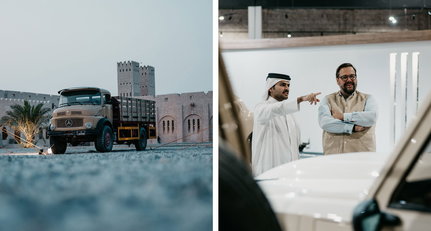
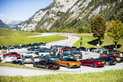
And James Bond's iconic Aston Martin DB5 was, from a pragmatic perspective, a company car from Her Majesty's State Fleet. Today you can become a member without owning an Aston Martin — although that would be quite a waster for the iconic AMOC grille badge. Be that as it may, last weekend, the Aston Martin Owners Club celebrated its 90th birthday. And not in London or at the company's old headquarters in Newport Pagnell, but — because Aston drivers never miss an opportunity for a road trip — on an excursion to Saalfelden am Steinernen Meer at the foot of the Austrian Alps.


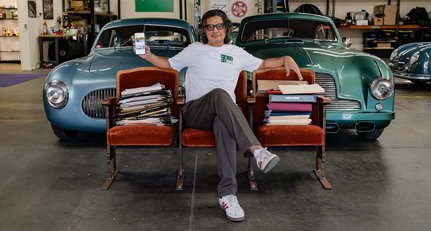
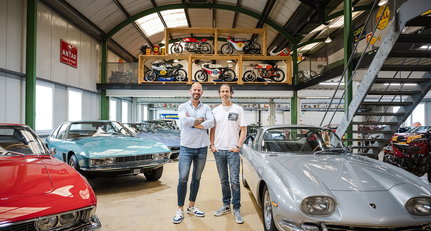
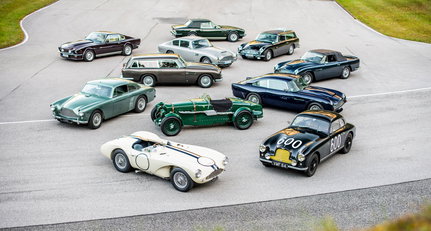
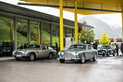
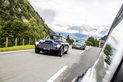
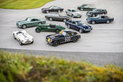
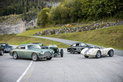
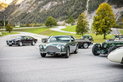
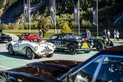
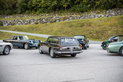
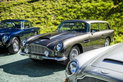
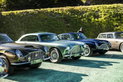
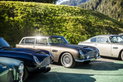
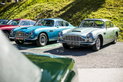
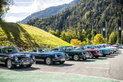
Naturally, most participants travelled to the club meeting and concours under their own steam. A gentleman from Denmark even completed the journey from the Far North in 14 hours and in one go at the wheel of his Aston Martin DB6. Meanwhile, we at Classic Driver joined our friends from the Golden Age Collection in Munich on their road trip. After all, Christophe Schmidt, who curates the private collection of an Anglophile enthusiast, had already impressed us with their exceptional Aston Martins at the Concorso d'Eleganza Villa d'Este and The ICE St. Moritz. For the 90th anniversary of the AMOC, the Munich-based collection brought not just one or two, but eleven historically significant collector cars from Aston Martin's golden age to Saalfelden. And since the summit meeting on the Grossglockner High Alpine Road was unfortunately canceled due to sudden snowfall, there was all the more opportunity to embark on a journey through the brand's history with the ever-knowledgeable Christophe Schmidt.


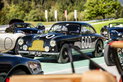
The oldest car in the collection is an Aston Martin Ulster Sport 2-seater with an impressive history. In 1935, the year the AMOC was founded, M.C. Trehorne Thomas and Michael Kenyon drove the brand's most famous pre-war racing car in the 24 Hours of Le Mans, achieving 10th place overall. Meanwhile, the transition to the post-war era was marked by one of the three Aston Martin DB2 factory racing cars from 1950, boasting an almost unbelievable racing history. With drivers like Eric Thompson, George Abecassis, Lance Macklin, and Tommy Wisdom at the wheel, the team car not only achieved third place overall and two class wins at Le Mans, but also won the Mille Miglia twice before passing into the ownership of company founder Sir David Brown as a daily driver.


Our favourite racing car from the Golden Age Collection, however, remains the breathtakingly beautiful 1955 Aston Martin DB3S. The delicate racing car, finished in American cream white with dark blue stripes, was once used in races on the US West Coast and has already enchanted us at both The ICE and, more recently, Marks & Cars.


The AMOC is a place for brand connoisseurs — anyone with a question about Aston Martin's sometimes convoluted brand and model history will usually find not just one, but several excellent answers at the club's meetings. And as is often the case with experienced collectors, it's the obscure test cars and missing links between the great success models that particularly fascinate Aston enthusiasts. One such key model from the Golden Age Collection is the factory prototype of the Aston Martin DB4, known within the scene as DP114/2, from 1957. Designed at the factory and equipped with a De Dion rear axle, the car served not only as a rolling development laboratory but also as a private car for David Brown's wife.


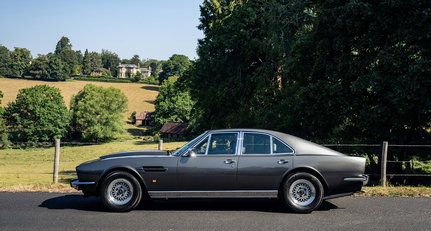
The Aston Martin DB5 V8 prototype from 1966 also played a key role in the brand's history: not only was it the first experimental vehicle from the new factory in Newport Pagnell, but also the first road-legal Aston Martin with the V8 engine developed by Tadek Marek, which would decisively shape the brand from 1969 to 2000. The engine replaced the traditional inline six-cylinder and ushered Aston Martin into the era of high-performance GTs and supercars. The DBS V8, V8 Vantage, Lagonda, and even the Bulldog concept car would have been unthinkable without Tadek Marek's eight-cylinder engine.


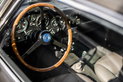
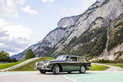
However, the AMOC wasn’t the only one with a milestone birthday this year; the Aston Martin DB6 also turns a proud 60 in 2025. On that note, there’s no better car to celebrate this anniversary than the first DB6 ever built: a 1965 example finished in elegant "Silver Birch" with dark blue leather seats. As the crowning glory of the model range, the Golden Age Collection also brought along one of only 38 Aston Martin DB6 MkII Volantes in first-class original condition, practically a twin of the Aston Martin that King Charles has owned since his 21st birthday.


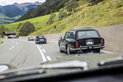
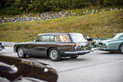
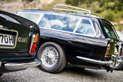
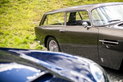
The rarest and most British of all variations of an Aston Martin is, of course, the Shooting Brake; a grand tourer converted into a hunting car with ample space for shotguns, dogs, and picnic baskets. And since the Golden Age Collection brought along two Shooting Brakes — the only DB5 built at the factory and a Radford DB6 in Vantage specification — the subtle design differences between the two gentleman's station wagons could be excellently discussed in direct comparison. The DB5 Shooting Brake, originally personally built for David Brown, was later driven by gentleman driver and L'Oréal board member Lindsay Owen-Jones. These weekend-ready company cars remained a recurring theme at the AMOC.


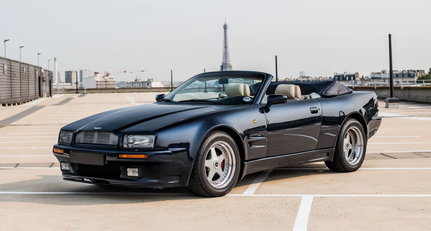
In the mid-1980s, Sir Elton John was driving his Aston Martin V8 Vantage in England in a completely private capacity — and thus fully qualified for AMOC membership. Painted in "Royal Cherry," with magnolia-coloured seats and a burbling 7-litre engine under the hood, the British muscle car didn't quite live up to the brand's previous code of understatement. Yet the car offered a glimpse into the racy special models of the 1980s and 1990s, which are particularly sought-after by collectors today. Finally, the 1988 Aston Martin V8 Volante in "British Racing Green" was a case for connoisseurs, which only at second glance was identified as a rare EFI version.


It is also thanks to the AMOC that such knowledge about the intricacies of Aston Martin history remains so well documented and widespread in the scene to this day. "The AMOC plays a crucial role in the history of Aston Martin," says Christophe Schmidt. "It remains the most important institution for archiving, researching, and disseminating technical knowledge about the brand and its cars. It is thanks to the club and its dedicated members that Aston Martin enthusiasts can now look back on almost a century of first-class documented vehicle histories." It’s likely only a matter of time before Cambridge offers a professorship in Aston Martin history.


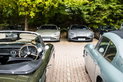
The eleven extraordinary Aston Martins from the Golden Age Collection were, of course, just the tip of the iceberg at the AMOC anniversary. As admirers of the 1980s Aston Martin V8 Zagato, we naturally had to bow down before the unique racing car, once driven around British racetracks by comedian Rowan Atkinson.


Another truly magnificent sight was that of an unrestored Aston Martin DB5 in "Roman Purple” — a colour that, along with Cumberland Grey, Tungsten Silver, and Bahama Yellow, is counted among our favourite paint schemes. And wasn't the bright red 1950s coupé, vaguely reminiscent of a Pegaso, the mythical Aston Martin DB2/4 designed by Giovanni Savonuzzi and custom-built at the Serafino Allemano coachworks in Turin? One could not have wished for a better line-up of the great British sports car brand for the 90th anniversary of the Aston Martin Owners Club.
Photos: Rémi Dargegen for Classic Driver © 2025 All rights reserved.