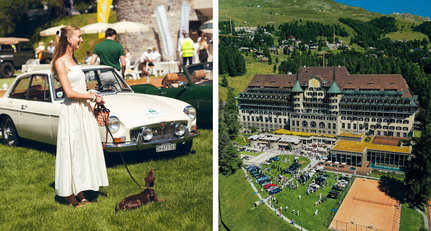


There is a distinct art to arrival in St. Moritz — a choreography of shifting gears, turning wooden steering wheels in tight mountain curves, and gliding into that golden alpine sunlight you can only find in the Engadin, leaving behind the frantic pace of modern life. Once a year, when the mid-summer sun catches the immaculate lawns of the Suvretta House and the crisp, thin air of the Alps fills with the unmistakable, mechanical baritone of vintage straight-six engines built in Britain, that art form achieves its absolute peak.


Following the dazzlingly opulent, high-society flair of the Billionaire Edition in the previous year, last weekend's 32nd British Classic Car Meeting St. Moritz turned its gaze toward an equally style-defining world: the timeless, all-white elegance of traditional lawn tennis. Few cultural motifs harmonize so seamlessly with the ethos of classic British motoring as the codes of the grass court—the effortless sophistication, the absolute discipline of form, and the celebration of seasonal ritual. And while the world's best players battled it out at Wimbledon, automotive jewelry met courtside nonchalance in St. Moritz, shifting the paradigm from sheer high-octane competition to a masterclass in the art of living well.


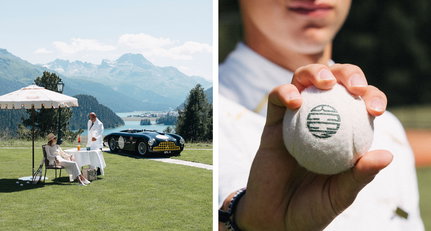
On Thursday, Classic Driver's very own J.P. Rathgen got into the mood for the weekend at the St. Moritz Tennis Club, where he traded rallies with Kuwaiti tennis champion Mohammad Al Ghareeb before taking the umpire's chair in the grand restaurant of Suvretta House — which had been converted into a tennis court for what must have been the most extravagant tennis tournament in sports history.


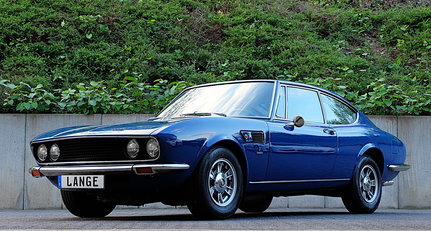
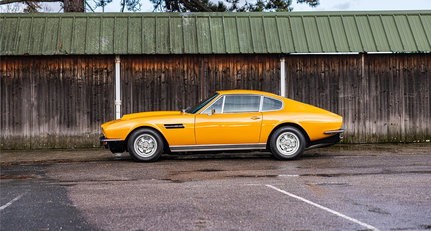
On Friday, the crowds in St. Moritz had a first chance to inspect this year's cars, including plenty of iconic Austin-Healeys, Jaguar XK150s and E-Types, Triumph Spitfires, as well as Aston Martin DB5s and V8s, but also rarer machines like a Bristol 405, a Mini Pickup, one of only three surviving ex-Works Aston Martin DB3 — and the 1969 Austin Mini Cooper 1275 S Works rally car driven by none other than "The Rally Professor" himself, Rauno Aaltonen. The day culminated into a glamorous dinner at Badrutt’s Palace Hotel overlooking the town and Lake St. Moritz.


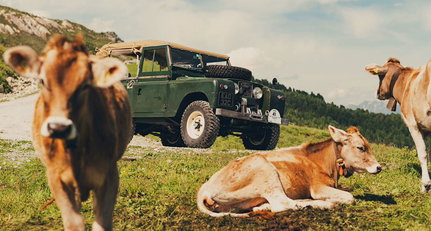
Kicking off at Badrutt’s Palace Hotel, the true centerpiece of Saturday’s action was a grueling yet visually spectacular 200-kilometer regularity rally designed to test the stamina of pre-war legends and the sharp reflexes of late-century classics alike. Crossing the alpine border into neighboring Italy twice, the route challenged grids to handle staggering shifts in altitude with a healthy dose of italianità. Leg 1 sent the field hunting down the serpentine tarmac of the legendary Maloja Pass, plunging into the deep shadows of the Val Bregaglia toward the historic streets of Chiavenna. After a brief foray onto Italian soil, the teams returned up the mountain to the manicured grounds of the Suvretta House to enjoy a quintessential British picnic, served directly from wicker hampers. Leg 2 proved no less dramatic, routing the automotive caravan back up and over the breathtaking vistas of the Bernina Pass, down to the sun-soaked town of Tirano, before the final ascent back into St. Moritz.


In a razor-sharp battle of precision timing, Tiziano Nessi and Hirad Houshmand claimed overall victory in the fiercely contested Sports Classic category, driving a 1963 Jaguar E-Type to a mere 337.41 penalty points and earning a specially engraved IWC Pilot’s Watch at the Suvretta House Gala Dinner. They were pushed hard by runners-up Ferruccio and Tamara Nessi in a 1939 MG TB (436.46 penalties), followed closely by Nello and Carolin Wiesendanger in a 1956 Jaguar XK140 DHC to round out the podium. The remaining top-ten slots showcased the remarkable depth and age-coefficient diversity of the high-altitude rally.


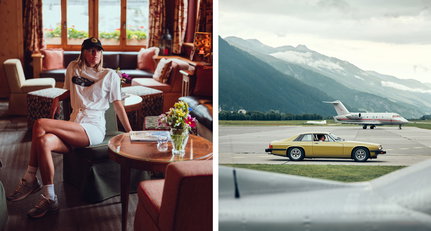
If Saturday was a test of mechanical stamina and navigational discipline, Sunday was a pure aesthetic celebration. The emerald gardens of the Suvretta House transformed into a sun-drenched, lawn-tennis garden party, sound-tracked by the traditional melodies of the Swiss Highland Pipers and fueled by Pimm’s Cups, fresh strawberries, and double cream. The weekend's recommended dress code, “White, Wimbledon Style,” saw participants and spectators alike enthusiastically embracing the theme. The lawns were a sea of Panama hats, unconstructed linen blazers, vintage pleated skirts, and pristine tennis whites, presenting a breathtaking panorama of timeless courtside fashion that mirrored the classic lines of the machinery parked nearby.


The expert jury, led by President Marco Makaus and accompanied by His Majesty's Ambassador James Squire, evaluated each entrant not just on cosmetic appearance, but on authenticity, mechanical correctness, and historical provenance. In a rare and magnificent sweep of the weekend's highest honors, the coveted Best of Show Trophy was awarded to the


As the cars slowly filed out of the Suvretta gates on Sunday afternoon, their echoing exhaust notes bouncing off the surrounding granite peaks of the Engadin, the event left an indelible impression on everyone present. It proved beyond a doubt that whether you are striking a perfect slice down the line or clipping a blind mountain apex, great tradition and impeccable style remain completely evergreen. Until July 2027, the high-altitude valley returns to its quiet alpine slumber, but the echo of Wimbledon style in the mountains will linger for a long time to come.
Photos: Pietro Martelletti, Davide De Martis, Fabrizio D’Aloisio