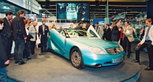
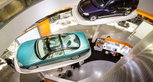


Concept cars can be a double-edged sword. While some show cars merely aim to generate maximum attention with wild aesthetics and crazy technology, others offer a concrete preview of upcoming production models and future automotive engineering. The Mercedes F200 Imagination, unveiled by the brand at the Paris Motor Show in October 1996, sits right in the middle of these two approaches.
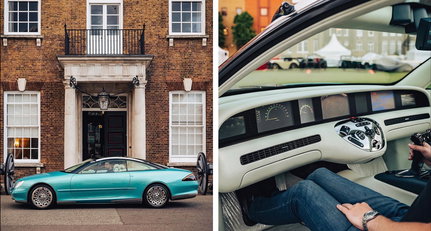
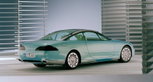
Its exterior design previewed the fundamental look of the second-generation Mercedes CL that would debut in 1999. The profile and window line in particular found their way into production almost unchanged. This design was realized under the supervision of longtime chief designer Bruno Sacco and is primarily attributed to Christopher Rhoades and Harald Leschke from the manufacturer's Advanced Design team.


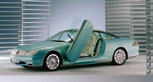
Naturally, the butterfly doors that were almost mandatory for concept cars of that era never made it into production. The same goes for the trypophobia-inducing wheel design and the massive taillights. Instead, the second edition of the CL rolled off the assembly line with the familiar taillights of the W220 S-Class introduced in 1998. At the front, it received the typical Mercedes four-eye face of the late nineties, whereas the concept and the four-door version of the flagship model still featured single headlight units.
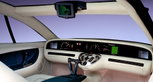
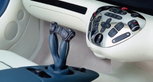
At first glance, the interior looks like an absurd futuristic fantasy, largely due to the complete absence of a steering wheel and pedals. Airplane cockpits and the controllers of the brand new PlayStation are said to have inspired the layout. The creative department of the Swabian manufacturer opted for a supposedly revolutionary control concept using two sidesticks mounted on the driver's door and the center console. Three decades later, we have to admit that this solution never caught on, even though it offers one clear advantage: If necessary, the person in the passenger seat can take control of the car at any time.

Interestingly, this control concept was only made possible by the revolutionary drive-by-wire technology that has only established itself in automotive engineering in recent years. Prime examples are the Tesla Cybertruck and the newly introduced facelifted version of the Mercedes EQS. Although Saab had already worked on this technology in research projects in the early nineties, the F200 Imagination introduced the system to the general public for the first time in 1996. This setup entirely eliminates any mechanical connection between the steering controls and the front wheels or the brakes. To safely test the unfamiliar driving behavior without a mechanical link, the F200 Imagination was extensively evaluated in Mercedes' own driving simulator, which had opened in 1985. This makes the manufacturer an absolute pioneer in the field of virtual car development as well. This technology is essential for autonomous driving, which is the ultimate future automotive tech, and the concept was a true trailblazer in this area during the nineties.
Looking closer at the dashboard, a sudden realization hits you. A large screen stretches across the entire width. The concept thus anticipated the Mercedes Hyperscreen, which would only celebrate its production debut in the all-electric EQS flagship in 2021. Video cameras replaced the traditional rearview mirrors, representing another visionary idea that has only become established in the car industry in the current decade.

In contrast, the electronically controlled ABC suspension went into production much earlier. It was teased in the F200 Imagination and ultimately hit the streets in 1999 with the closely related CL. It later became available for the S-Class and the R230 series SL. The concept already featured an active suspension control system that could compensate for the rolling and pitching movements of the body in real time.
This futuristic coupe was by no means a static mockup. Appropriate propulsion was provided by the in-house 6.0-liter V12 engine with 394 horsepower, offering not only powerful acceleration but above all excellent smoothness. Before electric drivetrains were viable for a car of this kind, the refined and acoustically restrained twelve-cylinder engine was the best choice for a luxury coupe of this caliber.


The F200 Imagination may have seemed like unrealistic science fiction at its debut almost thirty years ago, but it was surprisingly groundbreaking for a concept car. Even if its influence is mostly only noticeable today, it is hardly surprising that the curators of the Mercedes Museum in Stuttgart have reserved a place for it in their permanent exhibition.
Photos: Freddie Atkins and Mercedes-Benz