

When a modern car enthusiast hears the name Lagonda, the high-tech Series 2 saloon immediately comes to mind. Introduced in 1976, this luxury wedge penned by William Towns drew massive attention with its futuristic and wonderfully angular design. Along the way, it ushered in the era of the digital dashboard, a feature that would not transform the wider industry for decades. Even though the onboard electronics were plagued by various teething problems, this technology showcase – with 638 built across three series – catapulted Aston Martin into the modern age and helped pull the company out of the depths of the oil crisis.
That same oil crisis was a primary reason why the Aston Martin Lagonda Series 1 fell significantly short of expectations in the mid-1970s. However, this exotic car, built a mere seven times, was not the first attempt to revive the prestigious brand name. Before the Second World War, the company founded in 1906 by American Wilbur Gunn in Staines was in the same league as Rolls-Royce and Bentley. It also made a serious mark in motorsport with sports cars like the M45R Rapide, which won Le Mans in 1935. Under new ownership – Alan P. Good had outbid Rolls-Royce for the company and poached the famous engineer W. O. Bentley – the manufacturer shifted towards a more comfort-oriented approach in the second half of the 1930s, launching a smooth-running V12 alongside its familiar six-cylinder engine. The luxury models of this era served as a blueprint for the noble post-war Lagondas.


In 1947, industrialist David Brown purchased the insolvent company shortly after acquiring Aston Martin. His main interest lay in the powerful and smooth Lagonda inline-six engines, which he believed held great potential for the sportier Aston Martin models. Yet the takeover was not solely about technology transfer. He also used the prestigious brand name to market comfort-oriented touring cars, most notably the Lagonda 2.6 Litre and the Lagonda 3 Litre. These models only sold around 800 units combined over a decade. Behind the scenes, he had merged the two companies, Aston Martin and Lagonda.
Another attempt to reestablish the brand name took place in the 1960s. The Lagonda Rapide was produced from 1961 to 1964, hiding Aston Martin engineering beneath its acquired-taste bodywork. With a total of just 55 Rapides built, the model once again fell far short of expectations. Towards the end of the decade, yet another attempt was launched, but with a major difference. The formerly independent brand had been reduced to a mere model designation within the Aston Martin line-up.


In 1969, the automaker built a first prototype internally designated MP230/1. It was essentially a version of the DBS extended by 30.5 centimetres and fitted with two additional doors, intended as a private car for owner David Brown. Beneath the skin, there were few differences compared to the brand's contemporary two-door models, with power coming from a 5.0-litre pre-production version of the in-house eight-cylinder engine. At the front, the prototype still featured the quad headlamps of the contemporary DBS, whereas the subsequent production model used single headlamps like the Aston Martin V8.
Series production was not planned at that time. David Brown sold Aston Martin in 1972 to the British firm Company Developments Ltd. It was this management team under chairman William Willson that finally brought the closely related saloon into series production to crown the model range. This happened at the exact moment the oil crisis caused the luxury saloon market to collapse. A few weeks after the premiere, Aston Martin went into receivership. The sports car manufacturer was eventually saved in 1975 by an Anglo-American consortium of investors, under whose direction the wedge-shaped Series 2 was later created.


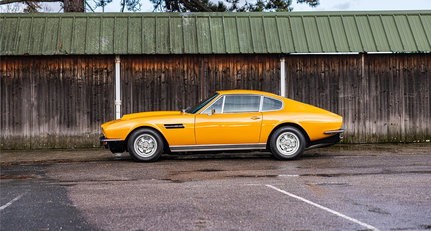
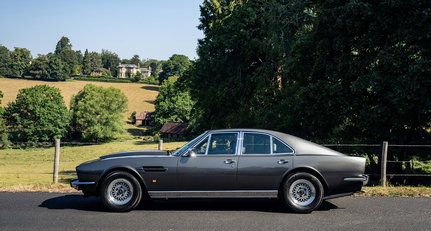
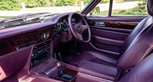
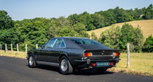
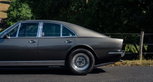
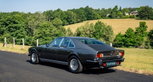
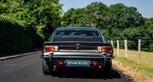
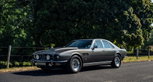
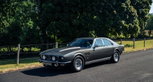
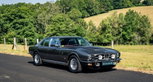
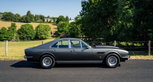
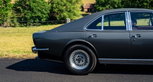
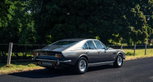
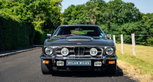
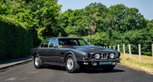
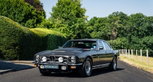
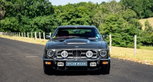
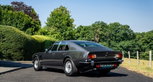
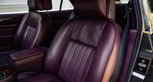
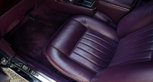
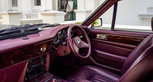
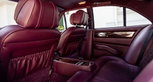
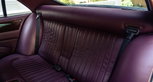
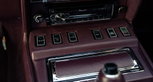
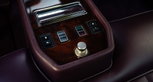
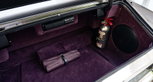
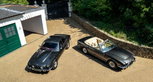
The production version intended for customers, derived from David Brown's 1969 one-off, was unveiled in October 1974 as the Aston Martin Lagonda V8 Series One at the London Motor Show, where it won the SMMT's gold medal for coachwork. The very car that graced the manufacturer's exhibition stand back then is currently being offered in excellent condition by British dealer Dylan Miles Ltd. The rarity and history of this car, being the third of only seven examples, are not the only things that make it special. Its Cumberland Grey paintwork combined with Connolly 'Wildberry' hides further underlines its noble character. However, this colour scheme was only applied during a two-year restoration in the early 2000s. Back in 1974, the car was originally presented in Tourmaline Blue with an off-white interior.
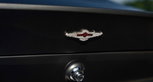
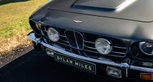
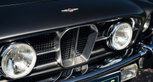
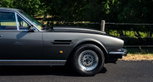
Naturally, there were several differences between the prototype, which was already five years old by the time the Aston Martin Lagonda V8 Series One was introduced, and the production version. The latter received the face of the Aston Martin V8 that had arrived on the market in 1972. With its single headlamps and simple black grille, it looked considerably more modern. A Lagonda-specific chrome grille decoration was added, bearing a distant resemblance to the BMW kidney grille. It was flanked by two round auxiliary lights and helped distinguish the front of the saloon from the coupés, which were built in much higher numbers.


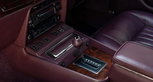
Behind the sporty, forward-leaning front fascia sat the 5.3-litre V8 that also powered the two-door models. It was paired with either a three-speed TorqueFlite automatic transmission from Chrysler or a five-speed manual gearbox from ZF. Only two examples were equipped with the latter. Aston Martin never officially stated the power output, but 280 to 300 horsepower is a realistic estimate. All things considered, the luxury saloon weighing around two tonnes was adequately motorised, though it was hardly a firecracker. With a base price of £14,040, it cost a quarter more than the closely related V8 coupé. Meanwhile, the more comfortable and more stately Rolls-Royce Silver Shadow was a good £1,000 cheaper. Given this difficult market positioning, it comes as no surprise that Aston Martin produced just seven units in total and unveiled its successor only two years later.
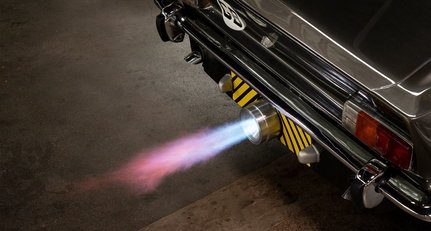
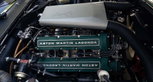
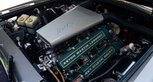
The example now on offer, bearing chassis number 12003 and showing around 43,000 miles on the clock, can definitely not be accused of lacking power. The brand specialists at R.S. Williams installed their own in-house 7.0-litre V8 – said to produce between 450 and 480 horsepower – back in 1992. In 2019, RSW rebuilt the engine to the same specification using a V540 continuation block supplied by Aston Martin.


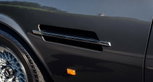
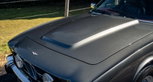
During its restoration between 2002 and 2004, the saloon also received bodywork updates to Oscar India specification. In 2010, the car transferred to factory ownership after being purchased by then-CEO Ulrich Bez, whose signature still adorns the airbox, and it remained there until 2017. The rare Lagonda saloon was repainted once again in 2022 and has participated in several concours events in recent years, including the 2023 Concours of Elegance at Hampton Court, where it received a Class Honours award. The Aston Martin Lagonda V8 Series One may have entered the market at precisely the wrong time, and it lived in the shadow of its rival from Crewe back then. Today, however, this very unfavourable market positioning makes it a genuine rarity. It is one of the rarest Aston Martins ever made and a true showstopper even at the most prestigious automotive events.