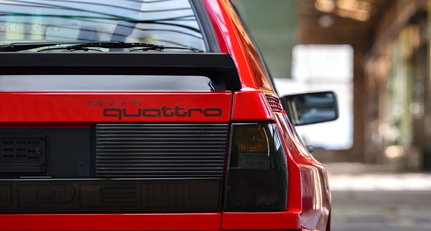







The Audi Ur-quattro revolutionized the rallying world in the early 1980s like no car before it, primarily due to its all-wheel drive system. However, the real reason for the ecstasy among rally fans was hidden under the hood. It was the powerful and spine-tingling sounding turbocharged five-cylinder engine that, along with the quattro system, transformed Audi from a conservative brand for elderly gentlemen into a serious premium manufacturer and a true competitor to Mercedes and BMW.
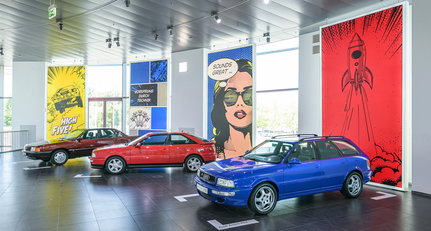
Audi is now taking the fiftieth birthday of its in-house five-cylinder as an opportunity to dedicate an exhibition to this iconic engine at the Audi museum mobile in Ingolstadt. Running until February 28, 2027, the showcase is aptly named "1-2-4-5-3" in reference to the engine's firing order. The special exhibition includes seven specially prepared display engines as well as fourteen cars.


The rally ace that became a legend with Michèle Mouton and Walter Röhrl behind the wheel was far from the first Audi to draw its power from five cylinders. The VW subsidiary was considering equipping the second generation of its upper mid-range Audi 100 with more prestigious five- or six-cylinder engines. For reasons of weight distribution and a more compact design, the decision ultimately fell in favor of the five-cylinder, which was derived from the EA 827 four-cylinder of the Audi 80.
In August 1976, exactly fifty years ago, Audi introduced the second generation of the Audi 100 (C2) in Luxembourg and surprised everyone with the unconventional design of its new top-of-the-line engine. Bearing the internal code EA 828, it was equipped with a modern fuel injection system and delivered 136 horsepower to the front wheels. At the time, no one could have guessed that this cylinder quintet would peak thirteen years later in the monstrous Audi 90 quattro IMSA GTO with 720 horsepower.

The five-cylinder engine wasn’t an Audi invention though. A radial engine with five cylinders was already rotating in the front wheel of the Munich-built Megola motorcycle in the 1920s. However, they were rarely used in production cars until then. Only the upscale diesel version of the Mercedes /8 (W115), the 240 D 3.0, produced a modest 80 horsepower from five cylinders at that time. The 2.1-liter petrol engine reached customers in the spring of 1977 in the form of the Audi 100 5E.
The bridge between these two cars was built by none other than Ferdinand Piëch. Audi's technical director and the driving force behind the brand's realignment had been involved in developing that very Mercedes diesel with his own Stuttgart engineering firm in the early 1970s. A few years later, he evolved the concept for Audi into a petrol engine. He can comfortably be described as the patron of the five-cylinder.


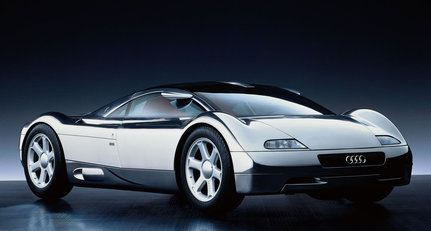
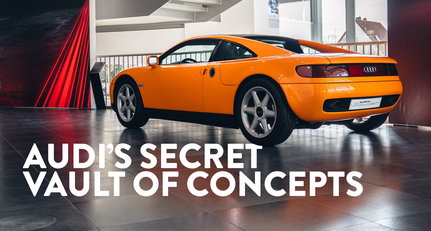
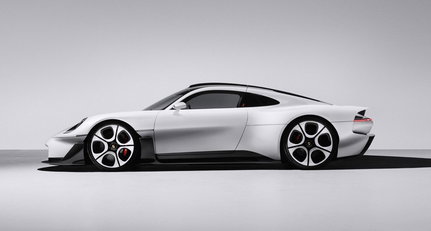
The team at Audi Tradition in Ingolstadt is not limiting itself to everyday classics like the original Audi 100 5E, the 200 5T, or the 100 TDI. They are also enriching the exhibition with sporty milestones such as the S2 Coupé, the Avant RS2, the RS 3, and the TT RS. The oldest exhibit, incidentally, is the aforementioned Megola motorcycle. The show is rounded off with the TT Motorsport racing version and two concept cars, the RS Q3 concept and the retro-styled GT50 concept. The latter is an apprentice project from last year. The trip to Ingolstadt is worthwhile not only for the carefully selected exhibits but also for the creative presentation in a pop art and comic style that references the engine's history.
“50 years of the five-cylinder engine is a very special anniversary for Audi,” says the responsible curator Stefan Felber. “Few technologies evoke such strong emotions or have shaped the brand’s image so profoundly over the past five decades. That’s why so many Audi fans and museum visitors have asked us whether we’d mark this anniversary with a special exhibition — a wish we were only too happy to fulfill.”
Photos: Audi Tradition