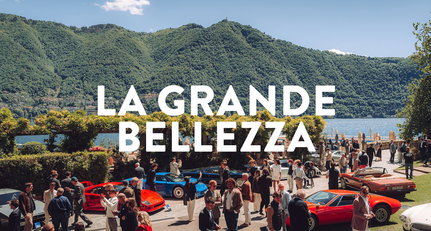


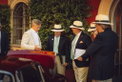


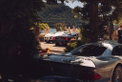
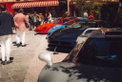
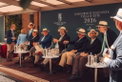









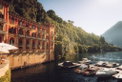







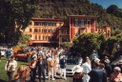


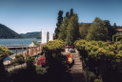


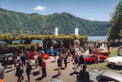

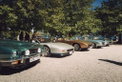

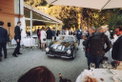
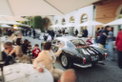
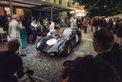

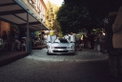
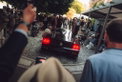





It's a bit like Christmas with the Concorso d'Eleganza Villa d'Este: Every year, it's the same setting, the same roast goose and oysters, the same people singing the same carols, the same rites of festivity. But still, we look forward to the annual repetition — and the small variations that will make all the difference. The Grand Hotel Villa d'Este is a true time capsule, a snow globe in which old-money luxury and mid-century Italian elegance are still very much alive: Once you step inside and recognize the Murano glass chandeliers, the big windows with stunning views of the lake, the waiters in their white jackets, delivering Negronis and Club Sandwiches across thick carpets, the modern world disappears — even if it's just for one fine weekend in May, arguably the most beautiful weekend of the year.


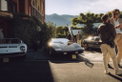
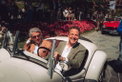
The reason why we return to the Concorso d'Eleganza Villa d'Este year after year, to meet the same people and follow the same old concours protocol, are the cars: Every year, the selecting committee brings together an eclectic mix of equally stunning, rarely seen automobiles from all eras and brands, brought to Lake Como from all over the world. This year, the selection stretched from modest pre-war aluminium race cars and luxurious art-deco cruisers to the genre-defining hypercars of the 1990s and early 2000s, reframing the search for automotive beauty and elegance once again for a new edition of the 97-year-old concours. After days of heavy rain, the concours Saturday rewarded the attendants and guests with glorious sunshine, creating the perfect setting for the exhibition of cars and the parade, moderated by Simon Kidston since 2001.


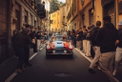
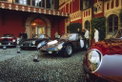
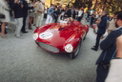
For fans of Ferrari and Italian endurance racing and coachbuilding culture, this year's Concorso d'Eleganza was a very rewarding edition: A whole concours class was dedicated to the greatest endurance racing cars from Maranello, and you know that the selecting committee did a great job when a barn-find Ferrari 250 GTO is not the most spectacular car in the line-up. The grounds of the grand hotel briefly shook when the Ferrari 340 MM — which won the World Sportscar Championship in 1953 — and its neighbouring Ferrari 375 Plus started up their V12 engines. Meanwhile, the dark red Ferrari 250 GT Competizione "Tour de France" owned by watch guru Davide Parmegiani and the steel grey 250 SWB Competizione from the collection of Andrea Bianchedi competed for the title of the most beautiful shape within the 250 legacy.


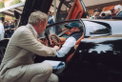
For us, the most exciting racing horse was the Ferrari 250 GT Zagato — a rather modest, black-and-white Gran Turismo sporting a hand-painted starting number and Zagato's famous double-bubble roof. Andrea Zagato walked us around the racing car, explaining how true automotive beauty is achieved by taking elements until there is nothing left but the purest, most functional shape. Deservedly, the Zagato Ferrari won its class and was one of the hottest contenders for the "Best of Show" trophy.

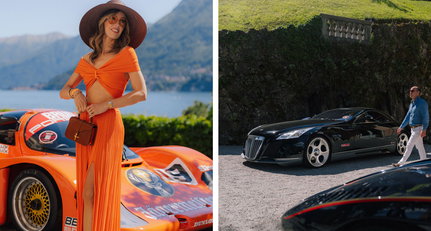
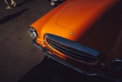
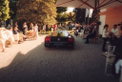
And there were more memorable Ferraris on display: With their jet-age fenders and supersonic shapes, Carrozzeria Ghia's coachbuilt designs for Italy's major car companies might not be the most timeless, but certainly the most flamboyant. And naturally, all eyes were on the two-tone, orange-and-anthracite Ferrari 375 MM with its Lampredi V12 race engine and sculptural shape when it roared across the terrace during the parade — winning the trophy for the best engine sound awarded by opera singer Jonas Kaufmann. Less bold, but certainly equally interesting was the Ghia-designed Ferrari 212 Coupé Speciale which was once owned by Juan Perón, President of Argentina, and which won its class with a subtly elegant two-tone paint and rather modest hint of a tailfin.


If you, like us, have a soft spot for mid-century Italian coachbuilding, there were more exciting cars in the concours: US architect Jonathan Segal had brought his Siata 208 CS designed by Carrozzeria Balbo — a highly aerodynamic coupé that was powered by Fiat's 'Otto Vu' V8 engine and merged hot rod vibes with the sweeping elegance of 1960s Lancias and Ferraris which this car certainly inspired. Meanwhile, Milanese collector Corrado Lopresto had brought a beautiful, Lake Como green Carrozzeria Touring-designed Isotta Fraschini 8C Monterosa that envisioned a return of the iconic brand in post-war years in trademark Touring elegance. And in case you were more into open-top one-offs, the Villa d'Este curators had you covered as well with Gianni Agnelli's silver Ferrari Testarossa Spider — created by Pininfarina with official sanction from Maranello — or the Fissore-designed Monteverdi 375 L Palm Beach that once belonged to the Swiss carmaker Peter Monteverdi himself.


As Simon Kidston once said: Colors make cars. That rule applies especially to the dramatic shapes of Lamborghini's greatest hits — and the Marrone-over-Senape Countach LP400 as well as the white-and-gold Miura SV which won its class both looked absolutely stunning on the grand hotel's lakeside terrace. However, the times are changing even at Villa d'Este. And the cars that received by far the most attention and praise from guests and participants old and young, were the hypercars. As automotive history proceeds, many of the groundbreaking machines that have kicked off the louder-faster-stronger movement in the 1990s and early 2000s are now starting to be considered for their historic relevance — and some of the most important cars were on display at Concorso d'Eleganza Villa d'Este last weekend.


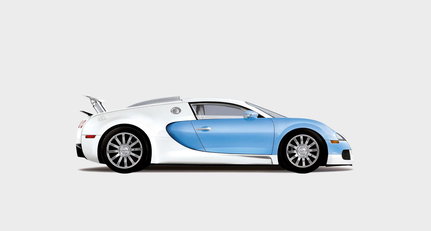
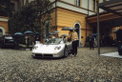
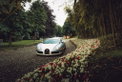
Paying homage to the silver arrows of Juan Manuel Fangio, the 2000 Pagani Zonda C12S 7.0 reminded us of the perfect, uncluttered shape of the early examples of Horacio Pagani's Italo-Argentinian supercar. Meanwhile, the Bugatti Veyron made its first Concorso appearance with one of six pre-series prototypes — the beautiful, white and pale blue car known as Prototype 5.1 and owned by Antoine Tauvel became famous during the launch of the hypercar when the photos of high-speed tests in the Black Rock Desert were printed by newspapers and magazines worldwide. But of course, the Veyron is not the only modern-day Bugatti that defined automotive history: Victoria Dold had brought her trademark blue Bugatti EB110 to Como, reminding us of the company's innovative Campogalliano years and the origins of the luxury hypercar.


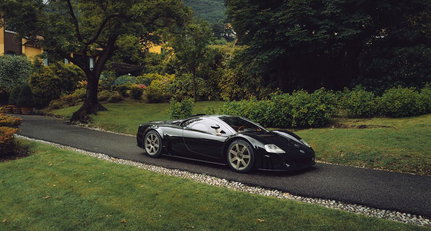
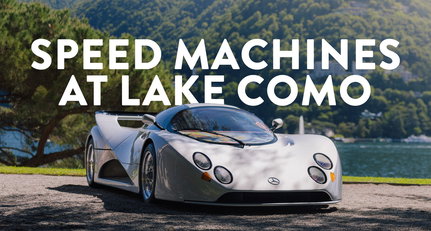
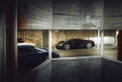
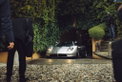
However, the car that stole the show was brownish-black, 2000 Volkswagen W12 Nardò, a high-speed prototype that the world had almost forgotten — but which played an important role in Volkswagen's striving for speed and perfection under Ferdinand Piëch. Designed by Giorgetto Giugiaro, the Nardò was intended to prove that VW could build a technologically advanced high-performance car as well as practical everyday vehicles. Developed through several concept stages from 1997 to 2001, it showcased Volkswagen’s compact W12 engine architecture and famously set a 24-hour speed record at Italy’s Nardò test track in 2002 with an average speed of 322.9 km/h, a record that still stands. Although a limited production run was discussed and never realized, the project directly influenced later VW Group cars such as the Bentley Continental GT, Volkswagen Phaeton, and the Bugatti Veyron. As the first Volkswagen in the Concorso d'Eleganza Villa d'Este since 1929, the car also signaled a shift towards the new-millennium dream cars that excite the car world today: After all, our casually filmed smartphone video of the Nardò in the underground garage of the Villa d'Este went viral in the days before the concours, reaching almost five million viewers worldwide.


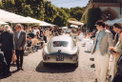
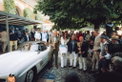
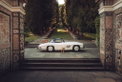
While the digital world celebrated the forgotten unicorn Y2K hypercar, the winners of this year's Concorso d'Eleganza Villa d'Este validated that timeless elegance and historical significance are still the core values at this contest: On Saturday, the concours crowds voted for a white Mercedes-Benz 300SL with skis on top to win the "Coppa d'Oro" trophy awarded by public referendum — a solid but rather unsurprising choice given the variety of coachbuilt one-offs and racing icons in the field.
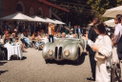
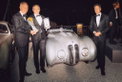
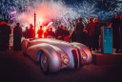
And on Sunday night, the jury finally announced the big winner of the event: The "Best of Show" trophy by the BMW Group was presented to Stefano Martinoli and his 1937 BMW 328 MM "Bügelfalte". Standing next to a flamboyant Mercedes-Benz 540K from the same year, the modest aluminium streamline roadster might have been overlooked by the untrained eye - but if there ever was a BMW to win at Villa d'Este, it was this very car.


The BMW 328 helped establish the company as a maker of lightweight, technically advanced sports cars, combining a powerful 2-litre straight-six engine with excellent balance, aerodynamics, and reliability to become one of the most successful racing cars of the late 1930s. This particular chassis, 85032, was transformed for the 1940 Mille Miglia into the unique streamlined “Bügelfalte” roadster, whose innovative design and reduced weight helped BMW dominate far more powerful rivals and cement the 328’s legendary status in motorsport history. After surviving wartime upheaval, years in the Soviet Union, and eventual return to the West, it remains the only surviving Mille Miglia roadster largely in original condition, preserved as a rare witness to pre-war European racing and automotive design.

Merging purposeful, less-is-more lightweight design made in Germany with Mille Miglia racing heritage, it was the perfect car to shine in the glimmers of fireworks over Lake Como and the Grand Hotel Villa d'Este — the last sanctuary of Italian elegance, where la grande bellezza is still very much alive.