








The barn-find Ferrari 250 GTO
This Ferrari 250 GTO, chassis 3589GT, is especially significant as one of only eight right-hand-drive examples and part of the original 36 first-series GTOs, all of which were built for top-level GT racing. It combined a highly successful early racing career with one of the most extraordinary survival stories in motorsport history, including years abandoned outdoors before being rediscovered, restored, and ultimately preserved as a landmark “barn find” of the golden GT era.

The survivor BMW 328
This BMW 328 “Bügelfalte” is the only special roadster built at BMW’s Munich plant for the works racing department and the sole Mille Miglia entry of its type to survive in largely original, unrestored condition. It played a key role in BMW’s 1940 Mille Miglia campaign, finishing sixth overall after being heavily modified for racing, and later passed through a remarkable post-war history involving Soviet reparations.

The Mangusta from Kill Bill
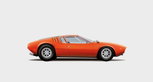
This De Tomaso Mangusta is a Giorgetto Giugiaro-designed late-1960s icon, powered by a Ford V8 and named as a deliberate “anti-Cobra” statement that cemented De Tomaso’s place in the sports car world. This exceptionally original, ultra-low-mileage example gained added cultural fame through its cameo in Quentin Tarantino’s Kill Bill: Volume 2, where it was used as a symbolic link to the film’s snake-themed assassins, giving it an unexpected second life in pop culture history.

The missing-link hypercar
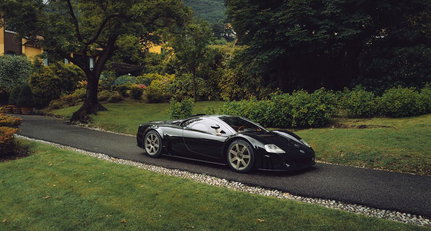
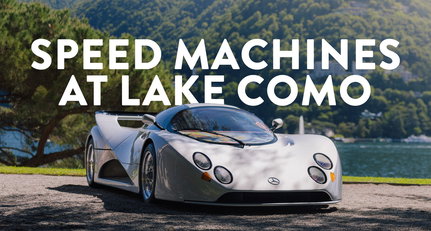
As the ultimate development stage of Ferdinand Piëch’s W12 concept, the Volkswagen W12 Nardò built by Italdesign under Giorgetto Giugiaro to prove Volkswagen’s ability to create a true supercar alongside its mass-production cars. It is the only privately owned example of the W12 prototypes and represents the peak of the programme, holding long-distance and 24-hour speed records from Nardò while directly paving the way for later high-performance models like the Bentley Continental GT, Volkswagen Phaeton, and even influencing the Bugatti Veyron.

The Le Mans founder's Bugatti Type 37
The Bugatti Type 37 replaced the Brescia with a lighter 1.5-litre four-cylinder engine producing around 60 hp and reaching about 150 km/h, while retaining close mechanical ties to the Type 35 but using simpler wire wheels. This late 1929 example is especially significant as it was ordered by Charles Faroux, co-founder of the 24 Hours of Le Mans, and remained remarkably original through decades of careful ownership.

The return of Isotta Fraschini
This Isotta Fraschini 8C Monterosa chassis 0) is significant as one of only five advanced post-war prototypes created to reinvent the marque as a luxury carmaker, and it represents one of the most radical Italian luxury engineering experiments of the late 1940s. It is especially notable for its rear-engine layout, Lampredi-designed V8, and unique Touring coupé body, making it a rare surviving example of a highly ambitious but ultimately unrealised production vision.

The Advocate's Testarossa
This Ferrari Testarossa Spider is a true one-off, created by Pininfarina as the only official open-top version of Ferrari’s 1980s flagship and presented in 1986 to Gianni Agnelli, making it deeply tied to Fiat’s most iconic industrial figure. Finished in elegant silver with Agnelli’s signature light-blue body stripe, distinctive factory-approved design changes, and unmatched provenance, it is essentially a perfect Villa d’Este concours car — combining rarity, period design purity, and aristocratic Italian industrial history in a way few Ferraris ever can.

The Veyron Prototype
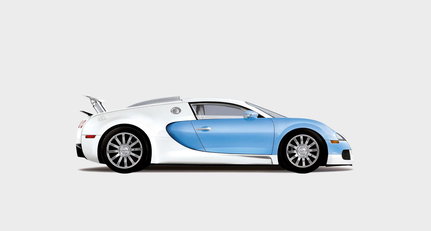
Painted in Pearl and Ice Blue, this Bugatti Veyron “Prototype 5.1” is one of just six near-series pre-production cars and played a pivotal role in the development and approval of the Veyron for series production under Volkswagen Group leadership. It was used as a key high-speed test and validation vehicle—especially for aerodynamics, tyre development with Michelin, and stability testing—and was even the car used for major media unveilings and official presentations, making it central to how the Veyron was introduced to the world.

The last Ghia Ferrari
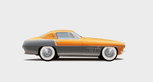
This Ferrari 375 MM, chassis 0476 AM, is uniquely significant as the only example ever bodied by Ghia and the final road-going 375 MM coupé built, making it a one-off within an already extremely rare nine-car series. Commissioned in 1954 by American businessman Robert Wilkie and designed under Luigi Segre with his input, it combined a Formula 1–derived Lampredi V12 with an unusual Ghia fastback coupé body that debuted at the 1955 Turin Motor Show before being delivered new to the USA.

Balbo's Otto Vu
This SIATA 208 CS Balbo Berlinetta is significant as one of only about 30–35 SIATA 208 V8 sports cars ever built and one of just six known surviving Balbo-bodied Berlinettas, making it one of the rarest versions of the entire model family. It represents the peak of SIATA’s ambition as a small Turin engineering firm, combining a lightweight in-house tubular chassis with Fiat’s “Otto Vu” V8 and bespoke coachwork, and this particular example has a notably international history across Italy, France, Germany, and the USA before its recent restoration.
You can now browse the full catalogue featuring all classes and cars at the Concorso d'Eleganza Villa d'Este 2026 on the official website. To witness the greatest cars when they start their engines on the shores of Lake Como, make sure to follow Classic Driver on Instagram and YouTube.