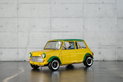
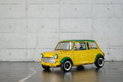
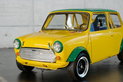
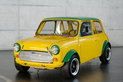
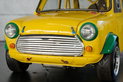
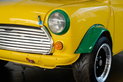
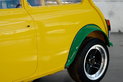
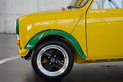
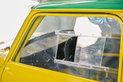

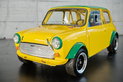
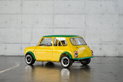
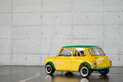
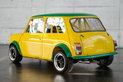
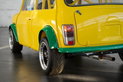
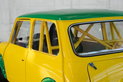
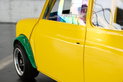
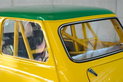
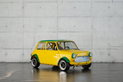
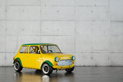
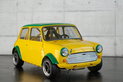
1993 Rover Mini
Mini Mk II-
Year of manufacture1993
-
Car typeOther
-
Chassis numberSAXXNYAXMBD043264
-
Lot number036
-
Reference numberhg_4be7d60a5c6d
-
DriveLHD
-
ConditionUsed
-
Interior colourOther
-
Location

-
Exterior colourOther
Description
No-compromise Mini built for the circuit
Extensively documented conversion into a racing car
Not yet used in competition since its rebuild
Just three owners from new
When the Mini was introduced in 1959, few could have predicted that it would become one of the most successful rally cars of its era. After all, Alec Issigonis had designed it as a small car intended to make the most of every inch of available space. Yet front-wheel drive, a short wheelbase, low weight and wheels pushed right out to the corners quite inadvertently provided a remarkably useful recipe for motorsport.
John Cooper spotted the potential early on. The racing-car constructor gave the Mini more power, disc brakes and a sportier set-up. The Mini Cooper appeared in 1961, followed two years later by the more powerful Cooper S. The likeable little runabout had become a serious competition machine.
Rallying provided the Mini with its greatest stage. On the Monte Carlo Rally, the little British cars regularly caused a stir as they took on far more powerful machinery over snow-covered Alpine passes. In 1964, Paddy Hopkirk took overall victory in a Mini Cooper S for the first time. Timo Mäkinen repeated the feat in 1965, followed by Rauno Aaltonen in 1967. In 1966, the Minis even finished at the head of the field, only to be disqualified over controversial lighting regulations.
The Mini proved remarkably effective on circuits as well. Its recipe for success was wonderfully simple: where larger cars relied on power, the Mini countered with low weight, traction and agility. An economical little runabout had become a racing car – and an outsider had become one of motorsport’s great David-versus-Goliath heroes.
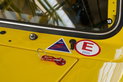
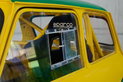
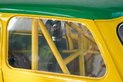
This Mini began life as a civilian Rover Mk II, with a fairly modest 53 hp from its 1,273 cc engine. It was first registered in Germany shortly after Christmas 1993. By the following November it had passed to its second owner, who a few years later evidently decided he wanted to go a little faster. An entry in the German registration document, dated 1998, records the installation of a roll bar and diagonal brace. It was the Mini’s next owner, however, a dedicated motorsport enthusiast from Upper Austria, who really got serious.
From 2004 onwards, the little Englishman was uncompromisingly prepared for circuit use. The engine rebuild alone is documented in its own dedicated photo album. According to its owner, a five-figure sum was invested in the small but rather serious powerplant. As its owner was more at home on rally stages, however, the Mini has yet to see competitive circuit use, and its engine can at best be considered barely run in.
Helmets, racing overalls and gloves have since been hung up, and the competition machinery is now being passed on to new owners. With a little further preparation, this Mini should make a serious contender – and one quite capable of giving considerably larger rivals something to worry about.

Watch our latest YouTube videos
More Listings related to Rover Mini


Recommended Listings


