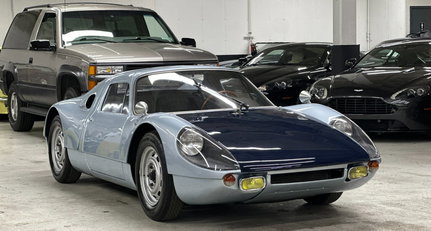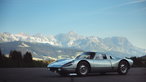
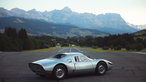
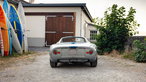
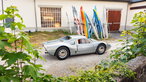
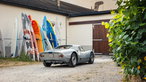
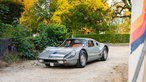
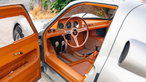
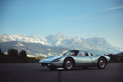
1964 Porsche 904
904 Carrera GTS-
Year of manufacture1964
-
Car typeCoupé
-
Chassis number904080
-
Engine number99072
-
Competition carYes
-
DriveLHD
-
ConditionUsed
-
Exterior brand colourSilbermetall
-
Interior colourOther
-
Number of doors2
-
Number of seats2
-
Location

-
Exterior colourSilver
-
GearboxManual
-
Drivetrain2wd
-
Fuel typePetrol
Description
- History includes top gentleman driver Gianni Bulgari
and budding professional Sam Posey, period entries
in 1964 at Mugello (1st overall), Targa Florio (retired
when leading), Vallelunga (2nd), and in 1966 the
- Daytona 24 Hours (11th) and Watkins Glen 500 (1st)
- Clear provenance and inspection by marque
specialist Jochen Bader May 2026
- Two engines including Ruf rebuilt six-cylinder unit
fitted and Dr Pohl rebuilt Typ 587/3 four-cam
- Current ownership since 1988
- European tax paid and road registered
In his standard-setting book The Racing Porsches – A Technical Triumph, respected racing driver and journalist Paul Frere titles the chapter on the 904, ‘904: the first of the moderns’.
Porsche approached the 904 with a completely clean sheet. In 1962 it had been racing in Formula 1, and from 1960 to 1963 built a bewildering number of spaceframe prototypes for long-distance events and hill climbs. It also ran the production-based 356 Carrera-Abarth GTL at Le Mans and other epic events. It was time for a fresh start.
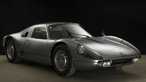
So, during 1963, engineer Dr Hans Tomala developed a closed prototype of a new car that was intended to be road legal (the cars were always delivered on road tyres). Butzi Porsche was responsible for the styling of a model heavily
influenced by the construction methods of the Lotus Elite. Aircraft manufacturer Heinkel Flugzeugbau moulded the 904’s glassfibre body, and the cars were assembled in Zuffenhausen.
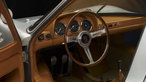
The racing suspension – wishbones at the front, radius rods at the rear – was mounted directly on the strong pressed steel/glassfibre semi monocoque. The pedals and steering wheel moved for reach as the seats were fixed.
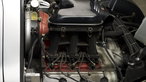
It was originally planned to use the 911’s new six cylinder, but powering the new ‘904 Carrera GTS’ was the punchy and familiar Carrera four-cam flat four, now a 1,966cc unit and available in two levels of tune: 180bhp for racing, 155bhp for road use. The five-speed transaxle derived from the new 911. Porsche itself ran the six-cylinder as a Prototype in selected events.
The company set down an initial run of 100 cars – in all, probably around 120 were built. The first 10 chassis were reserved for its own racing team, in which the 904 was to run as a homologated Competition Grand Touring model. Cars were sold to privateers the world over, including Scuderia Filipinetti, Brumos Racing, Dickie Stoop and Jo Siffert.
A factory car immediately scored an overall win at the 1964 Targa Florio, the first round of that year’s World Championship. It was a regular four-cylinder car, but alongside it on the grid was another works 904 packing a 1,981cc version of the Formula 1 car’s flat-eight. It finished sixth.
From then onwards Porsche experimented with six and eight-cylinder prototype 904s while privateers used the more reliable Carrera flat-four. The 904 GTS was a highly successful sports car right up to the late-1960s, with Monte Carlo ally, Tulip Rally, Tour de France Automobile, Nürburgring 1,000km and Le Mans successes to its credit.
This Motor Car
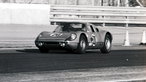
After witnessing 64-year-old Briggs Cunningham’s dramatic 2.0-litre class win and 9th overall in his new customer 904 at the 1964 Sebring 12 Hours, Gianni Bulgari met Porsche racing director Baron Fritz Huschke von Hanstein after the race and asked about buying one. Von Hanstein offered him “a good price, $5,000, great value compared to a GTO.” Within only four or five weeks, a truck arrived in Rome from Germany with the new car on Stuttgart registration plates. This was chassis 904 080.
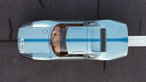
Bulgari initially test-drove his new Porsche around the city, recalling later that it “was much better to drive than the GTO, much more modern. But I had to remove the seat to drive and instead put Dunlop foam rubber on the floor.” His first race was the 24 April 1964 Targa Florio, sharing with friend Maurizio Grana over 10 punishing laps of the Little Madonie circuit in Sicily. The car was silver with a thin red stripe for identification, carried race numbers 78
and was entered by Scuderia Sant’Ambroeus.
A total of seven 904s made it to the Targa: three works cars and four privateers. One of the Porsche’s big benefits was fuel economy, as Bulgari remembers about a car that was, “so easy to drive fast, it could do five laps without refuelling which gave a great advantage.”
The new Porsches made all the running, despite GT expert Jean Guichet at the wheel of a works supported Ferrari 250 GTO featuring the latest ’64 bodywork. Early in the race Bulgari/Grana were 2nd overall, moving into 1st place mid-distance before pulling off with damaged suspension where it was attached to the chassis. Bulgari in 2008:
“We were leading on the 5th lap when at full speed on the straight the car took off and when it landed it felt odd. I went into the pits and von Hanstein said ‘Herr Bulgari, you cannot go on, the chassis is broken’.
“The car was taken back to the factory who were surprised by the failure. Within a few weeks it was ready for Mugello, which we won although that was very tiring.”
The Mugello event was held on 21 June 1964 at the fast and dangerous Mugello road circuit. It was the Coppa Emilio Materessi, a race with a long tradition and generally a Ferrari benefit. The Sunday date clashed with the Le Mans 24 Hours, but the entry list included two ’64-spec GTOs, an earlier Series 1 and some fast Alfa Romeo SZs and TZs.
Two hundred miles over the demanding road course just outside Florence was understandably “tiring”, but Auto Italiana described Bulgari’s victorious solo drive as a “monologue”, with the Roman driver taking the lead “on the first lap and ended the race in the same position, without any direct opponents.”
After victory at Mugello, Bulgari and his 904 were in action at national races and hillclimbs including the Bolsena-Montefiascone hillclimb (1st), the Conchiglie Shell at Vallelunga (2nd) and the Premio Campagnano again at Vallelunga (2nd). Bulgari remembers the latter for the “great dice” he had with Mennato Boff a in a Maserati ‘Birdcage’. Success eluded him at the 6 September 1964 Coppa Intereuropa at Monza. An accident in practice meant he non-started.


Watch our latest YouTube videos
More Listings related to Porsche 904