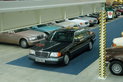
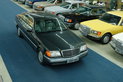
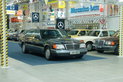
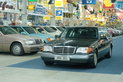
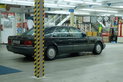
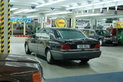
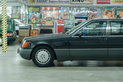
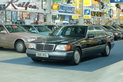
1992 Mercedes-Benz S-Class
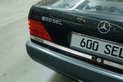
600 SEL-
Year of manufacture1992
-
Mileage111 194 km / 69 093 mi
-
Car typeOther
-
Chassis numberWDB1400571A035414
-
Engine number119.980-12-006921
-
Lot number068
-
AirbagsYes
-
Reference numberhg_8c79aef809e0
-
DriveLHD
-
ConditionUsed
-
Exterior brand colourBlue Black Metallic
-
Interior colourGrey
-
Interior brand colourLeather grey
-
Interior typeLeather
-
Location

-
Exterior colourBlack
Description
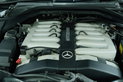
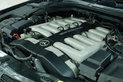
The first Mercedes production twelve-cylinder-engine
Strongest version of the model line with 408 HP
Timeless and elegant color combination
Only 111,194 documented kilometers
Chassis no.: WDB1400571A035414
Engine no.: 119.980-12-006921
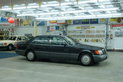
Paint: 199 Blue Black Metallic
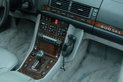
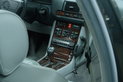
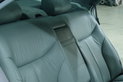
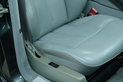
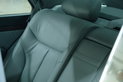
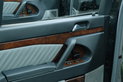
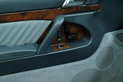
Interior: 268 Leather grey
Factory options:
217 Self-levelling suspension on rear axle with ADS
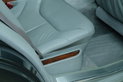
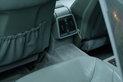
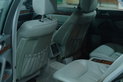
224 Rear single seats with multi contour backrests and headrests, electrically adjustable
228 Auxiliary heater
247 Electric seat adjustment (front passenger seat) – additionally adjustable from the rear
291 Airbag for driver and front passenger
303 Front folding armrest with tray
404 Orthopaedic front seat backrest (multiple contour backrest in model 140), left
540 Roller blind, electric, for rear window
550 Trailer coupling
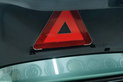
630 ECE-warning triangle
682 Fire extinguisher
810 Sound package (Bose)
872 Electric seat heater for rear seat bench, left and right
873 Seat heater for left and right front seats
880 Closing system with infrared remote control
Provenance:
26/06/1992 – Mercedes-Benz Georg Pappas Automobil AG, Salzburg, AT
16/06/1993 – Ing. Peter Berger, Wien, AT
11/03/1998 – Bera Warenvertriebsgmbh, Wien, AT
13/08/1998 – Bera Handels AG, Wien, AT
06/06/2002 – Bera Abfallconsulting GmbH, Wien, AT
18/04/2013 – Dipl.-Ing. Stefan Werner Dietrich, Marchtrenk, AT
Documents:
Austrian Typenschein (1992)
Original service booklet
About the model line:
W 140
As early as 1981, with the W 126 S-Class barely two years into its production life, development work had already begun on its successor. No less than three billion Deutsche Mark had been allocated to the project, with a market launch scheduled for 1989. Under the direction of Chief Designer Bruno Sacco, several proposals were developed, before Olivier Boulay’s design was selected as the definitive direction in late 1986. Then the unthinkable happened. BMW unveiled the 750i, Germany’s first production V12 of the post-war era, a car that made Mercedes‘ mighty 560 look decidedly old-fashioned in the first comparison tests. Suddenly, all the high-tech electronics that had been engineered into the new S-Class seemed almost secondary. Mercedes had no choice but to respond. A V12 was now indispensable—and it had to be ready from day one. The launch was postponed by two years.
Mercedes followed much the same path as its Bavarian rival. Two six- cylinder engines effectively became one V12. With six litres of displacement – one litre more than Munich’s offering – and 408 horsepower, Stuttgart left no room for doubt and once again relegated the competition to second place. The engineering was matched by equally bold styling. Gone was the restrained elegance of its predecessor. Broad surfaces, softly rounded forms and imposing proportions gave the W 140 a presence that was impossible to ignore. It was not universally admired at first glance, but that was precisely the point. The new S-Class was never intended to be merely pleasing. It was meant to command authority.
Beneath the sheet metal, Mercedes-Benz spared no effort. Double glazing provided a level of sound insulation previously unknown in a production car. Doors and boot lid could be gently pulled shut by power-assisted soft-close mechanisms, while the climate control, seats and suspension delivered a standard of comfort that left even the finest luxury saloons of the competition looking dated. Electronics found their way into virtually every aspect of the car. The W 140 was no longer an automobile defined solely by mechanical engineering – it had become a rolling showcase of advanced technology.
Mercedes showed equally little restraint when it came to engines. Alongside the magnificent V12, refined inline-sixes and effortlessly powerful V8s formed the backbone of the range. Outright speed was never the S-Class’s greatest strength. Its defining quality was the complete ease with which it mastered every journey. In the W 140, performance was never something that had to be summoned. It was simply always there.
Such technical abundance inevitably came at a price. The W 140 grew larger, heavier and more complex than any S-Class before it. Retractable guide rods at the rear helped even experienced chauffeurs judge where the enormous limousine actually ended. At the same time, its debut in 1991 coincided with a global recession. While restraint had become the order of the day in many parts of the world, the new S-Class struck some critics as a symbol of excessive opulence. Few Mercedes-Benz models have ever polarised opinion quite so strongly.
Time, however, would prove remarkably kind to the W 140. The 1994 facelift brought a more restrained appearance together with Mercedes-Benz’s new model nomenclature: S 280, S 320, S 420, S 500 and S 600. By the end of production in 1998, more than 400,000 saloons had been built. The W 140 was never intended to be a modest S-Class. It was the most uncompromising interpretation of what Mercedes-Benz believed a luxury automobile should be at the beginning of the 1990s. Once again, the S- Class had become the benchmark by which all others were measured.

Watch our latest YouTube videos
More Listings related to Mercedes-Benz S-Class


Recommended Listings


