
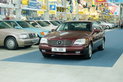
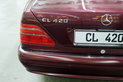





1997 Mercedes-Benz CL
CL 420-
Year of manufacture1997
-
Mileage166 834 km / 103 666 mi
-
Car typeOther
-
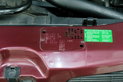
Chassis numberWDB1400631A372847
-
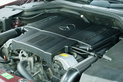
Engine number119.981-12-011128
-
Lot number077
-
SunroofYes
-
Reference numberhg_97ea95ef156f
-
DriveLHD
-
ConditionUsed
-
Exterior brand colourRuby Metallic
-
Interior colourBlack
-
Interior brand colourNappa leather black
-
Interior typeLeather
-
Location

-
Exterior colourRed

Description
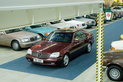
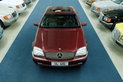
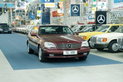
One of only 2,496 ever made
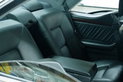
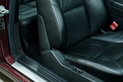
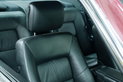
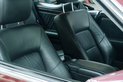
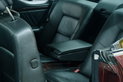
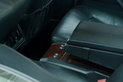
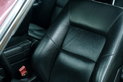
Rare Nappa-leather interior
Delivered new to the Netherlands
Only 166,834 documented kilometers
Chassis no.: WDB1400631A372847
Engine no.: 119.981-12-011128
Production no.: 9821673
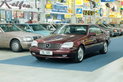
Paint: 572 Ruby Metallic
Interior: 231 Nappa leather black
Factory options:
284 Shift lever in wood/leather combination
289 Wooden/leather steering wheel (dia. 390 mm)
302 Folding armrest in the rear with storage tray
303 Front folding armrest with tray
306 Activated charcoal filter (odor filter)
351 Auto-Pilot-System (APS)
404 Orthopaedic front seat backrest (multiple contour backrest in model 140), left
405 Orthopaedic front seat backrest (multiple contour backrest in model 140), right
414 Electric tilting/sliding roof in glass version
540 Roller blind, electric, for rear window
819 CD changer – Alpine – in trunk
884 Trunk lid additional locking mechanism (HZS)
Provenance:
23/05/1997 – Nicht lesbar, Emmen, NL
14/12/2021 – Patrick Graeffly, Herne, DE
Documents:
German registration papers (2021)
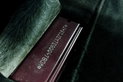
Original service booklet
About the model line:
C 140
Following the success of the C 126 Coupés, there was never any real question whether the new S-Class would once again be joined by a sporting two-door model. As it had with its predecessor, Bruno Sacco’s design team refused to take the path of least resistance. Instead, it created an entirely new body on a wheelbase shortened by almost ten centimetres. Hardly a single body panel behind the windscreen was shared with the saloon.
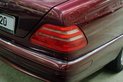
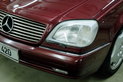
As before, the headlamps and radiator grille were redesigned so that a large Mercedes star once again dominated the front end. The absence of a B- pillar and window frames was already a familiar Mercedes Coupé hallmark. New, however, was the completely independent rear styling, featuring bespoke tail lamps of its own design. Like the saloon, the proportions appeared more substantial and more imposing than before. What the Coupé may have lost in elegance in the eyes of some critics, it gained in presence and authority.
Beneath the elegant bodywork, Mercedes-Benz spared no effort, just as it had with the saloon. Double glazing, soft-close doors and boot lid, driver’s airbag, seat-belt pretensioners, automatic climate control and virtually every conceivable comfort feature came as a matter of course. When the car made its debut at the North American International Auto Show in January 1992, only the two largest engines in the Mercedes-Benz portfolio were offered beneath its long bonnet: the 5.0-litre V8 in the 500 SEC and the 6.0- litre V12 in the 600 SEC. Series production of both models began in October 1992.
Following the saloon, Mercedes renamed the Coupés in 1993 as the S 500 Coupé and S 600 Coupé. A third engine variant, the S 420 Coupé, followed at the Geneva Motor Show in March 1994. In 1995, the V12 Coupé was the first to receive a new electronically controlled five-speed automatic transmission, soon followed by both V8 models. The new gearbox not only reduced fuel consumption but was also less expensive to manufacture. The C 140 also introduced several technological firsts for a production Mercedes-Benz, including the Electronic Stability Program (ESP) and the GPS-based Auto Pilot System (APS) navigation system.
The 1996 facelift brought yet another change of name. Rechristened CL 420, CL 500 and CL 600, the Coupés simultaneously gave birth to an entirely new model line. The concept itself, however, remained untouched. The update also introduced xenon headlamps with dynamic headlamp levelling, automatic seat-occupancy recognition, PARKTRONIC and standard side airbags.
Building the large Coupés was an expensive undertaking, with much of the work still carried out by hand. Unsurprisingly, this was reflected in their price, ensuring a high degree of exclusivity. Production numbers fell well short of those achieved by the previous generation. Fewer than 27,000 examples were built by 1998. Yet for Mercedes-Benz, its most exclusive two-door model was anything but a failure. Prestige, after all, has never been measured in production numbers.

Watch our latest YouTube videos
More Listings related to Mercedes-Benz CL


Recommended Listings


