
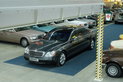
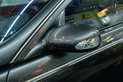
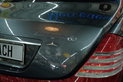
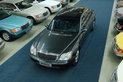
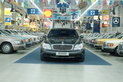
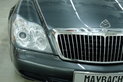
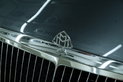
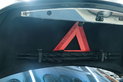
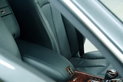
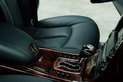
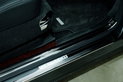
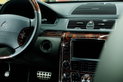
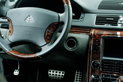
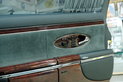
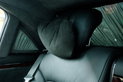
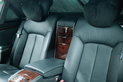
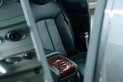
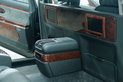
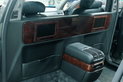
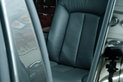
2004 Maybach 62
62-
Year of manufacture2004
-
Mileage65 123 km / 40 466 mi
-
Car typeOther
-
Chassis numberWDB2401781A000939
-
Engine number285.950-40-001001
-
Lot number028
-
SunroofYesClimate controlYesAirbagsYes
-
Reference numberhg_12f86a0741c4
-
DriveLHD
-
ConditionUsed
-
Exterior brand colourDark Grey Himalayas Metallic
-
Interior colourBlack
-
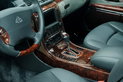
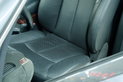
Interior brand colourExclusive leather black/anthracite
-
Interior typeLeather
-
Location

-
Exterior colourGrey

Description
One of only 1,058 ever made
The legitimate successor of the W 100
As luxurious as it can get
One Belgian owner, 65,123 documented kms
Chassis no.: WDB2401781A000939
Engine no.: 285.950-40-001001
Paint: 725 (UT) Dark Grey Himalayas Metallic
Interior: 531 Exclusive leather black/anthracite
Factory options:
199 Maybach breather cap
201B Owners manual and service record – Dutch
215 Adaptive Damping System Plus (ADS+)
216 Rear axle steering with large steering angle
219 Proximity-controlled cruise control
222B Info plate coolant/refueling – French
231 Garage door opener
250B Mobilo Life/Europe service package
265B Airbag label – Dutch/English
295 Curtain at rear door left and right
390 Linguatronic – English (British)
401 Front seat climate control
402 Rear seat climate control
407 Folding table, manually adjustable, in rear left
408 Folding table, manually adjustable, in rear right
413 Panoramic sliding sunroof/glass sunroof
443 Heated steering wheel
481 Undershields
513 Belgium
669 Spare wheel/folding wheel
682 Fire extinguisher
840 Dark tinted glass
882 Sensor system and antitheft alarm system
889 Keyless-Go
891 Premium ambiance illumination
983 COC paper Euro 4 technology w/o reg. cert. part II
Provenance:
23/06/2004 – Renting-Car Trucks, Lummen, BE
Documents:
Belgian registration papers (2014)
Belgian registration papers (2004)
COC paper – German/Dutch (2004)
About the model line:
W 240
In 2002, Mercedes-Benz revived the venerable Maybach marque, whose rights had become part of the company with the acquisition of Maybach- Motorenbau GmbH back in 1960. With Maybach, Mercedes-Benz ventured back into a world of motoring it had left behind with the demise of the legendary 600. Rolls-Royce and Bentley had long since passed into new ownership, and ultimate luxury had once again become serious business. Stuttgart was determined not merely to compete, but to redefine the benchmark. The Maybach name was chosen to evoke an era when the world’s most exclusive automobiles came from Germany.
The technical foundation was derived from the W220 S-Class, but that was largely where the similarities ended. Customers could choose between two wheelbases: the Maybach 57 for those who still preferred to sit behind the wheel themselves, and the Maybach 62, half a metre longer, for those who preferred to be chauffeured. Hardly a single body panel was shared with the S-Class. The proportions were deliberately majestic, the passenger compartment set well to the rear, leaving no doubt as to whom this automobile was primarily intended to serve.
Beneath the elegant bodywork, Mercedes-Benz spared no effort. AirMatic Dual Control air suspension, double glazing, soft-close doors, sophisticated automatic climate control and an almost limitless degree of personalisation came as standard. Rear-seat passengers enjoyed electrically adjustable individual seats, folding tables, a refrigerator, an entertainment system and materials more reminiscent of a luxury yacht than an automobile. Hardly any customer request remained unfulfilled.
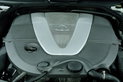
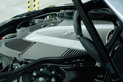
Nor were there any compromises when it came to the powertrain. A newly developed twin-turbocharged V12 initially produced 550 horsepower and an immense 900 Newton metres of torque. Later, the Maybach 57 S raised the bar still further with an impressive 612 horsepower. Despite its considerable weight, the large Maybach accelerated from 0 to 100 km/h in little more than five seconds. Even more remarkable than its performance figures, however, was the effortless composure with which it achieved them. In a Maybach, speed seemed to lose all sense of drama.
Technically, the automobile left virtually nothing to be desired. Commercially, however, it never fulfilled the expectations placed upon it. Buyers in the ultra-luxury segment continued to favour Rolls-Royce and Bentley. By the end of production in 2012, little more than 3,000 examples had been built. Judged by sales figures alone, the Maybach was not a commercial success. Judged by its ambition, however, it was a remarkable demonstration of what Mercedes-Benz was capable of achieving, both technically and in terms of craftsmanship, at the dawn of the twenty-first century. Entirely in the spirit of Wilhelm Maybach, it was no ordinary automobile, but an unparalleled demonstration of the extraordinary heights Mercedes-Benz was capable of reaching.

Watch our latest YouTube videos
More Listings related to Maybach 62


