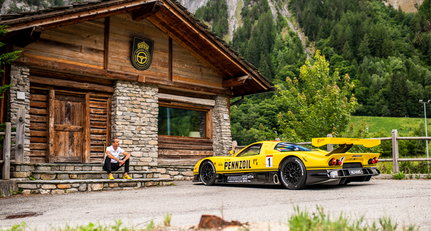
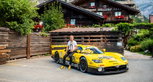
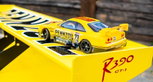
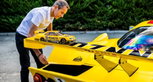
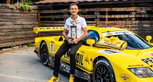
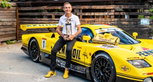
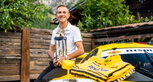
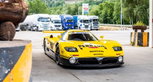
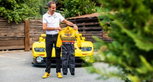
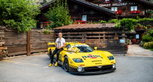
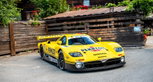
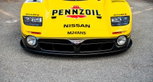
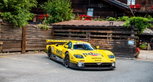
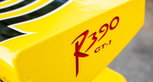
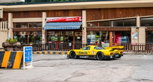
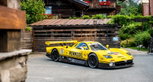
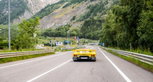
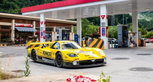
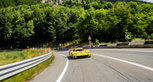
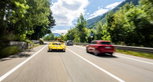
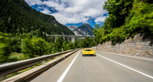
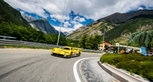
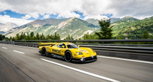
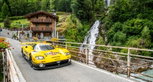
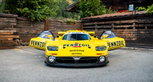
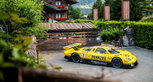
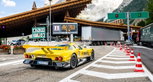
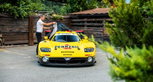
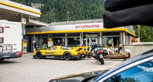
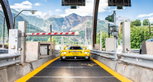
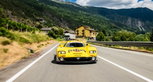
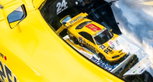
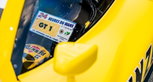


In Courmayeur, where Alpine torrents and distant cowbells set the rhythm of the village streets, the hum of engines is usually softened by deep pine forests and jagged cliffs. But the car approaching today in this natural theatre is promising a whole different, almost operatic kind of drama: As daylight spills into the Val d’Aosta and the valley widens into terraces of vines and stone castles, downshifts echo through the gorges, becoming increasingly louder as the rugged landscape teases what’s about to come into view. Within a few seconds, a yellow flash shoots past, then slows down, looking truly other-worldly as it comes to a halt just metres away. The machine that catches us by surprise is a the only Le Mans raced Nissan R390 GT-1 that’s road-registered. And the man climbing out of the driver’s seat, his face full of smiles, is none other than Érik Comas — the French racing legend who piloted this very car at the 24 Hours of Le Mans in 1998.

Érik’s journey to race and eventually own and daily-drive his dream machine truly is an extraordinary one. And while we are desperate to experience the open roads of the Aosta Valley in a fully-fledged Le Mans racer, we first need to go back to the very beginnings of this tale to understand its significance. “I had my first taste of speed very late, compared to most nowadays. A mechanic in my father’s business had a go-kart he used just for fun. I was 13 years old when I first tried it. Luckily, there was a circuit local to us in Valence, and people soon remarked I was immediately fast. I was hooked, but my father would only let me drive around the car park of a supermarket behind his workshop." When Érik asked if he could race competitively, his father's response was an immediate no. When Érik turned 18, he decided to buy his own go-kart, and within two years he was French Champion, cementing those early comments of his undeniable speed and soon raising into the highest spheres of motor racing.


From 1990 to 1994, Érik Comas racked up 63 race starts in Formula 1, battling it out against some of the sport’s greatest talents. But a new opportunity arose when Érik was approached by Toyota on a rainy day at the famed Japanese circuit of Suzuka with an interesting proposal. Érik agreed to the new challenge of driving in the All-Japan Grand Touring Car Championship, and after steering Toyota's legendary Castrol Supras in the 1996 season, Érik received a call from Nissan: “They wanted me to drive for Nismo in the GT-R, but to also compete in the 24 Hours of Le Mans with an all-new GT-1 car that was created in collaboration with Tom Walkinshaw Racing". It was only the second carbon fibre GT-1 car in the world after the McLaren F1. “They showed me the project and I was immediately in love with the car. Instead of being paid for the 1997 and 1998 seasons, Nissan and I struck a deal that I would receive the first chassis of the 25 road cars needed to meet FIA homologation rules. We nearly finalised the deal, but Nissan ultimately decided to focus solely on the 24 Hours of Le Mans, where only one road car was required for homologation by the Automobile Club de l’Ouest. That homologated car, as you would expect, remains with Nissan Heritage to this day.” This meant Érik’s dream of owning a road-going version of his dream racer wasn’t to be, but he was ensured the opportunity was always there, should the moment arise.


Testing had commenced with the Nissan R390 GT-1 back in 1997, with Érik racking up a staggering 20,000 kilometres behind the wheel, spread across various European circuits without a single technical failure. When asked about just how special the R390 GT-1 was to drive at speed, Érik’s face beams with delight as memories flood back of his maiden drive. “We had spent some time testing in Portugal and Paul Ricard before Le Mans, and I can remember lapping the circuit and building up the speed with every turn.” Erik’s face visibly glows with pride, as he continues: “What a beauty! I thought: This is the best racing car I've ever driven. Then, as we arrived at Le Mans and began testing, we knew we had a strong chance. The car was fast in 1997, but in 1998 it felt perfect. Driving a car this fast and beautiful, you really feel happy!”


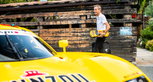
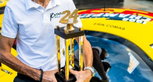
Through the twists of race strategy, changing weather and incredible competition from some of the sport’s best cars like the Toyota GT-One, Mercedes-Benz CLK-LM and the formidable Porsche 911 GT-1, it was an all-Japanese driver lineup that, for the first in Le Mans history, reached the podium with the R390 GT-1. The remaining two Nissans would finish fifth and sixth, with Érik’s fellow drivers Jan Lammers and Andrea Montermini all commending the car for its incredible reliability. Érik’s smirk is still clearly visible as he gently leans on the yellow bodywork. “You know, for me, 1998 was the best year of my career. Winning with the Skyline GTR-33 in the Pennzoil livery, racing in Le Mans with the R390 GT-1, all while living in California at the time, being 35 years old! That’s why this car means so much to me.”


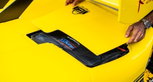
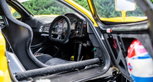
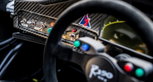
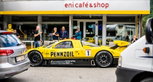
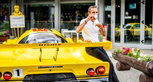
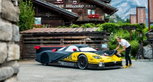
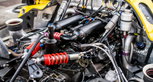
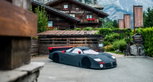
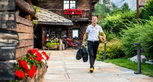
And so, we arrive back in the present day, more curious than ever to understand just how Érik came to own not just a R390, but his R390 GT-1 — the actual car that he raced in Le Mans. “My 1997 dream of driving an R390 GT-1 on the road was reawakened in 2018. And it was only possible due to my pre-agreement with Nissan, since I was the only driver to have done the full Nissan Le Mans programme from 1997 to 1999. But my dream was not to compete in classic racing. In fact, it was still the same dream I had 20 years earlier — to go on the road with this GT-1 car.” Incredibly, Érik confirms very little actually needed to be done in order to make the car road-worthy: “Except the power steering that the car has, the fresh air system for the cooling inside, and a horn, 95 percent of the car is as it finishes Le Mans!" The brake calipers are from Le Mans, as is the whole bodywork, the engine and gearbox. The clutch is slightly stronger, allowing Érik to drive in traffic. As Nissan had first applied for homologation in the United Kingdom, he simply used the period documentation and had the car road registered in England. Looking at the otherworldly racecar casually parked in front the little village café, Érik smiles: “Basically, I wanted to do a restoration job which is not irreversible.”


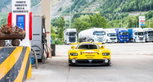
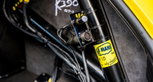
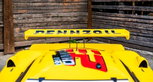
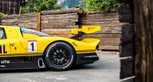
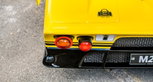
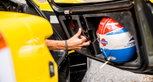
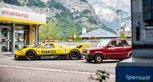
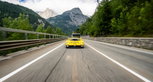
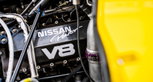
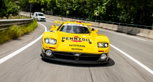
We pay for our espressos, Érik opens the Cockpit, squeezes into the right-hand driver seat and fires up the engine with an earth-shattering, unfiltered roar while we get into our more modest car and moments later, we're out on the open road. Alongside modern crossover Nissans and battle-scarred Fiat Pandas, the Nissan R390 GT-1 truly seems like a machine from Mars. Every single person that we pass — from first graders to grannies — stops, stares or points as this iconic racer passes by. Soon it's becoming more and more difficult to keep up with Érik, as he puts his car through its paces on the narrow mountain roads. The engine is the exact same 3.5-litre twin-turbo V8 that powered the car in Le Mans — you can even still see the seals of the Automobile Club de l’Ouest on the sides of the turbochargers and produces around 660 horsepower to the rear wheels. This outrageous figure could reach over 1,000 horsepower without the Le Mans specified air restrictors. However, 660 horsepower is more than sufficient when set against the weight of around 1,000 kilos. Ridiculously low, wide, and adorned with a massive spoiler, Érik's daily driver would certainly outshine even the latest unicorn hypercars.

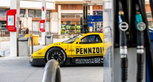
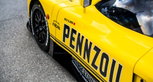
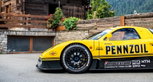
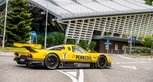
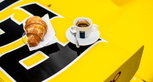
As Érik refuels the car, we continue our chat over another cup of coffee. Intrigued by the Pennzoil livery, one that was most notably seen on the R33 and R34 Skylines which Érik raced, but never on the R390, another story ensued as he takes a sip of his espresso. “The car was originally all white, and over the years had been given many liveries to celebrate its life, from the Le Mans decals shown at Concorso d'Eleganza Villa d'Este in 2022 to a unique half and half livery that was displayed at Fuoriconcorso in 2023." Earlier this year, while the car was receiving its original Le Mans livery look, Érik met the renowned artist Benoit Fraylon, a neighbour of his in the Persian Gulf. "As a fan of my racing career, he shared with me a project he had developed in his spare time, with the sole intention of igniting social media interest, featuring a stunning Pennzoil livery. At that moment, I realised that Benoit had created a masterpiece, perfectly capturing the essence of my Japanese career with Nismo: my magnificent R390 GT-1, which had led me to sign with Nissan, now adorned in the colours of my Pennzoil GT-R and my two consecutive JGTC titles in 1998 and 1999.” Érik continues, smiling: “After I saw Benoit's plans, I didn’t sleep for three days, I was too excited. I contacted the team who were halfway through the Le Mans livery, I showed them Benoit’s designs, and thankfully they agreed it was perfect!”


There is a whole generation of car enthusiasts out there who experienced the golden era of 1990s motorsports and its cars — the Pennzoil Skylines, the Castrol Supras and hypercar icons like this R390 GT-1 — through a PlayStation controller, dreaming of how they would drive these machines in real life. Érik Comas was a true racing hero to many of us, driving some of Japan’s greatest cars. Standing right next to him and his street-legal Nissan R390 GT-1, casually chatting about this exciting era and unique car over a cup of coffee, is truly a memory we will not forget anytime soon.
Photos by Remi Dargegen for Classic Driver 2025