

The Lion King
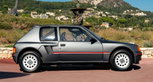
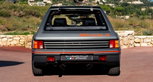
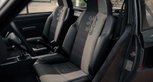
Audi quattro? Not so fast! The Group B crown belongs to a big cat from Sochaux. For marketing purposes, Peugeot turned its new hope in the supermini segment into a turbocharged, mid-engined beast with permanent four-wheel drive. In 1985, the manufacturer took the world title with seven outright wins, and in 1986, the final season of Group B, it defended the crown with six more victories. Measured by titles, the pint-sized Frenchman is therefore the most successful car of this legendary era. For homologation, Peugeot had to build 200 road cars, all of which, bar a handful for VIP customers, were finished in Winchester Grey. Power comes from a version of the 1.8-litre turbocharged four-cylinder tamed to 197 hp, an engine that produced up to around 500 hp in competition trim. Charles Pozzi is currently offering an example at its Vence showroom that has covered just 30,900 kilometres and carries a hefty price tag of 405,000 euros. It is not only the price that shows how important the 205 T16 is to the Lion brand’s history: just a few days ago at the Paris Motor Show, Peugeot unveiled the all-electric E-T16 concept, which translates the aesthetics and concept of the homologation model into the future.


Norse mythology in white
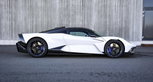
Formula 1 know-how for the world’s most glamorous boulevards: the 2026 Aston Martin Valhalla brings uncompromising racing DNA from the pinnacle of motorsport into series production. With its 1,064 hp plug-in hybrid powertrain, the mid-engined beast, limited to 999 examples, has made a name for itself in the realm of hypercars. The clinically pure Zenith White paint, with its cool aesthetic, contrasts with the exposed carbon-fibre aero elements, and its colour restraint makes the car stand out in its segment. Inside, Aston Martin relies on motorsport-proven ergonomics, while on this brand-new example offered by Selected Car Investment, fine duotone leather and blue contrast stitching from the Q by Aston Martin programme add a clean Scandinavian touch. Fittingly for its name, the new owner may well feel as though they are sitting in the great hall of Odin, the father of the gods.


A Procar for the road
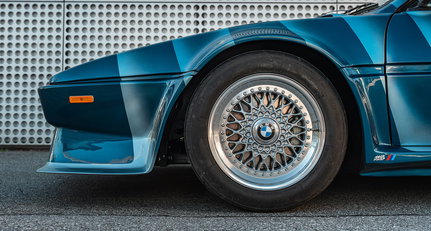
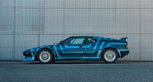
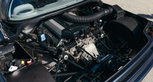
With the M1, BMW, back then a rather down-to-earth brand, broke into the ranks of the supercar makers in the late 1970s. Giugiaro’s wedge not only looked spectacular, its 273 hp 3.5-litre straight-six also left many a Ferrari or Lamborghini trailing in its wake. For BMW dealer AHG, however, the sports car, limited to 399 examples, was still not exclusive enough. In 1982, after M1 production had ended, AHG managing director Peter Gartemann launched a special series inspired primarily by the looks of the M1 Procar racing version. Probably no more than ten were made, each one unique. They were recognisable by their Procar spoilers, flared wheel arches, three-piece 16-inch BBS wheels and an upgraded interior. Most eye-catching of all, however, were the individual liveries by the Altmiks paint shop. The engine is said to have been uprated to 350 hp, while adjustable racing suspension, a new exhaust system and a racing clutch completed the performance makeover. The blue example, which RM Sotheby’s will auction in Munich on 20 November, was built for the AHG boss himself and remained in his ownership. It also graced the brochure AHG used to promote its rather special version of the M1.


The capstone of the De Tomaso era
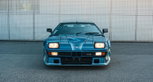
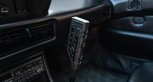
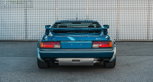
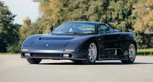
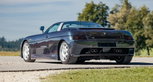
The legendary but technically rather long-in-the-tooth Pantera was well past its prime after more than twenty years in production when De Tomaso finally unveiled its successor in 1993. The Guarà also formed the glamorous capstone of the career of Alejandro De Tomaso, who died in 2003. The unusually styled sports car was based on the Maserati Barchetta Stradale prototype and used an aluminium honeycomb chassis clad in Kevlar, carbon fibre and glassfibre, along with racing suspension developed by Formula 1 engineer Enrique Scalabroni. Before long, the Argentine-Italian manufacturer switched back to Ford V8s to lower costs, just as it once had with the Pantera. This 1996 example is one of only around 21 coupés built and, thanks to its 4.0-litre BMW V8, which found its way into only a handful of cars after 1995, it ranks among the rarest variants. Delivered in Porsche Blue Metallic with grey leather, this underdog, offered at Broad Arrow’s Zurich auction on 7 November, shows just over 25,000 kilometres on the clock and comes with its factory documents.


Pozzi’s silver one-off
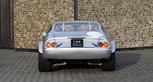
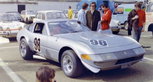
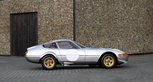
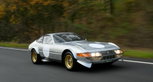
Depending on the version, the Ferrari 365 GTB/4, penned by Pininfarina designer Leonardo Fioravanti, covers a remarkably broad visual spectrum. While the muscular, sinewy coupé in standard trim is a timeless design classic whose aesthetic Maranello revisited with the 12Cilindri, the Daytona in racing guise looks unusually brutal for an Italian thoroughbred. With its side pipes, aggressive stance, flared wheel arches and aero mask, it is more reminiscent of American IMSA racers of the era. This silver 1971 car is the only known Daytona converted to Competizione specification in-house by Parisian Ferrari importer Charles Pozzi. Its second owner, Philippe Cornet-Epinat, entered it in the 1972 4 Hours of Le Mans and, despite a crash on the very first lap, still finished eighth. Later converted into a Spider, the car was returned to its 1972 Le Mans specification under Daytona expert Mike Sheehan. Today, London dealer Sam Hancock has the road-registered, race-ready Competizione in stock.