
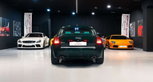


Goodwood Green over Baby Blue
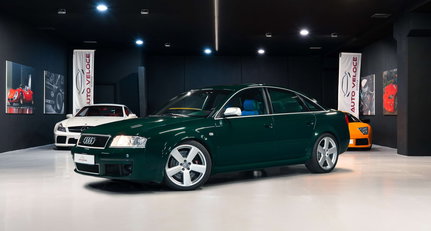
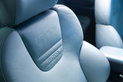
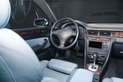
The first generation Audi RS 6 remains a tour de force of understatement, yet this specific example breaks the mold with its unorthodox factory color scheme. Pairing a Goodwood Green exterior with a vibrant light blue leather interior, it offers a unique and rare aesthetic that challenges the conservative and sometimes even a bit boring reputation of German executive cars. Large sporty Audis were most popular in estate form, which makes this elegant sedan stand out even more.
Having covered only 45,000 original kilometers, the vehicle has been spared the high-mileage fate typical of these Autobahn marauders. These cars were built to cross continents at eyewatering speeds, after all. Power comes from the 4.2 liter V8 biturbo, putting out 450 cultivated horses with a mechanical character that got lost in most modern Audis. This preserved RS 6 was specced by someone who cared more about personal taste and individuality than resale value, which turns it into a real collector's item.


Maranello’s Hypercar Nucleus
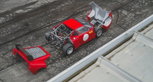
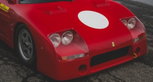
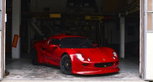
While the 308 GT/M’s name might lack the immediate recognition of its more famous siblings, its significance as the most influential test bed on the way to the Ferrari hypercar cannot be overstated. Coming to RM Sotheby’s Monaco auction on April 25 with an estimate of 1.5 to 2 million Euros, this prototype served as the crucial development lab for the 288 GTO and the F40. It was the first purpose-built competition car created primarily by the Michelotto family in 1984, effectively bridging the gap between standard road cars and the extreme performance machines that would define the following decades. The Michelottos closely worked together with the engineers from Modena, dedicated to honing the best customer racers with the DNA of the Prancing Horse.
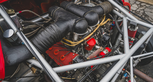
The technical execution involved rotating the 308-derived 3,0-liter V8 engine, upgraded to 370 hp, longitudinally and utilizing a pioneering composite body made of carbon fiber and Kevlar, resulting in a weight of only 840 kilograms. During its extensive testing at Fiorano, chassis 001 achieved remarkable results by recording lap times that surpassed the far more powerful 512 BB/LM and even eclipsed the later F40. This fully functional prototype, only known to real connoisseurs, stands as a rare testament to the engineering era that paved the way for Ferrari’s “Big Six” Hypercar lineage.


The Hacienda’s Unbreakable Workhorse
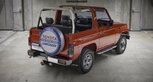
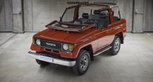
The Toyota Land Cruiser LJ70 remains a masterclass in functional design and beams you right into a biopic centered around a drug kingpin, especially when finished in this striking orange-brown paintwork paired with a contrasting off-white soft top. This warm color combination perfectly captures the aesthetic of late eighties Latin America while highlighting the purposeful, rugged nature of the J70 series. As a short-wheelbase variant, its compact proportions, timeless simplicity and square silhouette make it one of the most visually distinct and sought-after expressions of the Land Cruiser lineage.
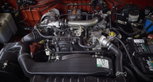
At its core lies the 2.4-liter turbo diesel engine, a no-nonsense mechanical heart celebrated for its steady torque and legendary longevity. The vehicle’s integrity is thoroughly documented by an official Green Book from Classic Car House Copenhagen, which includes essential data such as compression test results and paint thickness measurements. With its manual gearbox and low-range transfer case, this LJ70 stands as an unbreakable mechanical tool that prioritizes off-road talent over modern comfort commodities.


The Exige Trailblazer
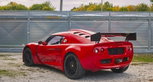
The Lotus Elise has always been defined by its minimalist approach to weight, yet the Motorsport edition pushes this core philosophy to a far more radical extreme. Developed by the specialized Lotus Motorsport division, this version removes every hue of luxury or even comfort to create a truly spartan and feather weight competition machine, which ended up being the blueprint for the roadgoing Exige.
A modified 1,8-liter Rover K series engine, which delivers a peak output of 200 horses, is paired with a special dog clutch gearbox and a limited slip differential, the powertrain is as raw and mechanical as it gets. The exterior reflects this purpose through a large front splitter and an adjustable carbon fiber rear wing while Perspex windows and Speedline alloy wheels ensure that every unnecessary gram of mass is eliminated. A total weight of less than 700 kilograms results in an exceptional power to weight ratio.
The interior is a functional workspace equipped with a Stack digital dashboard for data logging and a MOMO quick release steering wheel. Although many of the sixty units produced featured a central driving seat, a rare group of nineteen cars was manufactured with a left-hand drive configuration. This specific layout was essential for achieving GT class homologation and allowing the model to compete on the international stage.


Bolide DNA for the People’s Car
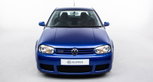
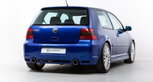
The MK IV Golf was characterized by a transition towards a higher build quality, Volkswagen had real “Premium” ambitions. The iconic R32 version emphasized this upmarket shift with genuine performance and key figures that were impressive in the economy focused compakt segment. Originally conceived as a limited halo car, its immediate success caught the manufacturer by surprise and laid the foundation for the entire R sub-brand. It’s characteristic 3,2-liter VR6, distingiuashable by its deep and warbly growl as a natural byproduct of its narrow angle geometry. This soulful powerplant was paired with the world’s first production dual clutch gearbox, making the R32 an early testbed for the DSG technology. While the Haldex based 4motion system remains front wheel drive biased until slip is detected, it provided a planted agility that was normally exclusive to sports cars from prestigious brands.
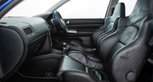
Having covered a significant distance over its lifetime, this 2003 example serves as a robust testament to the longevity of the VR6 platform when treated with professional care. The cabin remains a high-quality workspace featuring heated König sport seats and brushed aluminium accents, while the exterior is defined by the iconic Deep Blue Metallic paint and 18-inch OZ Aristo wheels. Together with oddities like the Passat W8 or the Touareg V10 TDI, it represents the maximalist chapter in Volkswagen history, before emissions constraints moved the R badged Golfs toward turbocharged four-cylinder units.