
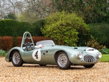
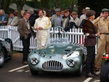
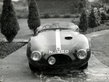
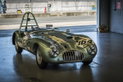


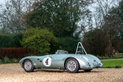
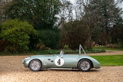
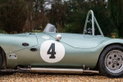
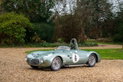

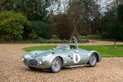
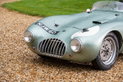

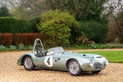
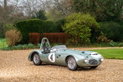

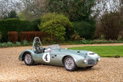
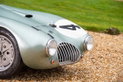
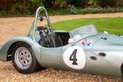
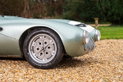
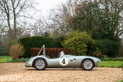
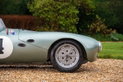

1954 Kieft 1100 Sports
-
Year of manufacture1954
-
Chassis number11/54/2
-
Engine numberFW3155
-
Lot number71
-
ConditionUsed
-
Location

-
Exterior colourOther

Description
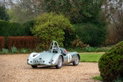
1954 Kieft 1100 Sports
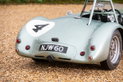
Registration no. NJW 60
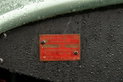
Chassis no. 11/54/2
Engine no. FW3155
Cyril Kieft's first racing car a mid-engined Formula 3 design appeared in 1950, making a significant impact on the class the following year thanks to a certain Stirling Moss. Don Parker won the 1952/53 Autosport championship driving a Kieft while Ken Wharton and Bernie Ecclestone were other noteworthy exponents. A two-seater sports car powered by a 650cc BSA engine was developed from the F3 design but did not enter production. Kieft's next venture into sports cars was with a batch of central steerers, designed by Gordon Bedson, formerly the Chief Experimental Engineer at Vickers. Bedson's design featured aluminium bodywork, which had been inspired by similar designs by Veritas and Gordini. The central-steerer was available with either 2.0-litre Bristol or 1.5-litre MG engines, or could be ordered as a chassis only. Eight cars were completed initially with a further four built later.
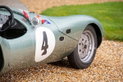
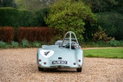
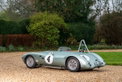
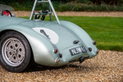
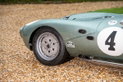
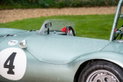
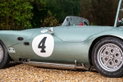
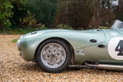
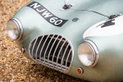
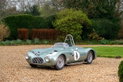
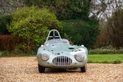
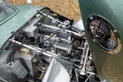
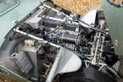
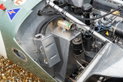
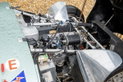
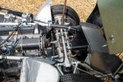
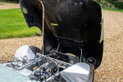
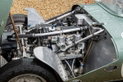
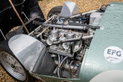
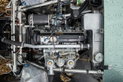
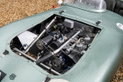
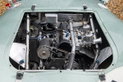
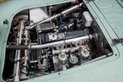
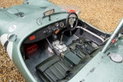
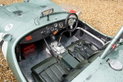
In 1954, Cyril Kieft developed a Coventry Climax-engined two-seater with a complete bodyshell in glassfibre: believed the very first automotive application of this material. Six of these two-seaters were built in 1954 after Kieft realised the Coventry Climax FWA 1100cc engine would make a good lightweight power unit for his race cars (Kieft was the first manufacturer to use the Climax FWA, before even Colin Chapman at Lotus). The engine delivered 72bhp at 6,400rpm and drove via a Moss gearbox, endowing the Kieft with a maximum speed of at least 110mph and a fuel consumption of 50mpg. The chassis was fabricated from 3¼" steel tube, forming a ladder frame. Suspension was independent all round with coil springs and wishbones at the front and a transverse leaf spring at the rear. The braking was by 11" cast drums, which also served as hubs, while the steering was rack and pinion. With its sleek, low drag, glassfibre body, the Kieft was at the cutting edge of contemporary sports car design.
The first of the six cars was entered at Le Mans for Alan Rippon and William Black, while the second (that offered here) was entered for the International Sport Car race at Silverstone and the Dundrod TT in 1954. One of the later cars was raced in the 1955 Targa Florio and at other European events. This car's history is detailed in the two books on Kieft's output and also in the extensive records that come with it.
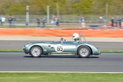
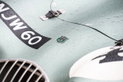
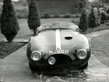
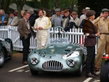
This car was originally raced by the factory in 1954 carrying the registration 'LDA 1' (used previously on another Kieft) with Don Parker driving at Silverstone and Fairwood. Don Parker and David Boshier-Jones shared it at the Dundrod TT and the car also competed at Shelsley Walsh, Silverstone and other venues. Sold to Maurice Higgins 1954 and reregistered as 'NJW 60', the car was loaned to the factory for further racing. In 1957 the Kieft was sold to Godfrey Sherwin, who used it for tours and rallies including an appearance at the first Kop Hill Climb re-creation in 2009 and owned it until he passed away.
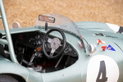
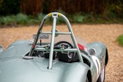
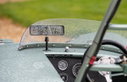
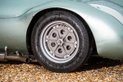
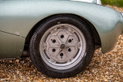
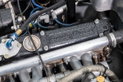
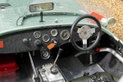
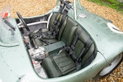
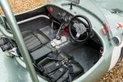
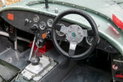
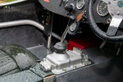
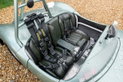
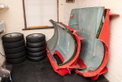
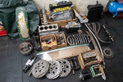
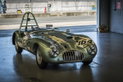
The Kieft was sold in 2010 to Rudolf Ernst, who had it completely restored and prepared for modern historic racing, all work being done by Andrew and Michael Hibberd of Hibberd Motorsports. The engine is virtually new (less than an hour of running time) and was built and tuned by David Whitehurst. There is also a spare engine ('FW 6450') that has around 20-or-so hours on it. The gearbox has been rebuilt with full synchromesh by Billy Bellinger of JB Sports Engineering, and there is a spare gearbox, also rebuilt by Billy and unused. Rudolf Ernst had new wheels and brake drums cast, and the car comes with two spare sets of wheels; an extensive set of engine and chassis spares; straight through exhaust; full-width screen; tonneau covers and fitted cover; as well as bucks for the front and rear glassfibre sections. To satisfy modern safety and racing requirements, the car is fitted with a roll cage; plumbed-in fire-extinguishing system; battery protection box; baffled fuel tank; and seat belts. The car also comes with the block from engine 'FWA 6152', which is the ex-Le Mans engine and believed to be the first FWA engine used in an automotive application. The car has a current FIA Historic Technical Passport (granted in 2018).
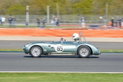
The Kieft has belonged to the current vendor since March 2016. Since its restoration by the Hibberds, the car has been raced at Goodwood, Le Mans Classic, and extensively in the UK. In addition to Monaco, Le Mans Classic and Goodwood, it is eligible for the new HSCC '50s race, FISCAR, VSCC and possibly even the Mille Miglia (a Kieft raced there in 1953).
1950s sports-racing cars are more and more prized and rightly so; they are beautiful and remarkably good fun to drive, often lively but nevertheless easy to use and maintain. Presented in very good condition with extensive spares and accompanied by an interesting history, the Kieft we offer is a superb example of this mythical barchetta which is, of course, eligible for many of the most important historic events.
