
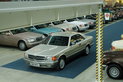
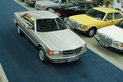
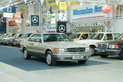
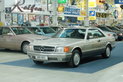
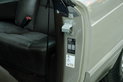

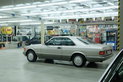


1989 Mercedes-Benz S-Class
420 SEC-
Year of manufacture1989
-
Mileage98 131 km / 60 976 mi
-
Car typeOther
-
Chassis numberWDB1260461A508093
-
Engine number116.965-12-076008
-
Lot number072
-
SunroofYesAirbagsYes
-
Reference numberhg_f36cdbe6a806
-
DriveLHD
-
ConditionUsed
-
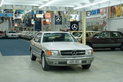
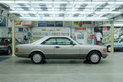
Exterior brand colourSmoke Silver Metallic
-
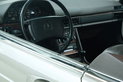
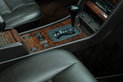
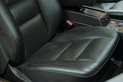
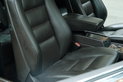
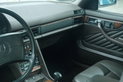
Interior colourBrown
-
Interior brand colourLeather Brazil
-
Interior typeLeather
-
Location

-
Exterior colourSilver
Description
One of only 3,680 ever made
Understated, elegant color combination
Only two registered German owners to date
Only 98,131 documented kilometers
Chassis no.: WDB1260461A508093
Engine no.: 116.965-12-076008
Body no.: 00290
Production no.: 9550602
Paint: 702 Smoke Silver Metallic
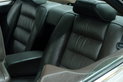
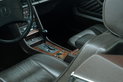
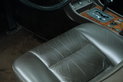
Interior: 263 Leather Brazil
Factory options:
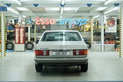
260 Elimination of model designation on rear lid
291 Airbag for driver and front passenger
300 Storage box in front tray
412 Electric sliding roof with tilting device
452 Two-tone horn
471 Acceleration skid control (ASR)
510 Becker radio Mexico cassette full stereo, electronic, Kurier LM/MW/SW/USW
531 Automatic antenna
551 Anti-theft/anti-break-in warning system
563 Front seats, left and right, reinforced
580 Air conditioner/Tempmatic
620 Vehicles with catalyst technique
640 15-hole light alloy rims
673 High-capacity battery
873 Seat heater for left and right front seats
Provenance:
31/10/1989 – Victor Guenthert, Muenchen, DE
02/03/2000 – Helmut Mueller, Torgau, DE
Documents:
German Fahrzeugbrief (1989)
Austrian Einzelgenehmigung (2015)
Original service booklet
About the model line:
C 126
The 51st Frankfurt Motor Show in September 1981 marked the return of a true Mercedes-Benz luxury coupé. After almost a decade without a flagship two-door model, Stuttgart returned to a tradition that had reached its zenith with the elegant W 111 Coupés. The 2+2-seat SLC certainly had its virtues, but it had never truly filled the void.
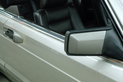
»SEC«, short for „S-Class“, „Fuel Injection,“ „Coupé“. Simple as the name may have sounded, Bruno Sacco set himself an altogether more ambitious task. He wanted far more than an S-Class with two fewer doors. Seizing the opportunity, he created one of the finest designs of his career. The wheelbase was shortened by 85 millimetres, while the roofline and window profile were completely redrawn. There was neither a B-pillar nor window frames. With all four side windows lowered, the uninterrupted glasshouse created an impression of remarkable lightness that still defines the character of the great coupé today.
Sacco also reworked the front end. The main headlamps became slimmer, while the fog lamps moved into the front bumper. This allowed for a wider radiator grille, dominated at its centre by the large three-pointed Mercedes star. Dispensing with the traditional bonnet-mounted star was another subtle nod towards a sportier character. The interior, too, received its own identity, featuring individual rear seats in place of the conventional bench.
Mechanically, the SEC shared almost everything with the S-Class saloon. Safety, comfort and effortless long-distance capability remained its defining virtues. Driver’s airbag, seat-belt pretensioners, ABS and later ASR ranked among the most advanced safety systems of their day. Beneath the long bonnet, only V8 engines were offered, their smoothness every bit as impressive as their effortless delivery of power. Outright speed was never the SEC’s greatest talent. Its true gift was covering vast distances at high speed without ever seeming to break a sweat.
The range opened in 1981 with the 380 SEC and the 500 SEC. The 1985 facelift brought the Coupés into line with the saloons, introducing an entirely new generation of V8 engines. The 420 SEC replaced the 380 SEC, while the 500 SEC remained in production and was joined by a new flagship, the magnificent 560 SEC. With up to 300 horsepower in ECE specification, it ranked among the fastest four-seat coupés of its era. Yet outwardly it differed little from its smaller siblings. That restraint was precisely its greatest luxury. The SEC never felt the need to advertise its abilities.
By the end of production in 1991, around 74,000 Coupés had been built. For many enthusiasts, the SEC remains one of the finest Mercedes-Benz coupés ever created—not because it was spectacular, but because it was timeless. And that is precisely what makes it so extraordinary.

Watch our latest YouTube videos
More Listings related to Mercedes-Benz S-Class


Recommended Listings


