

The Last Busso Alfa
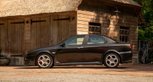
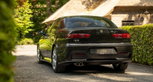
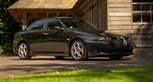
Upon its debut in 1997, the Alfa 156 ushered in a successful fresh start for the storied brand, which had initially stagnated following its acquisition by Fiat. The primary driver of this resurgence was the retro-futuristic design overseen by design chief Walter de Silva. The Italian — who would later hold senior positions within the VW Group — revived a signature Alfa design element from the 1950s by extending the so-called "Scudetto" (shield grille) deep into the bumper, necessitating the offset mounting of the license plate. At the same time, rear door handles concealed within the C-pillars gave the four-door sedan the appearance of a two-door coupe. Drawing inspiration from historic models like the Giulia Sprint GTA and GTA 1300 Junior, the 156 GTA (standing for "Gran Turismo Alleggerita") arrived in 2001 as the range-topping model, reaching the German market from April 2002.
Powering the GTA was the final evolution of the "Bussone" six-cylinder engine. This transversely mounted 60-degree V6 delivered a robust 250 hp to the front wheels; thanks to its gutsy exhaust note and eagerness to rev, it enjoys a reputation among Alfisti as the last "real" Alfa engine. The specification of this 2002 GTA — offered in the Netherlands — is generous; in addition to a six-speed manual transmission, it features a headlight cleaning system, fog lights, head and side airbags (including in the rear), and beautiful "telephone dial" style light alloy wheels. Only 2,973 GTA sedans (a GTA Sportwagon was also available) were built before production stopped in October 2005 — so exclusivity is guaranteed.


Marking the end of an era
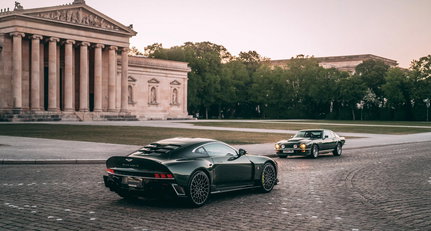
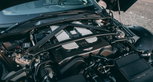
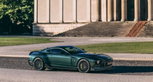
To mark its 110th anniversary in 2023, Aston Martin gave itself the ultimate gift: the Valour. Embracing the slogan "Be afraid. Not of what is to come. But what we might lose," the British manufacturer deliberately conceived an old-school sports car with analog DNA. Mundane figures like the 0–100 km/h time weren't even publicized — after all, the 5.2-liter V12 engine had plenty of power to offer: thanks to twin-turbocharging, it delivered exactly 715 hp and 752 Nm (555 lb-ft) of torque, channeled through a six-speed manual transmission that perfectly complemented the car's fundamental concept. Unlike the V12 Vantage, the power delivery wasn't electronically restricted, meaning there was a linear surge of thrust right from first gear upwards.
The design blended elements of the DBS V8 (which raced at Le Mans in 1977 and 1979) with those of the V8 "X-Pack" and the V600 Le Mans. The alloy wheels pay homage to the Ronal rims found on the V8 Vantage, while in contrast the interior aligns more closely with modern Aston Martin cabin designs.
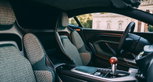
Aston Martin produced only 110 units of this "end-of-an-era" model at its Gaydon factory, and this particular example, currently with dealer Schaltkulisse, belongs to the lavishly equipped ones, boasting the 110th Anniversary Pack, a special "Q" division paint finish, carbon-fiber bucket seats trimmed in tweed, and a burr walnut gear knob. With only delivery mileage on the clock, this analog "super-Aston" is now waiting in Munich for its second owner — and for hopefully many more miles of pure driving pleasure.


French Rotary Club
It was not only Audi with the Ro80 that pursued rotary technology; Citroën, traditionally receptive to innovation, also explored the promising Wankel engine in the late 1960s. To that end, the brand with the "double chevron" logo partnered with NSU to develop a shared engine through COMOTOR, a newly founded joint venture based in Luxembourg.
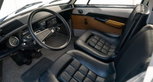
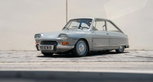
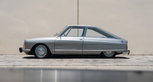
Conceived as a mobile test laboratory, the M35 was a 2+2 coupé with bodywork by Heuliez, based on the Ami 8 platform, with headlights from the same model, and a single-rotor 995 cc Wankel engine, still built in Neckarsulm. Hydropneumatic suspension and front disc brakes were as typical of Citroën as the single-spoke steering wheel and the "walking stick" gearshift. To assess the prototypes in everyday use, Citroën sold them to selected customers as part of a long-term trial that included a two-year warranty on the new engine, on condition that owners reported their experiences directly to the company's development department.
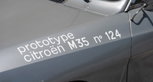
Officially, just 267 examples were built before production ended in spring 1971, as the Wankel engine's benefits were ultimately outweighed by excessive oil and fuel consumption. After the large-scale trial, Citroën bought back the cars and scrapped most of them. This M35, serial number 124, is among the few that escaped the crusher. It spent most of its life in the Dordogne and remained in a private collection in Lyon until 2013, when American collector Peter Mullin acquired it for his collection and museum. At the time, the odometer showed 18,500 km, and the car was described as being in "excellent and original condition." This rare example of a concept Citroën would briefly revisit with the twin-rotor GS "Birotor" is now offered at Broad Arrow's "The Quail" auction. Interestingly, an example of that visually less eccentric successor is also going under the hammer in California.


Pininfarina's Swan Song
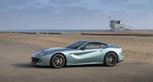
The F12 was the last Ferrari styled by the brand's longtime design partner Pininfarina — something one might well regret when looking at some of the subsequent Ferrari designs. Thanks to the extensive use of aluminum, the F12 weighs nearly 70 kilograms less than its predecessor, the 599 GTB Fiorano. Combined with a 46:54 weight distribution and an engine positioned lower and further back, it not only outperforms the 599 in terms of handling but even shaves two seconds off the Ferrari Enzo's best lap time at Fiorano — also thanks to its 6.3-liter naturally aspirated engine producing 740 hp, with 80 percent of the torque available from as low as 2,500 rpm.
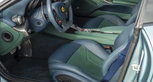
With only 4,657 units produced, the F12 is rarer than its successor, the 812 Superfast. This particular car was delivered to a Ferrari dealer in Denver, Colorado, in 2014 and remained with its original owner — a local resident — until 2025. Now offered at RM Sotheby's Monterey auction, the car has covered just 5,333 kilometers and captivates with its Celeste Metallizzato exterior paired with a two-tone interior featuring Blue Medio and green leather. The blue-and-green color scheme extends beyond the dashboard — split into a blue (upper) and a green (lower) section — to the seats (featuring green Ferrari Cavallino emblems embroidered into the headrests) and the door panels, while the headliner and the floor of the rear luggage shelf are trimmed in Alcantara. Whether for a serious collector or a hardcore driving enthusiast, this low-mileage example — with its striking interior color combination — offers the ultimate Ferrari Berlinetta experience for anyone wishing to still enjoy a non-hybrid, non-turbo V12 Ferrari.


Road-to-racecar-turned 911 Turbo
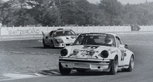
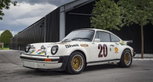
Things always seem to happen when you least expect them, as this episode from the run-up to the 1975 24 Hours of Le Mans demonstrates: the Swiss team Haberthur had planned to field two Porsche Carrera RSRs in the classic enduro at la Sarthe. But after one of the two cars had been sold at the last minute, a replacement had to be found for the second trio of drivers at short notice. It arrived in the shape of a brand-new 930 Turbo that a certain Max Kläy — a customer of Haberthur, the Porsche dealer renowned for its racing activities—had just purchased. In a gesture of camaraderie, he lent his new acquisition to his Swiss friends, who hurriedly converted it from a road car into a 350 hp race car. They fitted it with a roll cage, two racing seats, a sportier suspension setup, and additional cooling and lighting. Only the brakes and the four-speed gearbox — which had gear ratios too long for this circuit — remained stock.
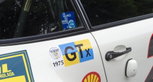
Despite such setbacks—the brakes alone had to be changed three times — Swiss drivers Claude Haldi and Peter Zbinden and Frenchman Bernard Béguin drove the production-into-racecar turned 911 Turbo to 15th place overall and victory in the GTX class, the first class win for a Turbo Porsche at Le Mans. Now, this early Turbo is for sale at Duncan Hamilton, serving as a memento of a completely different era of endurance racing—a time when plucky privateers with a knack for improvisation — at one point, a part even had to be sourced from a spectator's Porsche — could achieve success.