

Monster Miata
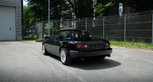
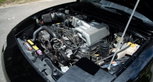
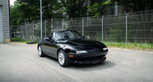
What looks at first glance like a classic first-generation (NA) Mazda MX-5 turns out, upon closer inspection, to be an MX-5 on steroids. It was modified by Monster Miata — a California-based company founded in the early 1990s — which transformed the cult Japanese roadster into a muscle car by shoehorning in a 5.0-liter Ford V8. This example, currently offered in Switzerland, sends around 300 hp via a reinforced Ford Thunderbird rear axle and a Tremec five-speed manual transmission to the wheels. The 1995 model has covered 61,000 kilometers; it is registered in Switzerland and fully certified for road use with all its modifications. Do you have the courage to tame this Miata — transformed into a muscle car in the Golden State? Monster Miata has carried out over 75 such conversions over the past 30 years, so the team there certainly knows a thing or two about tuning these Mazdas.


Lord of the rings
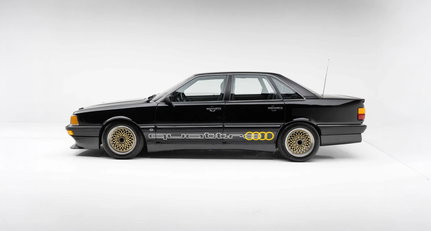
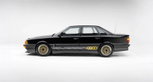
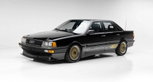
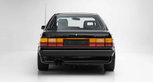
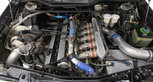
Things were actually going quite well for Audi in the mid-1980s; the manufacturer from Ingolstadt had just achieved a record drag coefficient of 0.33 with its 100 C3 sedan, and its motorsport efforts were also running quite well thanks to superior Quattro all-wheel drive. However, the brand with the four rings was struggling in North America — so a PR coup was badly needed. And what better way to achieve that than with a speed record? So they took an Audi 100 — better known in the US as the Audi 5000—and handed it over to the motorsport department. The team there upgraded the production 2.2-liter five-cylinder turbo engine with a five-valve cylinder head, which — combined with further fine-tuning and 2 bar of boost pressure—unleashed 650 hp.
With three-time Indy 500 winner Bobby Unser at the wheel, the black 5000 CS Quattro — fitted with a special body kit and a lowered chassis — was taken to Talladega, where on March 24, 1986, Unser lapped the superspeedway at an average speed of 332.88 km/h (206.88 mph). Audi's plan had succeeded. Not only had they set a record for an all-wheel drive vehicle but also had won the enthusiastic praise of a US motorsport legend, who later remarked enthusiastically that the car had felt "as though it were glued to the road with superglue." After being used for tire testing, the "Black Widow" was slated for the scrapyard. Fortunately, that didn't happen — and instead the car is now up for sale at RM Sotheby's upcoming Monterey auction.


Bavarian Autobahn stormer
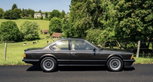
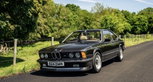
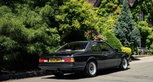
In terms of performance, the M635 CSi represented the pinnacle of the BMW 6 Series (E24) — the full-size coupé styled by Frenchman Paul Bracq, featuring a shark-like, tapered nose and an elegant rear end. The motorsport-steeled experts at BMW Motorsport GmbH were commissioned to take care of all powertrain and chassis upgrades. To start with, they reached into the top tier of their engineering arsenal to equip the car with a four-valve DOHC engine with six individual throttle bodies — derived from the legendary BMW M1 unit. In practical terms, this meant 286 hp from the 3.5-liter inline-six (M88/3). Also used in the M5, it catapulted the Coupé, which was fitted with front and rear spoilers, to a top speed of 255 km/h (158 mph). Only 5,855 units were handmade between 1983 and 1989, including 524 right-hand-drive examples like this 1984 UK model, which is also one of just two RHD cars finished in Sable Brown. Inside, passengers seated on beige leather upholstery enjoyed the comfort of a sunroof and air conditioning.
Alongside the attractive 16-inch Alpina light alloys, one detail catches the eye: the absence of wheel arch extensions usually seen on all M635s — confirming the early production date of this otherwise highly original Bavarian autobahn stormer.


Back to the future
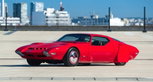
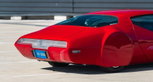
Don't be fooled, but this is not a work of Luigi Colani — the Berlin-based "designer" who passed away in 2019 and was notorious for creations like this one. Instead, the "Pontiac One" concept originated with Harry Bradley (1939–2003), a former GM designer who, in 1968, became the first person to design the legendary Hot Wheels model cars — a lineage somewhat evident in this red behemoth based on a 1970 Firebird. The car was brought to life alongside Bradley's sketches by Dave Crook, a draftsman and coachbuilder, also with GM roots. To achieve the lowest possible silhouette, he tilted the windshield back by five inches and chopped the roofline by three inches. Distinctive design features include fully enclosed rear wheels, six aggressive hood scoops, and a jewel-like, concealed tail lamp assembly that incorporates an optical reflector system with an elegant prismatic lens. Despite its somewhat wild appearance, the Pontiac — powered by a 5.7-liter V8 — is fully roadworthy.
GM styling legend Bill Mitchell was reportedly thrilled when he first saw the Pontiac One. However, plans to use the handcrafted one-off for official GM/Pontiac presentations never materialized — it was likely simply too far ahead of its time. Now, this unique "Firebird" is up for auction at Gooding & Company's Pebble Beach sale.


Noblesse oblige
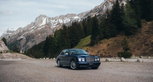
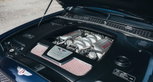
When the Bentley Arnage was launched in 1998, the Crewe-based brand, alongside Rolls-Royce, was still part of the Vickers Group. Its acquisition by Volkswagen followed shortly thereafter. The Arnage "R" and its sibling, the Rolls-Royce Silver Seraph, epitomized ultimate British noblesse in the grand touring segment. To this day, the sedan stands out thanks to its elegant, timeless design and prestigious presence. A key factor in this is the iconic twin-turbo V8, which churns out 457 hp from its 6¾-liter displacement—delivering effortless acceleration and silky-smooth operation in perfect harmony with a 6-speed ZF automatic.
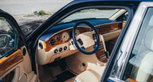
The 2007 model shown here already features the facelift introduced in 2005 — including four individual round headlights in Continental GT style and air-conditioning controls from the Bentley Azure instead of the former BMW switchgear. Originally delivered to Switzerland, the car has had only two owners to date; it is 100 percent authentic and in excellent condition. Inside, the cabin exudes "good old British luxury," featuring abundant wood and leather, as well as analog instruments with ivory-colored dials. And to ensure that nothing disturbs this cozy "splendid isolation," the doors feature a soft-close function.