

Rare desert wind
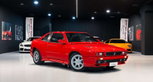
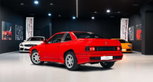
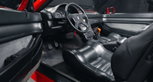
With its 326 hp derived from a twin-turbo 3.2-liter V8, the Maserati Shamal—based on the shortened chassis of the Karif and Biturbo Spyder, was a compact powerhouse on a 2.4-meter wheelbase. Its asymmetrical rear wheel arches were a signature design detail of Marcello Gandini, while the interior of the coupé—named after a Mesopotamian desert wind—exuded authentic 1990s charm with its full-leather upholstery and an oval analog clock. Produced from 1989 to 1995 as the final Maserati model under the ownership of Alejandro de Tomaso, the Shamal represented the ultimate evolution of the legendary Biturbo series and served as the swan song of the de Tomaso era, which came to a close with Fiat's acquisition of Maserati. Built in a limited run of just 369 units between 1989 and the end of 1995, the Shamal is today valued as one of the most highly sought-after collector cars of Italian provenance. Offered by the Rome-based dealer Auto Veloce, this red 1991 example shows 70,000 kilometers on the odometer and, complete with its Maserati Classiche certificate, now awaits a new owner.


British Beef
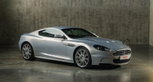
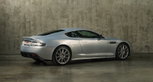
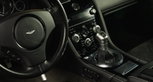
Launched in 2008, the Aston Martin DBS replaced the Vanquish S and, thanks to the extensive use of carbon fiber, tipped the scales at 30 kilograms less than the DB9, which was based on the same platform. It achieved cinematic fame through its appearances in as many as two James Bond movies ("Casino Royale" and "Quantum of Solace"). This 2010 model, currently located in Belgium, lures with the rare Graziano six-speed manual gearbox, which channels the 517 horsepower of the mighty 5.9-liter V12—built in a dedicated Ford engine plant in Cologne—to the rear axle. This silver example is complemented with a high-class interior finished entirely in black leather and Alcantara. Given that only 2,536 DBS Coupés were ever built—and considering the dealer describes its condition as "Concours"—the asking price of just under 160,000 Euro justifiably sits at the upper end of the market range for a pre-owned DBS.


Blue is the color
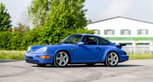
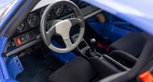
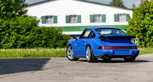
This 1992 RUF BTR 3.8 started life as one of only 290 examples of the ultra-lightweight Carrera RS N/GT —itself a road-legal version of the 964-type Carrera Cup racer. In 1999, the horsepower wizards from Pfaffenhausen upgraded it to their BTR 3.8 specification. This entailed the installation of a M64/50 turbocharged engine enlarged to 3.8-litre capacity. It is rated for 415 PS, mated to a six-speed manual RUF hand-shifter. Already before this mechanical conversion its first owner had ordered the car with the coveted "M003 Club-Sport" package. This included, among others, a roll cage, a larger fuel tank, Recaro bucket seats, Schroth harnesses, thinner glass, simplified door cards and a lightweight wiring loom. RUF further refined the exterior with a 930 Turbo-style rear spoiler, complemented by a RUF exhaust system and OZ wheels.
Following this conversion, the car remained in storage for nearly 25 years with minimal use before returning to RUF in December 2025 for extensive maintenance. Today, this exceptional BTR 3.8 presents itself in its correct factory delivery color of Maritime Blue and will be auctioned in early July at RM Sotheby's sale at Lake Tegernsee. Hopefully marking a speedy return to spirited and enjoyable driving.


The grandfather of the Ferrari FF
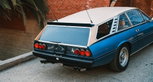
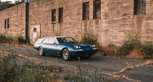
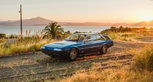
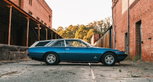
A Ferrari SUV? Yes. A pure electric Ferrari? It's just around the corner. But a Ferrari station wagon? Yes—though the FF from 2011, which you might be thinking of right now, was — strictly speaking — not the first Cavallino Rampante to sport a hatchback. It all started at the 1975 Geneva Motor Show with a standard 365 GT 2+2. After it had been on display there, this particular chassis (#18255) was delivered to Swiss Ferrari dealer and coachbuilder Willy Henri Felber, known for his bespoke creations such as the FF (Felber Ferrari), which evoked memories of the 166 Spider Corsa roadster.
On behalf of a supposedly wealthy client from the Middle East, Felber approached Giovanni Michelotti for a bespoke conversion which turned out to be an elegant shooting brake-style rear end. To bring his design to life the Italian star designer sent his sketches to renowned British coachbuilder Panther Westwinds whose craftsmen subsequently hand built a stunning two-tone station wagon finished in Ribat Blue with a contrasting white roof. The interior was lavishly upholstered in beige Connolly leather and as a technological highlight of the era featured a tube-style television between the front seats.
However, because the customer was subsequently unable to pay for the car, Felber initially kept the Shooting Brake—christened "Croisette" after the famous boulevard of the same name in Cannes—for himself. It then remained safely tucked away in a Swiss collection for decades, until Swiss classic car specialist Andreas Wüest got hold of it and caused a great stir in displaying the Croisette during the 2024 Monterey Car Week. Following that event, this unique collector's item remained in the US and is now listed for sale by Wüest.


A wolf in wolf's clothing
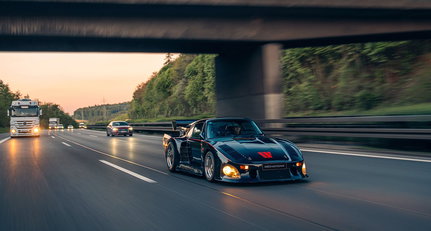
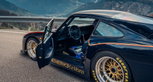
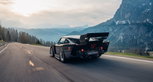
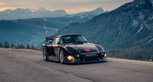
A Le Mans-winning car with numberplates —nothing less than that was the Kremer K3 Le Mans, converted in 1984 by Cologne-based brothers Manfred and Erwin Kremer for Austro-Canadian oil magnate and Formula 1 team owner Walter Wolf. This spectacular one-off was closely based on the 1979 24 Hours of Le Mans winning 935 K3 and kept its extreme Group 5 bodywork almost entirely unchanged. It was finished in the awesome midnight blue of Wolf's Formula 1 team cars, with red and gold accents and Wolf's personal "W" emblem. With a top speed of 338 km/h, this 740-horsepower rocket even outperformed a Ferrari F40. Particularly fascinating is the contrast between uncompromising racing technology and luxurious details. While the suspension, aerodynamics, and engine embodied almost unadulterated motorsport technology, the interior comes with amenities like leather upholstery, a high-end audio system, and even power windows. Nevertheless, its character remained extremely raw and loud.
Walter Wolf drove his prized possession over 9,000 kilometers across Europe before selling it in 1987 to Swiss former racing driver and collector Angelo Pallavicini. In the mid-2010s, this unique specimen then arrived at Mechatronik, where it remained part of the in-house collection for another decade. In the summer of 2024, the decision was made to undertake a two-year mechanical restoration at the very birthplace of this most radical road-legal descendant of a racing car. Upon completion at Kremer Racing, a three-day road trip—serving as a true endurance test—followed, leading from Stuttgart across the Dolomites to the recent "Fuori Concorso" at Lake Como. Now, this K3 Le Mans —the only one ever converted into a road-legal car by Kremer Racing —awaits its next owner at Mechatronik: a custodian for a car that stands as a testament to one of the greatest successes ever achieved by a private racing team – Le Mans 1979.