

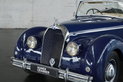
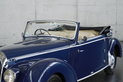
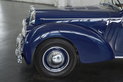
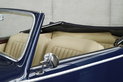



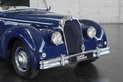


1950 Talbot Lago T15
Lago T15 LB Cabriolet Guilloré-
Year of manufacture1950
-
Car typeConvertible / Roadster
-
Chassis number5294
-
Lot number216
-
Reference numberhg_f01eba540079
-
DriveLHD
-
ConditionUsed
-
Interior colourOther
-
Location

-
Exterior colourOther

Description
A rare piece of French automotive artistry
Extensively restored to the highest standard
Quite simply breathtakingly beautiful
Matching numbers
In the early days of the motor car, manufacturers came and went with remarkable regularity. Companies merged and expanded as though there were no tomorrow, while in the race for the best ideas plenty of others were forced to lower their flags almost as quickly as they had raised them. The tangled family trees of those pioneering years are enough to leave even experienced genealogists scratching their heads today. One of the most energetic protagonists was Alexandre Darracq, whose eponymous company was already building ten per cent of all cars made in France by 1904. In 1905, he sold part of his business to England, expanded elsewhere through licensing agreements and, in 1906, established an automobile factory in Italy that would eventually become Alfa Romeo. In 1912, he withdrew from motor-car manufacture and sold what remained of his company to England as well.
The Talbot name had first appeared there in 1903. Clément-Talbot Ltd initially imported French Clément automobiles before venturing into production of its own. In 1919, A. Darracq and Company acquired Clément-Talbot Ltd, followed a year later by Sunbeam. From 1920, the cars of S.T.D. Motors Limited were sold as Talbot-Darracqs; from 1922, the British-built cars were simply Talbots, while those produced in France bore the Darracq name. In 1935, the S.T.D. group collapsed and was split into French and British companies. The Rootes Group secured the British operation, while Automobiles Talbot S.A. at its historic home in Suresnes passed to Antonio ‘Tony’ Lago.
The son of a theatre director in Bergamo, Lago had grown up among actors, musicians and politicians and served as a fighter pilot during the First World War. He became acquainted with Benito Mussolini at an early stage, but soon turned his back on the future Duce and became one of his fiercest critics. Mussolini’s attempt to do rather more than merely silence his former supporter ended in bloodshed, costing the owners of a trattoria and a Fascist their lives. Lago defended himself with a hand grenade, escaped through the back door and fled first to France and then California, where he took a position with Pratt & Whitney. He would never return to his Italian homeland.
In the 1920s, Lago settled in London, changed his first name from Antonio to Anthony and took over the Isotta Fraschini concession. He later joined Self-Changing Gears Ltd, manufacturer of the Wilson pre-selector gearbox, and in doing so established his first contacts with the S.T.D. group. In 1933, Lago moved to Paris and took charge of the Talbot works at Suresnes, by then in fairly dire financial straits. With characteristic confidence, he promised to turn the company around within 18 months. He failed. The shrewd businessman did, however, manage to secure an option to buy the factory out of bankruptcy.
Lago was utterly convinced that salvation lay in motor racing. He wanted to build light, fast cars and use their victories to polish the marque’s image and propel it to the international front rank. From now on it would be called Talbot-Lago, and it did indeed become synonymous with French extravagance, just as Tony Lago had imagined. Four bankruptcies told a rather different story financially.
For 1938, Lago announced plans for a three-litre V16 racing car and secured a subsidy of 600,000 francs from the Comité de la Souscription Nationale pour le Fonds de Course, which was generously supporting motor racing at the time. There was just one small problem: nothing even remotely resembling such a car ever materialised. France was instead left wondering where Lago had suddenly found the money for a Pratt & Whitney factory.
For all his escapades, Lago did at least attempt to pursue a sensible model policy as well. Alongside the racing cars and their road-going derivatives, clothed by the most celebrated carrossiers to create some of the most exciting automobiles of their age, Talbot-Lago also offered entry-level models for the upper-middle-class market. Although even the smallest engine still displaced almost two and a half litres.
For 1936, Talbot-Lago introduced a new model bearing the nickname Baby, a description that hardly seemed appropriate for a car with a wheelbase of almost three metres. Available as the 15, 17 or 23 CV, it could be ordered with overhead-valve six-cylinder engines ranging from 2.7 to 4.0 litres. Customers could choose between a conventional four-speed gearbox and, for a hefty premium, the Wilson pre-selector transmission Lago knew only too well. Factory body styles included a modern saloon and particularly elegant two- and four-seat cabriolets, all three with steel coachwork. Those wanting something more extravagant could buy a bare chassis and pay a visit to the carrossier of their choice. And the Baby would hardly have been a Tony Lago creation had he not also used it as the basis for a racing car.
The T15, T17 and T23 never quite fulfilled the hopes placed in them. Their prices, after all, still positioned them firmly in the luxury segment. Anthony Lago made a point of never publishing sales figures, well aware that the numbers would hardly enhance his reputation and might raise awkward questions about the economic survival of his company. In 1942, Talbot-Lago finally had to halt production. The Second World War had overtaken its financial troubles.
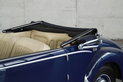
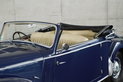
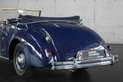
Anthony Lago was brimming with ideas and energy when production could finally resume after the war. The Talbot-Lagos received modernised styling and new engines designed by Carlo Marchetti, albeit with rather less variety than before. Alongside a mighty 4.5-litre six-cylinder with hemispherical combustion chambers and two camshafts, the T15 LB received a 2.7-litre engine effectively reduced by two cylinders. Producing 125 bhp, it was capable of taking the car to 150 km/h. The engines were works of art in their own right, with TALBOT LAGO proudly displayed in large lettering on either side of the cylinder head. Alongside the saloon, only a cabriolet remained, its body now built by Guilloré.
The first post-war years offered quiet grounds for optimism. Between 1947 and 1950, total production rose from 155 to an impressive 433 cars. And because Tony Lago simply could not leave motor racing alone, that same year brought an enormous success with outright victory at Le Mans. Yet only a year later, sales collapsed dramatically and the company once again stood on the brink. Only a moratorium granted by the banks kept it alive. Tony Lago tried to stave off the inevitable with a succession of new models, but in 1952 just 34 cars left the factory. By 1958, even Tony Lago had had enough and publicly offered Talbot-Lago for sale. Henri Pigozzi, owner of Simca and a fellow Italian, was the only bidder. His principal interest was the Suresnes factory, and the Talbot-Lago marque disappeared only a year later. Anthony Lago died in 1960.
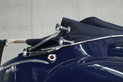
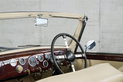
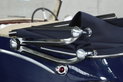
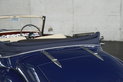
Years of working closely with France during the 1980s and 1990s had clearly left their mark on the last owner, who fulfilled a long-held dream with this Talbot-Lago. Turning that dream into reality, however, required years of restoration, for which he employed an absolute specialist within his own company. The fact that a little Peugeot 202 was being restored almost simultaneously did not exactly speed matters up. By the turn of the millennium, not only was the breathtakingly beautiful Guilloré Cabriolet finally complete, but its Styrian owner was also drawn back to his Austrian homeland. The two French cars naturally came with him. Austrian individual approval was granted in August 2001, and the Talbot-Lago was promptly registered.
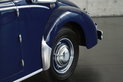
As though this breathtakingly beautiful Cabriolet were not fascinating enough in its own right, the quality of its restoration remains deeply impressive even 25 years after its completion. The fact that the Talbot-Lago shows hardly any signs of use is probably also due to it having been driven only sporadically for several years as its owner grew older. With a new owner, the mechanicals were gently awakened from their slumber. The brakes and carburettors were completely overhauled and the gearbox carefully adjusted. Through contact with the French Talbot-Lago Club, the original factory records were consulted and confirmed that the heart of the car – its engine – remains the original one.
This Cabriolet is an automobile of incomparable elegance, born of an era when aesthetics still seemed to stand above everything else in motor-car design. Talbot-Lago and Guilloré are both great names with firmly established places in automotive history. This Cabriolet needs very few words to explain why.

Watch our latest YouTube videos
More Listings related to Talbot Lago T15

